You've come to the wrong place for inspiration.

Why Brexit, Dom? Theory 3: for Britain!

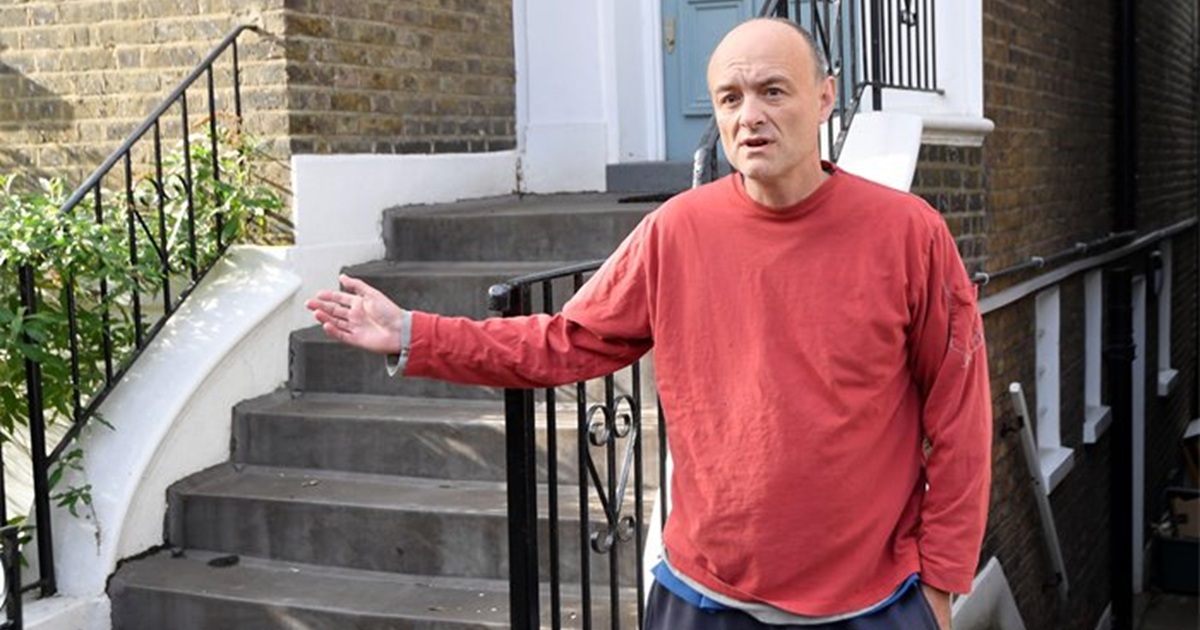
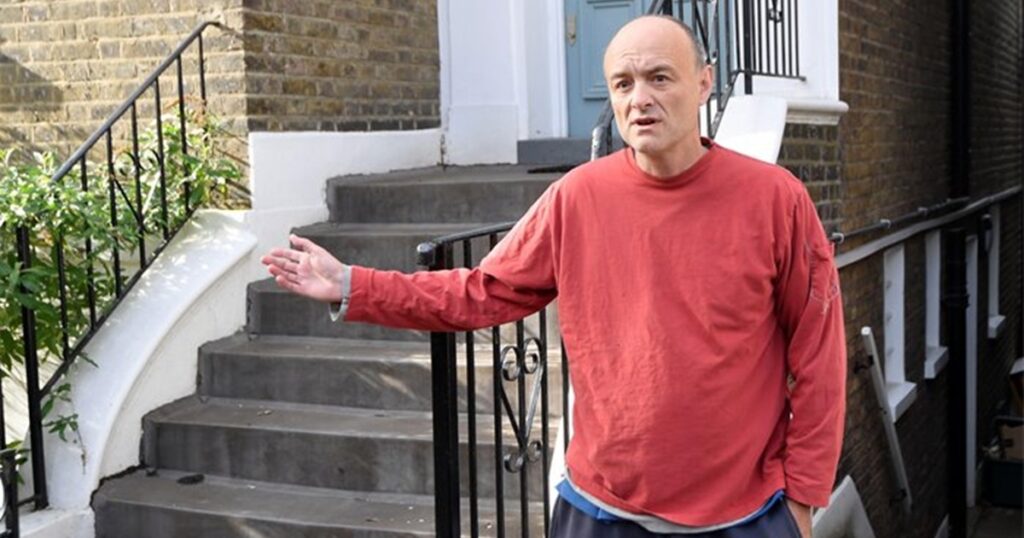
Dominic Cummings gesticulating

Cummings is so punk rock, he sometimes wears his Wednesday socks on a Thursday

“No, further to the right. And a bit further. Keep going …”

Dear Dominic Cummings

Why Brexit, Dom? 1: you’re a racist

Why Brexit, Dom? 2: you’re a communist

Most of the potential motives for Brexit that I’ve imputed to you so far have been, shall we say, less than generous. Not that many would blame me; the Leave camp wasn’t exactly awash with noble intentions. Most of your allies were self-serving faux-racist demagogues, avaricious business leaders, no-mark, no-brain backbench MPs and hasbeens hellbent on avenging Thatcher’s downfall, and crooks.

We must now consider the notion, however perverse, that you acted in good faith. That despite sharing methods with the Nationalsozialistische Deutsche Arbeiterpartei of the 1930s and the Communist party of the Soviet Union from the 1920s to the 1950s  – the Big Lie, short, simple and false slogans, demonising minorities, crowbarring open social divisions – you don’t necessarily share their aims. That instead of being a 24-carat cunt, you are merely a Dreadnought-class dimwit.

But if you genuinely believed Brexit would benefit the UK, that raises the £350m question: why? What principles was this belief founded on? Who is Dominic Cummings?

Too cool for schools of thought

Most people are upfront about their philosophies. They’re happy to be described as communists, environmentalists, centrists, or Muslims, because that’s how they describe themselves. You, though, have always tetchily resisted being pigeonholed. (Which to me smacks of the schoolboy desire to be seen as cool, edgy, a maverick, an outsider, whereas in truth your punk-rock credentials extend to sometimes wearing your Wednesday socks on a Thursday.)

When someone refuses to be labelled, you have to build a picture of their world-view the hard way: by looking at their influences, their associates, their words and their deeds. Since you haven’t actually done anything, that just leaves your influences, associates and words.

I’ve already mentioned Norman Stone, your history tutor at Oxford, who evidently left quite a mark on you (albeit a different sort of mark from the ones he left on his wives). Stone was a hater of institutions, a deep blue Conservative, and a staunch fan of Margaret Thatcher in particular.

When you came back from Russia in the late 1990s, you threw your lot in with Business for Sterling and the No campaign, which opposed the UK joining the euro (slogan: “Europe yes, euro no”. How quickly things change). This was populated by most of the same rights-and-standards-phobic CEOs who later campaigned for Brexit – Lord Wolfson, Lord Bamford, Rupert Lowe, Tim Martin, Richard Tice, Jonathan Warburton, Lord Sainsbury – and the remaining dregs of Thatcher’s toadiest toadies, Lawson, Rifkind et al.

After a stormy period advising Iain Duncan Smith when he was leader of the opposition, your next big project was the New Frontiers Foundation, a free-market libertarian “thinktank” (a word that should send shudders down every spine) that called for the dismantling of the BBC, the civil service, the EU and the UN. Your chief partner in crime there was James Frayne, who has spent his life since writing evidence-free guff for the Telegraph and Conservative Home, and scurrying around various shady, opaquely funded rightwing thinktanks.

Then it was on to North-East Says No, the campaign against a regional assembly on your childhood turf. (Every time you’ve espoused a cause, you’ve been victorious. I sometimes wonder what would happen if you ever campaigned for something, rather than against it.)

Your last big job before Brexit, and probably one of your longest associations, was as adviser to noted climate change denier and Iraq War backer Michael Gove when he was education secretary. But the only thing of substance that clown is remembered for saying is that people have had enough of experts, a line that reeks of Eau de Dom, and it seems fair to assume that the influence in that partnership ran exclusively one way.

Post-Brexit, of course, we have your illuminating stint as eminence grise to Boris Johnson during the clusterfuck that was the UK’s response to the Covid pandemic. A period when draconian rules were imposed on the demos (rightly, in my view), with exemptions for a certain Boris Johnson (Partygate) and Dominic Cummings (Barnard Castle).

Norman Stone aside, it’s not clear what, if anything, you learned from any of these collaborators, so let’s examine some other potential influences. Here’s a short list of historical and present-day figures for whom you have expressed admiration: ancient Greek historian Thucydides, Dostoevsky, wartime Churchill aide Viscount Alanbrooke, Apollo programme engineer George Mueller, Manhattan Project mathematician John von Neumann, and Otto von Bismarck.

These were industrious men; men of vision, men of ambition, men of action. Men who got things done. Men, men, men, men, manly men, men, men. Men who were, for the most part, sceptical or even scornful of the concept of democracy and due process and who were, almost to a man, far more concerned with personal glory and the glory of the state than with the welfare of ordinary people.

I’ve said before that I’m not going to further deplete my Brexit-drained pockets by paying to wade through the Elliot Rodger-esque jeremiads on your Substack, but in your public pronouncements, you’ve dropped a few more clues about your view of the world.

In the early noughties, at the NFF, you spoke of the need to remove barriers to free trade and foreign capital (15 years before erecting the biggest barriers to trade the UK has seen in our lifetime) and of your desire to “drastically reduce the regulatory burden on businesses”.

You’ve repeatedly called for more “nimbleness” in government and management – as opposed to what we see from the “bloated”, “hidebound”, “stagnant”, “sclerotic”, “failing”, “moribund” civil service and EU; for the sort of dynamic, industrious taskforces of geniuses that gave us the atom bomb, the Apollo programme and Silicon Valley.

You have at least once complained that the UK has failed to exploit the opportunities arising from freedom from the EU, mirroring the myriad grumbles of other ardent Brexiters who moaned about us getting the “wrong sort of Brexit”.

And of all the world’s nations, the one that seems to be closest to where your heart should be is the United States. As well as fangirling over its technological achievements, you have on more than one occasion called for closer ties with our onetime colony, even if to the detriment of our relationship with our neighbours.

For someone who claims to be uncategorisable, there are some strong threads running through these names, bodies and statements. Low tax. Small state. Nationalism. A cavalier attitude to rules and regulations, and outright contempt for the common man.

It all seems to place you squarely in the same laissez-faire park as Ayn Rand, Friedrich Hayek, Milton Friedman and Liz Truss. The sort of people who would see Brexit as a gateway to their dream of creating “Singapore-on-Thames”; whose grand idea for governing is not to govern at all, but to entrust the future of the country to the philanthropy of CEOs and the benevolent wisdom of stock traders.

It’s extremely tempting to conclude that, for all your scruffy rebel trimmings, you’re just another neoliberal.

Disastrous capitalism

Neoliberalism, for those who didn’t glance at the news in 2022, is big-boy, max-strength, batshit capitalism. On crack. It’s about eliminating everything that could conceivably put a dent in profits; about maximising CEO bonuses and share payouts in the short term, and pretending the long term doesn’t exist. If too much tax is a bad thing, no tax must be best! If too many regulations stifle investment and innovation, then surely zero regulations is the answer!

But if neoliberalism is such an obviously terrific idea, Dom, how come it wasn’t universally adopted from the moment of its conception? One reason, really: it’s fucking terrible for 99% of the population.

Little ever trickles down. Without some sort of external rebalancing mechanism, such as that provided by the state or a body like the EU, it merely concentrates in an ever smaller number of hands. Millionaires hoard their millions until they’re billionaires, and our present-day billionaires are now laser-focused on hitting 13 figures.

Singapore has achieved its success only through eye-watering levels of immigration (40% of the labour force are foreign-born), which might have been a hard sell to most Brexit voters. The US, too, owes much of its prosperity to outsiders – the Manhattan Project team in particular was stuffed with surnames that most of your supporters wouldn’t dare try to pronounce.

And while America is undoubtedly the wealthiest nation on Earth, that wealth is enjoyed by a tiny fraction of Americans. The inequality there has reached levels not seen since 1910, contributing to violent crime rates higher than in any other developed country. Workers have few rights and next to no holidays, decent healthcare is unattainable by all but the gilded few, and as a consequence, life expectancy in the US is lower than in Panama and Albania and it’s battling with Belize for 24th spot in the World Happiness Index. (The UK is in 23rd, down from 14th in 2020. The Brexit bonuses just keep rolling in.)

Even if we did want to emulate that “success”, we’d have our work cut out, as the US has five times the population of the UK and 50 times the natural resources.

While no one would disagree that too much red tape is a bad thing, it wasn’t devised purely to annoy rightwingers. It actually has uses: safety considerations, antitrust, quality control, environmental protections, consumer choice. Following proper procedures also allows us to achieve widespread consensus for an idea (and no, I don’t mean the flimsy, fleeting sort of consensus you can whip up by pasting bollocks on the side of a bus) so that it can go ahead with proper resourcing and popular support.

Lower standards aren’t just an accidental by-product of deregulation – they’re the whole point, as Jacob Rees-Mogg witlessly let slip with his “good enough for India” comment to the Treasury Committee soon after Brexit.

Regulation conflagrations result in huge short-term gains for CEOs and traders … and market crashes, runaway inequality, and disasters like Grenfell and Bhopal and Deepwater Horizon and Boeing.

And while the lean, nimble, efficient taskforces you have such a hard-on for are great for achieving specific, limited goals, they’re not really the ideal vessels for tackling bigger, longer-term problems, like coordinating international efforts to reduce waste and pollution and deforestation, tackling mass migrations, mounting a response to a global pandemic, or, I dunno, maintaining peace in Europe.

(Interesting parallel here: you’ve proved yourself adept at assembling teams to achieve the specific short-term goal of smashing things up, and you maintained your 100% record with Brexit. But when it came to the real, hard, complex job of forging a post-Brexit future for Britain, you, and every other Brexit nutjob, have abjectly failed. Because that involves long-term thinking, long-term planning, innovation, imagination, research, consultation, and achieving a real, lasting consensus, and not many of the thinkers, planners, innovators and diplomats, having been on the other side of the argument, were lining up to help out.)

The implicit “right sort of Brexit”, of course, was “the Brexit we secretly wanted but never actually described in detail because if we had, you’d never have voted for it”. You can win a referendum with lies, but to then deliver the exact opposite of what was promised was a political impossibility even for Boris Johnson’s Tories.

You’d sooner dress like a grown-up than admit it, but what most Brexit voters really wanted was BRINO – Brexit in name only. They wanted a win; they wanted their voices to be heard, to know their concerns were being acknowledged; but, aside from perhaps the genocide of all non-white folk, they didn’t actually want anything to change. If I had a pound for every time I’d heard some variation on the phrase “Stop panicking, there won’t be any downsides!”, the UK’s GDP would only be 3% lower because of Brexit instead of 4%.

Take this hilarious tractor twat, for example, who insisted that Brexit would make no difference, and that, at the same time, leaving the EU would somehow mean less red tape when trading with the EU.

False flag

But while I feel we’re edging closer to the truth here, I still don’t think the neoliberal dream was necessarily what you were chasing when you shoved the UK off the top floor of the Hotel Brussels without a crash mat.

For one thing, EU membership wasn’t really an obstacle to any of your stated goals. We’ve always been free to set up taskforces, to decide our own response to pandemics and suchlike, and besides, the UK had a disproportionate say in the laws that the EU drew up and passed. Being part of the bloc in many ways made innovation easier, as it gave us access to more funding and a deeper pool of talent.

Another reason I don’t think we’ve quite hit the nail on the head is that you know neoliberalism is not the answer. You’re a student of history and the classics and you’re up to speed with the news. (Hell, you were the news for a good few weeks.) You’re fully aware that a serially discredited ideology that’s been endlessly tried and tweaked and ended in tears for all but a few every time can’t possibly be the best path forward for Britain. Despite your stated desire for a meritocracy (government by the most deserving) and/or technocracy (government by the brightest), you know very well that populist methods only ever deliver kakistocracies (government by the worst): the likes of Boris Johnson, Donald Trump and Nigel Farage, the sort of lazy, narcissistic, self-serving scum described to a τ by the democrat/tyrants of Plato’s Republic.

But the main reason I don’t think you were acting in Britain’s best interests is that you hate your country.

You genuinely seem to believe the average IQ rises by 100% when you enter any room. You make no attempt to mask your disdain for your fellow man. Your political opponents, the media, the civil service, Tory politicians, even your direct collaborators: all are, in your jaded, bulging eyes, beneath you. And you hold the general public in such utter contempt that you blithely assumed they would swallow your outrageous referendum lies (52% of them duly obliged).

Why would anyone who regards literally all of his countrymen as blethering idiots ever devote so much time and effort to doing what’s best for his country?

Oh, and to return to the matter of your world-view, now that it’s all laid out before us, it rather puts one in mind of Mary Shelley, doesn’t it? A putrid pot-pourri of random elements in varying stages of decomposition, roughly stitched together, which seems like a reasonable idea on paper, but which, given life and released into the world, proves catastrophic. 

Frankenstein never gave his creature a name either.

Next time: You did it … for Dom!

Why Brexit, Dom? Theory 2: you’re a communist

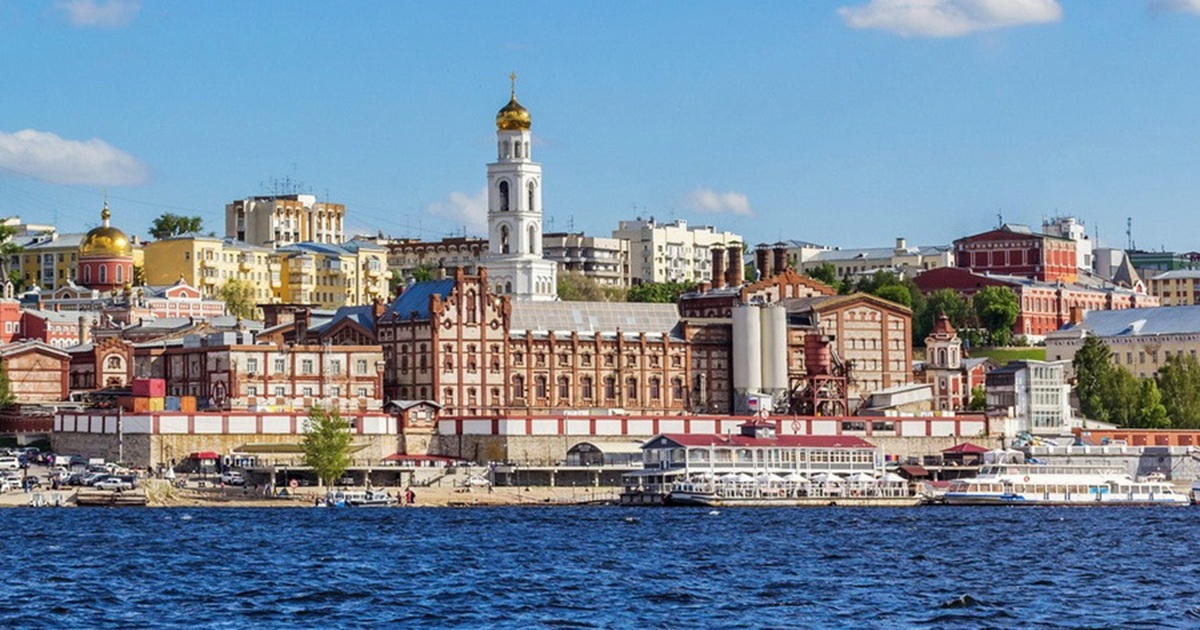
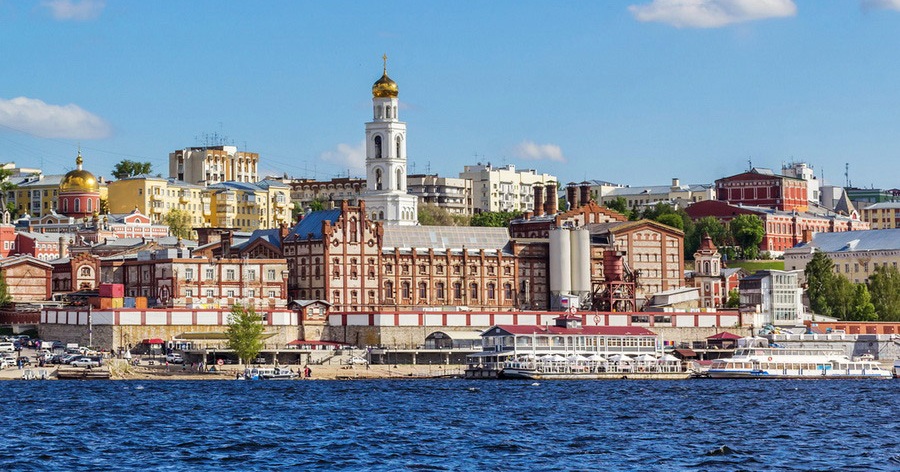
View of Samara from sea

One explanation for Dominic Cummings’ support for Brexit suggests he knew exactly how much damage it would do – and that damaging the UK was the whole point

Samara, Russia: not actually a bad location for a Bond movie.

Dear Dominic Cummings

Why Brexit, Dom? Theory 1: you’re a Nazi

Now that we’re fairly sure your backing of Brexit didn’t come from a far-right place, let’s examine the opposite possibility.

The virtue of this theory is that it’s one of the few that credits you with some intelligence, since it suggests you knew exactly how much damage leaving the EU would do to the UK … and that damaging the UK was the whole point, because you are working for its enemies. (When I say communist, I don’t, of course, mean communist in the sense of believing in shared ownership of the means of production, but in the sense of an ally of the successors of the Soviet Union.)

The drawback is that it sounds silly.

It is, not, however, entirely without basis, so in the interests of thoroughness, let’s go over the evidence that you’re a traitor and a spy.

First, as we’ve established, “patriot” likely isn’t the first word we’d see on your Grindr profile. Unlike Farage and co, you’ve never falsely bragged about how much you love your country, and to be fair to you, your country’s given you few reasons to love it. Bullied at school, ignored at university, a virgin until some time after your child’s third birthday … One of your favourite ways to boost your maverick mythos is to boast how little you care that people don’t like you. Of course, the only people who ever say that are people who’ve never been liked.

You’ve made clear on countless occasions the depth of the contempt in which you hold your fellow Britons, dumbing your referendum campaign down to breast-beating, big numbers and dog whistles, slagging off the “biased liberal media”, universities,  civil servants, judges and experts of all stripes, and even tearing a strip off your nominal allies, calling Boris Johnson “mad” and “a joke”, David Davis “thick as mince”, the European Research Group “useful idiots” and “a tumour that needs to be excised”, and Tory ministers “useful fuckpigs” and “morons”.

Can we really expect someone to act in the best interests of their country when they despise most of its inhabitants?

Second, Oxford and Cambridge universities have famously been fertile espionage recruiting grounds for generations. MI5 and MI6 still yoink a disproportionate number of their spooks from the quads – you and I both know people who had the tap on the shoulder – and the baddies got David Floyd, Jenifer Hart, Bernard Floud, Philby, Maclean and co, and Lord knows how many more whose files aren’t declassified yet.

Third, even though your undergraduate degree was in history, you spent much of your time learning Russian on the side. When I asked you why, you said “for fun”. One of your tutors there was Norman Stone, a radical thinker and an eminently blackmailable violent alcoholic womaniser who was so enamoured with Britain that he spent his twilight years in Turkey.

Fourth, immediately after graduating, you left the UK for an adventure on the balmy shores of … Samara, in south-western Russia, where you supposedly spent three years trying and failing to set up an airline, but supporting evidence for this beyond your own testimony is hard to come by. And what did you do the moment you came home? Throw yourself into the campaign to keep the UK out of the euro – the precursor, in terms of personnel, world-view and methods, to the Brexit campaign.

Fifth, your campaigning methods – and by that I mean the logical fallacies you like to use in your “arguments”: ad hominem, tu quoque, straw men, appeals to emotion, hyperbole, red herrings – are all lifted straight from the Kremlin playbook. If you do curl out a response these posts, I will be exceedingly surprised if it contains anything more than whataboutery and squeals of “liberal bias”.

And sixth, you could barely insert a sheet of tracing paper between your views and Vladimir Putin’s on a range of issues. You’re in complete alignment on the “menace” posed by the EU, the failures of liberalism, and the need for the west to abandon Ukraine. Like your programmer, Norman Stone, you have a soft spot in that leathery carapace for strong, charismatic and ruthless leaders: Sun Tzu, Pericles, Bismarck, Oppenheimer, Steve Jobs. And if you’ve ever said a kind word about NATO, I can’t find it.

When I put most of this to you on Twitter in 2017, you replied, “Don’t be ridiculous.” That’s settled, then!

I grant you, though, that there are counterarguments, the most obvious of which is the timing.

At the height of your Slavic infatuation, glasnost and perestroika were still in full swing. Russia was, if not an ally of the west, safely out of enemy territory. Surely Red Square wouldn’t have been recruiting at a time of reform, reconciliation and hope?

Well. While the immediate threat of thermonuclear armageddon receded in the 90s, for our respective intelligence agencies, the cold war never ended. And when you returned to the UK with your tail between your legs, Putin, who had already set his mind on restoring Russia to its post-WW2 glory days, was only a year away from becoming head of the FSB.

There remains the question of motive. Spies tend to be wooed in three ways: beliefs, bribery and blackmail. We can instantly discount the idea that you palled up with Putin for ideological reasons, since Putin doesn’t have an ideology, unless you count staying in power for as long as possible.

I’m not sure quite how wealthy you are, although that Islington town house is a bit fancy for a drifting fixer and a rentabollocks Spectator hack. But it bears mentioning in passing that Russia has long been famous for its “Kompromat hotels”, where people the Kremlin wanted to control or bring down were enticed into participating in depraved acts, and subsequently shown the tapes.

The main hillock upon which this theory stumbles is that if you were a Russian asset, surely, surely, the UK’s vaunted intelligence services would have raised a flag at some point. This is not, of course, necessarily the case; MIs 5 and 6 are far from infallible and have been compromised more than once. Moreover, while civil servants and senior politicians are thoroughly vetted, Spads (advisers, for those not in the know) such as yourself are subject to much less rigorous background checks.

Still. My faith in HMSS – and my reluctance to believe that I lived adjacent to a John Le Carre villain for a year – are sufficient to give you the benefit of the doubt.

Makes you think, though.

Next time: FOR BRITAIN!

Why Brexit, Dom? Theory 1: you’re a racist

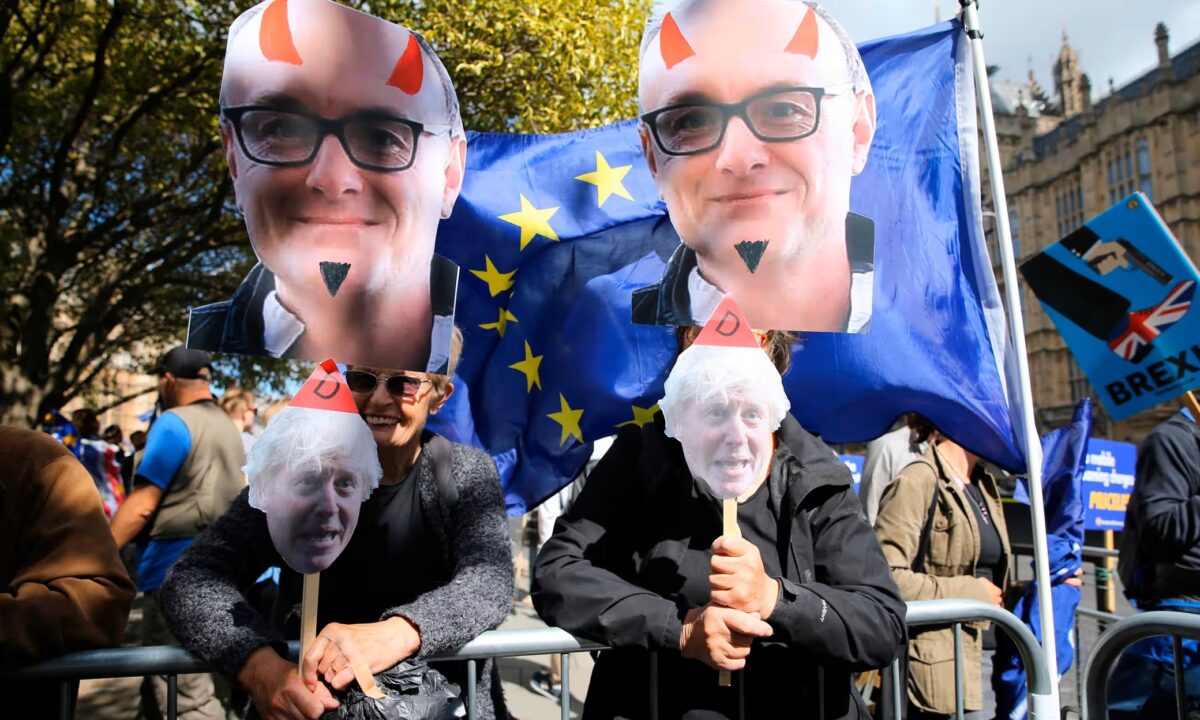
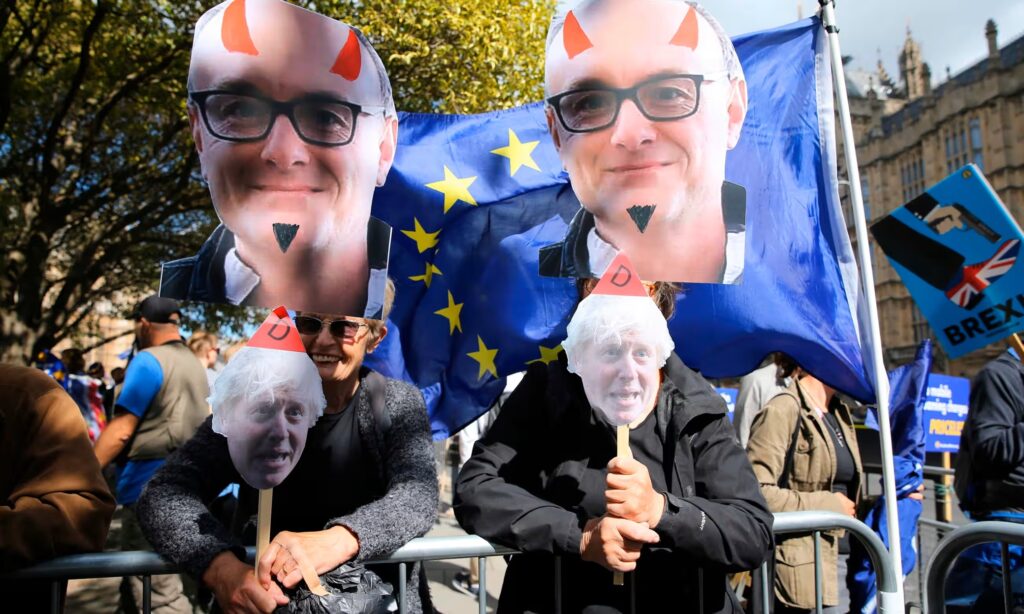
Protesters at a pro-EU rally holding placards with defaced pictures of Dominic Cummings
Protesters at an EU rally holding placards featuring defaced pictures of Dominic Cummings
Have you considered getting some horns? They rather become you.

Dear Dominic Cummings,

I know. It’s not fair to label all Brexit voters and campaigners as racists. For one thing, you bamboozled thousands of curry house owners into backing leave by (very quietly) promising them relaxed immigration rules for workers from Asia. On the other hand, you’d be hard pushed to find a white supremacist who didn’t swing behind it. The question here is whether it was hatred of foreigners that was driving you.

Shame, cos I was quite proud of this one.

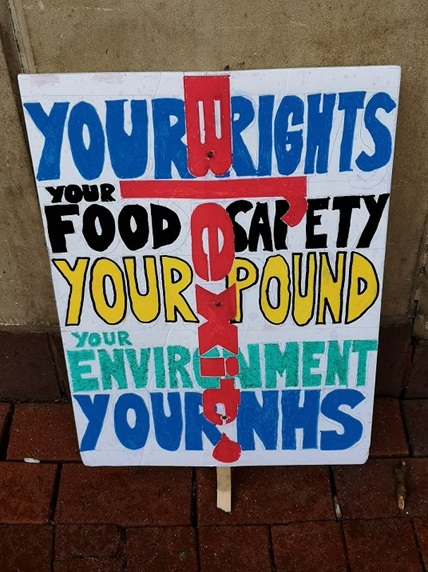
If I’d needed any convincing, by the by, that Brexit was beloved of the far right, the last nine years would have set me straight. I’ve been doxxed, received death threats, and had someone send me a picture of the pub at the end of my street, merely for expressing the view online that the UK might have been better off staying in the European Union. And last time I went on a pro-EU march, a band of Brexit thugs outside Westminster tube station physically attacked me and snapped my placard in two.

I’ll save us time and take it as read that you condemn such behaviour in the strongest possible terms, while taking care to note that those individuals are a tiny minority and not representative of the leave movement as a whole, yada yada.

In our university days, I never got any overtly Ku Klux Klan vibes from you, although Oxford at the time was whiter than a No 10 staffer’s septum and since you never left your room, I never saw you interact with anyone but me.

But people can change, and Oxford is perfectly capable of producing fascists, as attested by the story of another of our Exeter College contemporaries, who attained the giddy depths of leader of Ukip for a few seconds in 2019.

So let’s look at your more recent form.

The Leave campaign was a many-headed beast, but by far the two biggest heads were your bunch, Vote Leave, and Banks and Farage’s Leave.EU. While you were at pains to point out that there was no cooperation between your groups, somehow, your attack lines somehow dovetailed beautifully.

Leave.EU took the low road, spreading egregious falsehoods and obsessively shrieking “immigration”, appealing to people’s lizard brains, their base emotions. Your Vote Leave, meanwhile, took a semi-respectable, pseudo-intellectual approach, avoiding outright deception in favour of half-truths, exaggerations and cherry-picked data.

Ah. Two classic pieces by the Bruegel of Bullshit, Darren Grimes of BeLeave.

Leave.EU’s manure fuelled the motivation – racism – but it was your seemingly rational arguments that gave the shit a patina of legitimacy. So millions of people were free to vote with their gut safe in the knowledge that they could justify it to themselves and others with impressive-sounding but meaningless stats and equally meaningless abstract concepts like “sovereignty”.  The bald fact is, you’d never have got over the line without them, nor they without you.

Still. Let’s put that down to coincidence. Because as well as publicly distancing yourself from Banks and co during the referendum campaign, you’ve repeatedly complained since that one of the EU’s problems is its failure to deal with the rise of the far right. You even once expressed the hope that Brexit would permanently eliminate Farage and his ilk from UK politics.

“The EU … [has ] got this combination of free movement, can’t cope with Islamic nutjobs and growing political extremist parties” – Dominic Cummings, 2017

And then, a few months ago, you were sitting down for a cosy chat with the fascist fag-frog. Can you perhaps understand why I’m scratching my head now?

For all that, I’m fairly sure that you, as an educated man, don’t subscribe to the belief that white people are genetically superior to black or brown ones. I’m also sure that you, as a devotee of data, know very well that immigrants are net contributors to the economy; that they are twice as likely as native Britons to set up their own business; that only a small minority of immigrants are terrorists or rapists or scroungers and the crime rate among immigrants is no worse than among the native-born; that the great majority of asylum claims are found to be valid; that the only reason some are a temporary drain on state coffers is because successive UK governments pandering to their perceived xenophobic base have deliberately created an abstruse and arduous asylum process and that the state forbids them from working for a year (compared with six months, for example, in Germany); that much of Britain’s historic wealth and influence was built on immigrant labour and technical skill (as well as on slavery, which is just immigration minus the letting-them-in part); and that in future, without significant levels of inflow, the UK’s population, and therefore growth, will collapse.

I’m sure you also figured out at some point that you can’t just click your fingers and get all of Britain’s young, sick, or recently retired people to fill in for the jobs that immigrants currently do.

You might even admit under light torture that the “problem” with immigration is not the reality of the thing – most people who’ve met immigrants hold no fear of them – but its perception, which has been shaped for years by the Daily Mail, the Spectator, Tommy Robinson, Farage, and, well, you.

You have been vocal in recent years about the EU’s inability to reduce immigrant numbers. (Though if this were a genuine worry of yours, one would think you’d prefer the UK to be on the inside, since even though we take in fewer souls than almost any other country, it’s just as much our concern as the other 27 states’, and it might be useful to have access to Europol, Frontex, the Schengen Information System and the European Arrest Warrant.)

Perhaps, though, you’re not a full-blooded racist, but merely a patriot: a believer in sovereignty and self-determination.

But here again, I can’t imagine that you, a self-professed philosopher king, haven’t twigged that membership of an economic bloc – impossible without some shared standards and values – involves surrendering a barely measurable fraction of national sovereignty in return for enormous benefits to commerce and culture and opportunities for its citizens. It’s a trade-off that 27 other advanced, wealthy countries have been more than happy to make.

I’m sure you’re also aware that Brussels never really dictated anything to the UK, because the UK was a full and equal partner in all decisions (some would say, thanks to the concessions won by Margaret Thatcher’s bullying, a more than equal partner). Indeed, many of the most unpopular laws “inflicted on” Britain, such as the measures to promote energy-efficient lightbulbs, were British proposals.

And if, as I will discuss in a future post, you hoped one of the bonuses of Brexit would be closer alignment with (ie subservience to) the US, can the notion of sovereignty really be so precious to you?

All of which leads me to near certainty that you, as a literate and numerate man, will have known full well that leaving the EU would do nothing to alleviate the immigrant crisis, so there’s no way you’d have inflicted such deep and lasting damage on Britain’s economy, its relations with its allies, and its global soft power, for that reason.

On balance, then, I’ll grant you the benefit of the doubt and conclude that racism was not your chief motivation for Brexit. While taking care to note that you collaborated with racists, used methods favoured by racists to win the hearts of racists, caused a massive rise in racially motivated attacks, and handed more political power to racists than they could have dreamed of 20 years ago.

Next time: did you back Brexit because you’re a communist?

2 thoughts on “Why Brexit, Dom? Theory 1: you’re a racist”

  1. Comment: The text provides a stark reflection on the divisive nature of Brexit and its impact on individuals. It highlights the extreme reactions some face for expressing pro-EU views, which is deeply concerning. The distinction between the tactics of Vote Leave and Leave.EU is well-articulated, shedding light on the different approaches taken by these groups. It’s intriguing to consider how these strategies influenced public opinion and the referendum outcome. Question: How do you reconcile the long-term societal impacts of these divisive campaign tactics with the broader goals of democracy and unity?

  2. The continued polarization surrounding Brexit highlights the deep divisions it has caused within society. The author’s personal experiences with harassment and violence for expressing pro-EU views are deeply troubling and indicative of a broader issue. The distinction between the strategies of Vote Leave and Leave.EU underscores the complexity of the campaign, blending pseudo-intellectualism with emotional manipulation. Despite the differences in approach, the shared goal of both groups raises questions about the ethics of their methods. Do you believe the Brexit campaign could have been conducted in a way that avoided such divisive and harmful tactics?

Comments are closed.

Dear Dominic Cummings

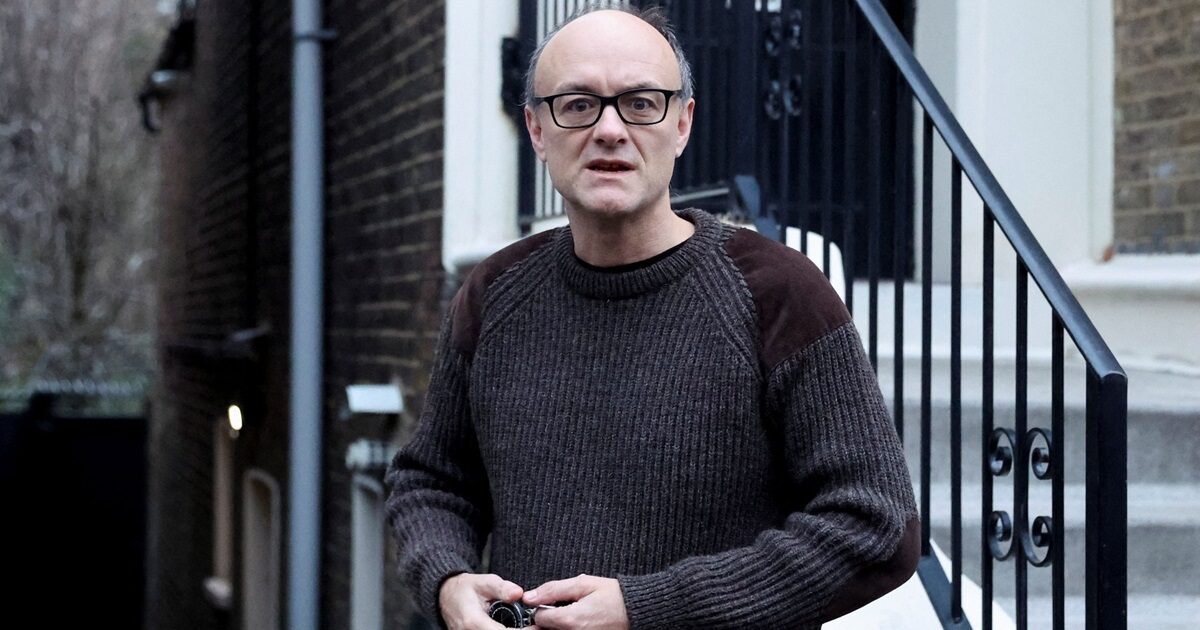
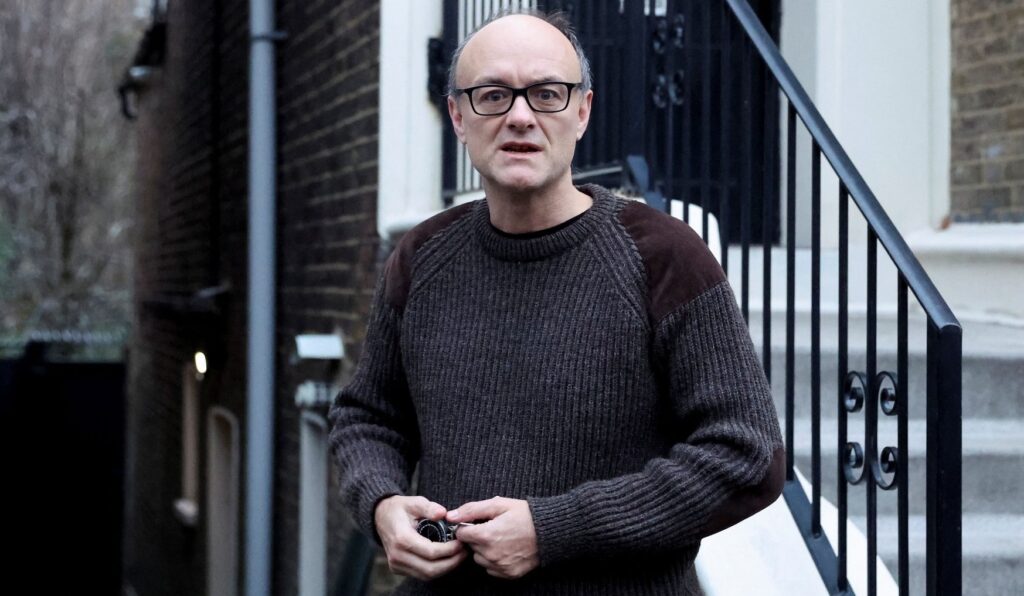
Dominic Cummings looking surprised and old outside his enormous Islington townhouse in 2022
‘Humanity has produced few true visionaries. But it’s produced plenty of arseholes who thought they were visionaries.’ Photograph: Hannah McKay/Reuters

Andy Bodle here. Remember me?

It would be wrong to say we were close at university, except in the strictly geometric sense. You were my neighbour on Staircase 9 in Exeter College in 1991/2 – my fourth year, your first. We didn’t hang out much, because you didn’t really hang out with anyone, but on the occasional Sundays you would invite me into your room for a glass of port and a game of chess. I think I managed a draw with you once.

But as this was the extent of our social interaction, we didn’t exchange details when I graduated, and we lost touch.

So it came as quite a pleasant surprise when, about 14 years ago, you turned up in my office as the guest speaker at our morning meeting (I believe you were an adviser to Michael Gove as education secretary at the time). We exchanged brief pleasantries and I think we might even have mooted meeting for a drink one day. We didn’t.

It was a rather less pleasant surprise when, four years after that, you appeared again, at the forefront of the insane clown posse that was Vote Leave, the official campaign group advocating the UK’s exit from the European Union. And to widespread surprise, you won.

In case you hadn’t guessed, that’s why I’m reaching out after all this time.

Initially, I was angry – very, very angry, to the point that I found out where you lived with the firm intention of knocking on your door and punching you in the face. Nine years on, I’m still extremely angry – because my life is no less ruined by Brexit, and the nation no less fucked – but since it’s neither healthy nor physiologically possible to sustain that level of hatred for more than a few years, I’ve now calmed down enough to address you with what I hope is some measure of restraint.

So here’s my question. Why? Why were you so determined to drag the UK out of the EU?

Millions of businesses, millions of livelihoods, hundreds of thousands of relationships, 4% of GDP, the fishing industry, the NHS, social care, UK farming, household budgets, Jo Cox, Makram Ali, Duncan Keating, Arek Jozwik, the freedom of movement of 68 million people across 30 countries, were all acceptable casualties in the pursuit of what, exactly?

For most of the Brexit cabal, the answer is not hard to fathom. They’re racists, they’re nostalgia-driven Thatcher loyalists, they’re business leaders looking to slash costs by slashing workers’ rights, they’re grifters, they’re short sellers, they’re Hayek/Friedman free-market loons, they’re idiots.

You, though, as far as I’ve been able to ascertain, are none of the above. You have no employees to strip rights from, no CEO bonus to swell, no colossal hedge fund likely to be further inflated by relaxed regulations, no willingness to spout populist bollocks born of a burning desire to be in the public eye, and your college room was relatively light on Nazi memorabilia.

You have offered us a few nuggets over the years, most notably the arguments you put on buses and full-page newspaper adverts – £350m a week for the NHS, Turkey joining, etc – but as half of us knew then and most of us know now, they were bullshit.

There have also been some possible pointers in your public statements, usually in evidence to various parliamentary committees, and I’ll touch on those as they come up, but none of them really stand up to any sort of scrutiny either.

There’s probably something buried in one of your interminable screeds on Substack, but first, I don’t have enough time left on this earth to be trawling through a quintillion words of vicious, poorly structured, self-aggrandizing jabber, and second, I don’t see why I or anyone else should have to find out why you made us poorer by parting with yet more cash.

So I wondered if, as a courtesy to an old acquaintance, whether you might for once in your life, with minimal evasion, divagation and tu quoque, provide a succinct and direct answer to my question?

I realise that a life spent on the extreme fringe of rightwing politics, in the company of (by your own admission) charlatans, fools and professional propagandists, will have caused irreparable damage to your relationship with the truth. But for once in your life, Dom, please try to include at least a smattering of it in your reply. Because I really, really want to know why you did this.

One of your guiding principles seems to be that the end justifies the means; that any amount of collateral damage is acceptable in pursuit of your goals; that you can’t make an omelette without breaking eggs. Which raises the question: how fucking big and delicious is this omelette to merit the violent destruction of so many millions of eggs? And where the fuck is it?*

This was originally intended to be a single blogpost, but I don’t believe modern attention spans will relish everything I have to say at once.

So over the coming weeks, I’ll list, in more or less reverse order, all the explanations I’ve been able to conceive of: the ideological, the cultural, the economic, the personal. Some are more plausible than others, but literally none of them, as far as I can tell, seems valid enough to justify the massive historic damage you’ve inflicted on your country.

*Sorry. I did warn you there was still some residual anger. But courtesy and diplomacy have never really been your thing anyway, have they?

Next time: did you back Brexit because you’re a Nazi?

1 thought on “Dear Dominic Cummings”

  1. Great post. Although I am even less connected to Dom (staircase 11 and never invited for chess) I am just as interested in whether he has any coherent answers to the questions you raise in (as always) such an entertaining manner. Look forward to both your next installment and, heaven forbid, maybe a response!?

Comments are closed.

‘With’ is not a fucking conjunction

Frustrated woman looking at laptop

In journalistic writing, ‘with’ is threatening to become the only connector in town. Whatever happened to good old ‘and’?

Photograph: Andrea Piacquadio

Every pedant has a pet hate. Whether it’s Oxford commas, Americanisms, lost participles or absent apostrophes, every armchair grammarian has one particular slip that grinds their gears. Several leagues clear at the top of my shit list is “with”.

Firefighters are battling to contain a massive blaze moving “like lightning” on the outskirts of Athens, with authorities evacuating people from towns, villages and hospitals as flames rip through trees, homes and cars.

OK, you say, it might not be exactly how I would have phrased it, but it hardly merits a pop-eyed 2,000-word blog post. Does it?

Well, let’s take a look at what’s going on here. The writer of the offending passage is trying to convey two pieces of information in one sentence. One, that firefighters are tackling a serious wildfire near Athens; two, that people have been evacuated from the area. So they’ve written two separate clauses, and joined them. With “with”.

Now English has a class of words designed to perform exactly this function. They’re called conjunctions. You know: “and”, “but”, “when”, “because”, and all those other linking words. My problem is that “with” does not fucking number among them.

In any dictionary you care to check, “with” is listed as a preposition: a word that shows direction, location, or time, or some similar figurative sense. Off my rocker. Up the wall. At my wits’ end. Even when erroneously pressed into service as above, with is still a preposition. You can tell because it still wants to behave like one.

The Austrians urged their EU counterparts to continue the effort to stamp out the tragedy in the Mediterranean, with more than 2,000 people suffocating or drowning last year.

While conjunctions will happily segue into full clauses (I read the paper and my jaw dropped), prepositions can only take nouns* as an object. That’s why the verbs in the sentences above suddenly have -ing at the end: the writer has, probably without realising, had to turn “suffocate” and “drown” into participles — verbs that act as adjectives by modifying the preceding noun — in order to meet the grammatical demands of “with”.

(*Technically noun phrases, but now is not the time to get bogged down in technicallies.)

Even so, my imagined detractors cry, this is hardly the most heinous of crimes. Why should we care?

For five reasons.

1) Eww

Rowley became commissioner in September 2022, having retired in 2018 after a career in several forces, with him first joining the Met in 2011 as an assistant commissioner.

This reporter has tried to squeeze three pieces of related information into one sentence, which is a perfectly respectable and achievable aim, but sheesh, couldn’t they have done so with a little panache?

As well as the usual grammatical contortions, they’ve ended up with three different verb forms and had to refer to the subject twice in the space of a few words (“Rowley” and “him”). Wouldn’t something like this be simpler and clearer?

Rowley became commissioner in September 2022, having joined the Met in 2011 as assistant commissioner, served in several forces, and retired in 2018.

2) Huh?

The prime minister has already pledged to establish closer ties with the EU, with the new minister for European relations, Nick Thomas-Symonds, travelling to Brussels for an introductory meeting with Brexit negotiator Maros Sefcovic on Monday.

This article was published on a Friday. The grammatical whims of “with” have denied us some important information: the tense of the subordinate clause. Did Thomas-Symonds go to Brussels last Monday, or is he going next Monday?

> Following the prime minister’s pledge to establish closer ties with the EU, the new minister for European relations, Nick Thomas-Symonds, will travel to Brussels for an introductory meeting with Brexit negotiator Maros Sefcovic on Monday.

3) Shrug

Holly Willoughby leaves ITV with questions to answer over Phillip Schofield lying

Hold on. Does Holly Willoughby have questions to answer? Does ITV? Or are these questions anyone can take? Has some action by Holly Willoughby led to questions being asked of ITV? A year later, I’m still not 100% sure what this Sunday Times headline was getting at.

With is a busy little word bee. Even though it’s only a preposition and not a fucking conjunction, it’s the 15th most commonly used word in the English language (according to the Oxford English Corpus) and the OED lists 96 separate meanings for it.

These myriad functions are already a common cause of confusion; consider the sentence “I shot with the man with the gun”, and why this regular column in the Guardian is the only one that has a comma.

With is already buckling under the strain of its multiple duties. Surely it makes no sense to add to them?

4) Grrr

One of the oddest things about this linguistic oddity is that it’s almost entirely unique to journalists. Barring a few instances that have leaked into the real world, you’ll never find “with” moonlighting as a conjunction in novels or poems or everyday speech.

There’s a word for language that’s unique to one class of people: jargon. Jargon marks out a group as special and, whether intentionally or not, alienates non-members. Which is fine when that group are specialists, like engineers or soldiers or gamers, talking mostly among themselves.

But journalism is all about conveying information to the wider world. It should be intelligible to as many people as possible. To use forms that are alien to the reader is to throw up walls in an arena that should be wall-less.

(The phenomenon may, incidentally, have been born from good intentions. Because the best reporting is neutral, eschewing value judgments, loaded terms and assumptions of guilt and causation, and because exact sequences of events are not always immediately known, it’s not always appropriate to use more specific connectors like “because” or “after”. This leaves us with bland old “and”, which can quickly become repetitive.)

5) Aaarrrrgghhhhh

If “with” was occasionally being wheeled out in an innocuous attempt to stave off monotony, then yes, I’d still be swearing, just not publicly.

But it’s everywhere. You’ll struggle to find a news (or especially business or media) story without at least one conscripted “with”. While subediting, I’ve come across as many as three in one paragraph. Sometimes it feels as if “and” has become an ex-conjunction.

Fortunately, other connectors are available.

Sometimes the meaningful conjunctions, like when, because or amid, are perfectly fine. Sometimes a pronoun like “which” or “who” will do the trick. Simply dropping the “with” and running with the participial form is another option, as are semicolons and full stops.

There will no doubt be some diehard descriptivists out there who can reel off a string of sentences by giants of literature using “with” as a fucking conjunction. All I have to say to you is: they could have done better.

Here are some examples I’ve come across in recent years, and suggested improvements.

The rear door of a restaurant in Ormeau Road was also kicked in, with racial slurs shouted at the workers inside.

> The rear door of a restaurant in Ormeau Road was also kicked in, and racial slurs were shouted at the workers inside.

As of Saturday, 779 people had been arrested in connection with the riots, with 349 of those charged, according to the National Police Chiefs’ Council.

> As of Saturday, 779 people had been arrested in connection with the riots, 349 of whom had been charged, according to the National Police Chiefs’ Council.

The tone was set by Boris Johnson, with the British prime minister opening the Cop26 talks with a stark warning …

Oh, come on.

> The tone was set by Boris Johnson, who opened the Cop26 talks with a stark warning …

The left-back was a free agent after leaving Tottenham, with the north Londoners having paid around £25m to buy him from Fulham in 2019.

> The left-back was a free agent after leaving Tottenham, who had paid Fulham around £25m for him in 2019.

ONS data showed a strong performance in the second quarter, with the service sector helping drive growth.

> ONS data showed a strong performance in the second quarter, driven partly by the service sector.

The EPC is designed to facilitate the strengthening of ties between EU and non-EU leaders in an informal setting, with previous conferences held in Spain, Moldova and the Czech Republic.

> The EPC, which has previously held conferences in Spain, Moldova and the Czech Republic, is designed to facilitate the strengthening of ties between EU and non-EU leaders in an informal setting.

With brands the driving force behind the industry’s growth, they account for £1bn of sales and 2.5bn bottles.

> Brands are the driving force behind the industry’s growth, accounting for £1bn of sales and 2.5bn bottles.

Sales of no- and low-alcohol beer are seeing a summer surge, with brewers boosting production to meet growing demand.

> Brewers are boosting production of no- and low-alcohol beer after a summer surge in sales.

Freer’s comments come 10 years after the Marriage (Same Sex Couples) Act achieved royal assent on 17 July 2013, allowing same-sex couples to marry and convert civil partnerships into marriage, with Freer converting his civil partnership with Angelo Crolla to marriage in 2015.

> Freer’s comments come 10 years after the Marriage Act, which allows same-sex couples to marry and convert civil partnerships into marriage, achieved royal assent on 17 July 2013. Freer converted his civil partnership with Angelo Crolla to marriage in 2015.

Ministers have said they want to tighten the law on glorifying terrorism, with the conduct of a minority of people on the pro-Palestine demonstrations in recent weeks, including the chanting of the controversial slogan “From the river to the sea, Palestine will be free”, prompted pledges of change.

(Here, it’s been so long since “with” wrote its unwieldy grammar cheque, the reporter’s forgotten to cash it.)

> Ministers have said they want to tighten the law on glorifying terrorism, a pledge prompted by the conduct of a minority of people …

The typical London rent also hit a new high of £2,633, with average costs in the capital now 5.3% higher than 12 months earlier.

The cack-handed use of “with” here has forced the writer to use not just London and a synonym for London in the same sentence, but also typical rent and a synonym for typical rent! Isn’t “Average London rents hit a new high of £2,600, 5.3% higher than 12 months earlier” less annoying to read?

A desert planet is also featured prominently, with comparisons between Tattooine and Arrakis able to be drawn thanks to their basic geography.

> Tattooine and Arrakis are both desert planets.

The majority of reviewers gave Dune: Part Two a 10-star rating, with only five reviews ranking it below five stars, with many complimenting its blend of “visual splendor and narrative depth.”

> I’m actually shaking too much to attempt this one.

The cost of borrowing has soared in the past two years with retail businesses finding it particularly difficult to raise debt amid concerns about consumer spending amid a surge in the cost of essentials such as food and energy bills.

> [bleep] [bleep] [bleep] [bleep] [bleeeeeeeeeeep]

The mountainness of this molehill is not so much that “with” as a clause connector is flat out wrong and should never be allowed — although it is, and it shouldn’t, because it’s not a fucking conjunction — but that it’s clumsy and lazy and vague, that it’s already doing more than its fair share of jobs in English, and that there are countless ways of producing the same effect with none of these drawbacks.

Language changes! some will say. Keep up, you old duffer! Well, yes, it does, but the changes that stick are generally for the better, offering some nuance or functionality that wasn’t there before. This one blows from every angle.

Journalists: dispense with ‘with’ with immediate effect

The number of people obtaining their news from decent news sites is falling off a cliff. Moreover, their visits are getting shorter; the average time spent reading a news article on the Guardian website (and, I’m sure, on all the others) is less than a minute.

The reasons mooted for this include increased competition and dwindling attention spans driven by instant-gratification culture. But I propose a further cause: a drop in quality.

To an extent, this was bound to happen. Newspapers have far fewer resources than they used to, having lost much of their advertising revenue to the internet, and the all-consuming need for speed means there’s less time for primping. But lazy, confusing, repetitive, cut-and-paste prose is not the magic bullet that will bring the readers swarming back.

Statistricks, part 5: the remainder

“Statistical thinking will one day be as necessary for efficient citizenship as the ability to read and write” – Samuel S Wilks, 1951

Authority figures can no longer be trusted to tell the truth. And since most of the news media is now in the hands of private owners with conspicuous agendas, and the few remaining outlets with a shred of integrity are running on fumes, journalists can no longer be relied upon to catch those authority figures out.

Which means there’s really only one gatekeeper left to protect you from disinformation: you.

The lies we’re most familiar with – and therefore the best at seeing through – are the verbal kind: sequences of words that bend, break or obfuscate the truth. But as I hope my last few posts have illustrated, those who wish to mislead us are just as adept at manipulating sequences of numbers, and it turns out we’re not half as good at spotting that.

This is a problem. And since these lies have real, measurable impact (if they didn’t, no one would bother lying), it’s your problem.

No one’s asking you to sign up for a master’s in statistics. You just need to know enough to be able to spot the red flags. So my last post on this subject will be a recap of my previous warnings on the subject, plus a wee list of other common examples of statistical chicanery.

Beware big numbers

We can all easily imagine what 10 items looks like. With a bit of effort, 100. And most of us can probably conjure a vague picture of 1,000 things. But when it comes to millions and billions and trillions, our mental gearboxes just seize up. This is what the propagandists are counting on.

The example I chose, because it is arguably one of the best known and certainly one of the most damaging, was the “£350m a week” claim by the Brexit campaign.

The Remainers were quick, ish, to point out the falsehood. But the battle was already lost. People were no less outraged by the true figure of £150m a week, because all that mattered was that it was a bafflingly large amount.

Big numbers in isolation are meaningless to the average person. To get an idea of their true significance, we need context: in this case, the cost of things of a comparable scale, like, say, the NHS budget (£2bn a week), or defence spending (£1bn a week). Most of all, we needs to know exactly what that money bought. Sure, EU membership cost a lot of money, but did it offer value for that money?

Since its wildly successful field test in the Brexit debate, this tactic is deployed on a daily basis. Whenever something within state competence is revealed as being even slightly less than ideal, the response from the state press officers is the same: trot out a big number.

“A spokesperson for the DfE said education was a top priority for the government, with an extra £2bn for schools for each of the next two years included in the autumn statement.”

Ooh, two billion! That’s a lot! Everything must be fine then.

But without the proper context, this means nothing. An extra £2bn on top of what? Was the annual increase in base funding, if it existed at all, in line with inflation? How does the total compare with the funding levels last year, or 10 years ago? How much is being spent per pupil, and how does this compare with other countries’ efforts? Most importantly of all, is this money enough to meet the current needs of the education system?

To sum up, don’t let your brain switch off when it sees big numbers. If anything, it should move to high alert.

Be on your guard against glitter

Advertisers have long made liberal use of “glitter” – words or phrases that make things sound superficially attractive, but are devoid of substance. Two of the more popular zingers are “more than” and “over”. I once saw a billboard ad for a breakfast cereal that proudly proclaimed: “Contains more than 12 vitamins!”

The reason this works (on the unwary, anyway) is the anchoring effect: the tendency of the human brain to evaluate everything with reference to the first value it encounters. In this case, the anchor value is 12, and “more than 12” signals the set of all numbers greater than 12 – loads! – when a moment’s reflection will tell us that the true figure is 13.

Now it seems politicians and journalists have learned a trick or two from copywriters, and no figure is deemed complete unless it comes with a side of comparatives or superlatives.

Recently, in the course of my subediting duties, I happened across an (unedited) article containing the line “the family were awarded over £8,129 11s 5d in reparation”. My God! Are you telling me those lucky sods received compensation of 8,129 pounds, 11 shillings and six pence?

Another word that sounds great but never survives scrutiny is “record”.

“That is why, despite facing challenging economic circumstances, we are investing a record amount in our schools and colleges.”

Well, Department for Education, I should hope you were investing a record amount every year, given that the population rises every year and that inflation is a thing.

One of the truth-twisters’ favourite buzzwords in the early days of Brexit was “fastest-growing”. Never mind those tired old European countries; we’re going to concentrate on trading with countries that actually have a future!

Here again, crucial context is missing, and the context is that these wonderful new trading partners are growing so fast because they’re starting from a much lower base. As even one prominent Brexit advocate once admitted (about a year before it became their favourite go-to gotcha), the real meaning of “fastest-growing” is “tiny”.

“Of course, if you start from nothing, it’s not hard to become the ‘fastest-growing’ campaign” – Isabel Oakeshott, 20/11/2015

Look at the IMF’s predictions for 2024.

The top five performers on this metric are Guyana (GDP $15bn), Macao ($24bn), Palau ($233m), Niger ($15bn) and Senegal ($28bn).

The GDP of the EU (even without the UK that it desperately needed to survive) is $17.2 TRILLION. That’s more than 200 times the GDP of those five countries combined. Not to mention that they’re all a lot closer and they make a lot more things that British people actually want to buy. Who is it more important to have barrier-free trade with?

Reporters and politicians are still making this same blunder today (“Next PM likely to inherit improved economy after UK growth revised up”).

If this were a sustained trend, it might tell us something significant. But the period over which the data was measured is three months. This is more likely just a course correction after a rough patch for the UK economy than a sign of sunlit uplands. At the very least, we should wait a while before leaping to any conclusions.

Be vigilant with visuals

Graphical representations of information – data visualisations, or datavis – are useful ways of communicating a lot of information quickly. And because creating them requires a modicum of expertise, they are often deployed as gotchas: “Quiver, mortal, as I blow your puny argument out of the water with my BAR CHART!”

The trouble is, in the wrong hands, datavis is as susceptible to abuse as any other mode of expression.

Be sceptical of surveys

Polling firms are businesses. Businesses serve the needs of customers. And customers have political, or commercial interests, which do not necessarily align with yours, or society’s. (Moreover, it seems an increasing number of polling firms have agendas of their own.)

Pollsters regularly use samples that are too small, fail to publish their methodology, and use daft or leading questions. Even broadly decent organisations like the WHO are not above such silliness.

One of the questions in the survey was “Have you ever tried alcohol?” 57% of 15-year-olds in the UK said they had. The WHO then quoted this answer, in the press release (which is all most time-strapped journalists ever read), under the heading “Alcohol use widespread”.

Suddenly, sipping a shandy once on a family visit to a pub garden is lumped in together with downing a bottle of Jack Daniel’s a day. Furthermore, we have no way of knowing whether these answers were completely honest. How many British 15-year-olds would be embarrassed to admit they’d never tried booze?

Polls can be tools to shape opinion as much as reflect it, first because they can influence government policies, and second because waverers in the general populace can be won over to what they perceive to be the majority view.

I could caution you to be wary of surveys that aren’t upfront about their methodology, surveys with a small sample size, surveys conducted by firms with murky political connections, or surveys whose funding is not declared. But to keep things simple: ignore polls.

Are those figures really significant?

Something else that should set the alarm bells ringing, along with big numbers, is long strings of numbers, as seen in this article.

“The data released on Monday, from the Chinese ministry of public security, showed the number of new birth registrations in 2020 was 10.035 million, compared with 11.8 million in 2019.”

The second figure in this sentence is expressed with three significant figures: 1, 1, 8. So why is the first given to five significant figures? Did data collection methods become a thousand times more reliable in a year?

Most sums bandied around in the public domain – especially those derived from polls, but also anything involving average values, like fuel prices, which are also estimated using samples– are only approximations to begin with. That is, the true value may deviate from the estimated value by 1% or more.

Say 78.5% of 1,000 people surveyed think Dominic Cummings is a giant Gollum-faced twat, and about a third of those want to punch him in his stupid Gollum face. A sizeable proportion of reporters these days would whip out their calculators and proudly conclude that 26.1666666% of all people want to assault Specsavers Boy. While that’s mathematically precise, it’s not accurate (it can’t be, unless there’s a fraction of a person out there somewhere who wants to lay Cummings out). To say anything beyond 26% is meaningless and misleading.

Similarly, if you’re performing an operation on a quantity that’s already been rounded, then it’s senseless to use more significant figures for the result.

“A slew of commercial and critical hits, including The Super Mario Bros Movie, which made $1.36bn (£1.094bn) at the global box office, has led to market experts comparing them to Marvel adaptations.”

Long strings of numbers are invariably a sign of false precision. If a politician, journalist or broadcaster is being hyper-precise with their figures in this way, they’re not necessarily consciously lying to you. But they are conveying an important truth: while they may know how to to type numbers on a keypad, and even use basic mathematical operations, they haven’t a clue how statistics works, and therefore can’t be trusted to properly understand, verify or convey the information they’ve been given.

On a related point, thanks to the uncertainty inherent in big data, running news stories about a “rise” or “fall” in something when the change is infinitesimal is just. Plain. Wrong.

In January 2018, the BBC published an article claiming that unemployment in the UK had fallen by 3,000 to 1.44 million.

That’s a whopping drop of 0.2%. But there’s no way there isn’t at least 0.5% room for error in these figures – so it may well be the case that unemployment has risen slightly. What you’re looking at here is not a news story; it’s a rubber-stamped government press release.

Why aggregates don’t add up

A few years ago, a newspaper I worked for (rightly) banned the practice of adding together jail sentences in the headlines of articles on court cases with multiple defendants. You know the sort of thing: “Members of Rochdale paedophile ring sentenced to total of 440 years”. The reasoning was that it was a) sensationalist and b) meaningless.

Because, uh, how many people were involved? (Sure, you could work it out by reading the article, but that’s an extravagance that fewer and fewer people seem to willing to stretch to.) Moreover, how do those numbers break down? If 48 people were involved, did four get put away for 55 years, and the other 44 for five? Or was the punishment more evenly spread, and they got just over nine years each?

Similar practices, however, still abound in other areas.

“UK homeowners face £19bn rise in mortgage costs as fixed-rate deals expire”

Wow, that’s going to put a dent in the holiday fund! Oh wait, they mean all UK mortgagors combined. But … context. How many people even have mortgages in the UK?

Recent figures suggest about 15.5 million homes in England and Wales are occupied by their owners, of which just under half are mortgaged. (There are separate figures for Scotland and Northern Ireland, but they’re relatively small and for our current purposes can be disregarded.) That means on average, mortgage payments would rise by about £2,600 per year per household, or £217 a month. Woop. That’s how much my rent just went up by.

A deeper dive into the figures reveals that fewer than a million households were facing monthly rises of £500 or more by 2026. Not half as sexy as the £19bn figure (and certainly not deserving of the lead slot on the front page of a global news provider), but twice as informative.

Unhappy mediums

People toss the word “average” around a lot, but as you may dimly recall from your schooldays, in the mathematical sphere, there are three distinct types: the mean, the median, and the mode. While they often give similar results, there’s sometimes significant divergence, and one kind of average is often more useful than another.

Take wages. Using the mean on a given group of people (adding up all the salaries and dividing that figure by the number of subjects) isn’t always terribly informative, because if the variance in wages is high, extreme figures skew the picture. Let’s say you have 10 people: two earn £10,000 a year, seven earn £20,000 a year, and one earns £200,000 a year. Calculating the mean would give you ((2 x £10,000) + (7 x £20,000) + (1 x £200,000))/10 = £36,000, which is a million miles from what any of the participants actually earn. The median, however – the figure in the middle if you line them up from smallest to largest – gives you £20,000, which is a much better reflection of the situation. (The mode – the figure that occurs most frequently – in this case gives the same result.)

So it’s vital to know, when someone is talking about averages, which kind they median.

Pushing your panic buttons

Barely a week goes by without the Daily Mail’s health pages shrieking about the latest thing that gives you cancer. They’re usually drawing on a “landmark report” – that is, a press release from a no-mark university – and they’re almost always lying with numbers.

The headline “Eating bacon increases your chances of getting cancer by 18%” is quite alarming, but remember, this is a relative risk, compared with the chances of someone who doesn’t eat bacon. It turns out that the absolute probability of succumbing to cancer among non-bacon eaters is pretty low – about six in 100 will get bowel cancer in their lifetimes – so an 18% increase on that doesn’t actually represent that big a jump. The unimaginable will strike only seven in 100 bacon eaters.

(There’s a fab and doubtless far from complete list of everything the Daily Mail says can give you cancer here, although the links are a bit screwy.)

Proportional misrepresentation

Some news organisations have improved their efforts in this department lately, but it’s a pit they still fall into depressingly often.

Before it was spotted and corrected, an article published in 2021 about the impact of Covid on education said: “While there was an across-the-board fall of a fifth in the proportion of children working at a level consistent with their age, those pupils in year 1 in 2019-20 appear to have suffered the most significant losses … 81% of year 1 pupils achieved age-related expectations in March 2020 … by the summer of 2020, this had dropped to 60%.”

The reporter is starting from the wrong baseline. The actual numbers are irrelevant, but for the sake of argument, let’s say there were 100 kids. If 81% of them (ie 81 kids) met the requirements in March and only 60% in June, that’s a fall of 21 percentage points, not 21 per cent. Comparing the new figure with the baseline, 81, gives a drop of a quarter rather than a fifth.

If you lack confidence in your ability to check percentages, use an online percentage checker, like this one: https://percentagecalculator.net/

Unusual? Suspect

I’m singling out the Mirror here, but virtually all the major news outlets reported this story in the same uncritical fashion. “The Royal National Lifeboat Institution has raised more than £200,000 in a single day … Its donations had increased by 2,000% from Tuesday, when it raised just £100.”

The alpha numerics among you will notice that the Mirror – and most other news providers – got their basic maths wrong here: £200,000 is an increase of not 2,000%, but almost two hundred thousand per cent on £100. But that’s not my main gripe.

The Mirror reporters (or should I say, the writers of the RNLI’s press release) have compared the latest figure with the figure from the day before – which ordinarily would not be a problem. However, we’re dealing here with not one, but two highly unusual days. Later in the piece, we discover that the average daily donation to the RNLI is not £100 (a very low outlier for the lifeboat folk), but £7,000 – a much more instructive figure against which to stand today’s total.

The most useful way to present the information would be “£200,000, around 30 times the average daily donations that RNLI receives”– but once again, the drive for a sexy headline has trumped all considerations of sense.

Finktanks

It doesn’t matter if it’s a study, a survey, a graph or a sweetie. Show nothing but scorn to anything that comes from a self-declared “thinktank” that refuses to declare its funding. The list currently includes, but is by no means limited to, the TaxPayers’ Alliance, the Adam Smith Institute, Civitas, Policy Exchange, the Centre for Policy Studies and the Institute for Economic Affairs. All, front organisations set up to advance the cause of neoliberal economics by whatever means necessary, are proven experts in weasel words, sharp practice and low-quality “studies”.

Things that should make you go “Hmm”

If you’re baffled as to why I’ve spent so much time droning on about this tedious statistics malarkey, it’s because it’s really fucking important to know when people are lying to you with numbers.

An awful lot of what’s wrong with the UK today – high prices, low pay, crumbling services, the erosion of workers’ rights, medicine shortages, rivers full of shit – has come about at least in part because people have failed to robustly challenge the falsehoods and of politicians, thinktanks and the media.

Some will shrug and say, “Meh, politicians have always lied, and things have always worked out OK.”

But disinformation is now being pumped out on a scale beyond anything we’ve ever seen. Whereas just a few years ago, politicians would do the honourable thing and resign if they were caught lying, now they’re happy to do so repeatedly, on TV, on social media, in parliament.

Campaign organisations and rogue nations are pouring unprecedented resources into their propaganda ops, much of it targeting people directly through social media and thus bypassing all scrutiny. Soon AI will be churning this stuff out faster than checkers can find it, never mind check it. All at a time when our traditional defences against disinformation are collapsing.

And because of our lack of confidence with numbers, it’s the statistical lies that are most likely to slip through.

If that sounds scary … well, good. You should be scared. But don’t panic. What I’ve been trying to communicate with these posts is that spotting this sort of deviousness isn’t as hard as you think. 

Just bear the above points in mind. Don’t assume that something’s true just because a source you personally approve of published or repeated it. Is the source reliable? Does this claim tally with what others say? Do these numbers support a particular political agenda rather too neatly?

Or to boil it down to one rule of thumb: if a number seems too good or too interesting to be true, it almost certainly is. 

Statistricks, part 4: how they lie to you with graphs

Lie detector reading

Was the United Kingdom the fastest-growing economy in the G7, as Boris Johnson claimed? Of course it wasn’t. It was a Boris Johnson claim

Lie detector reading
Visual lies slip past our defences more easily than verbal ones.

Part 1: ‘Trade with the EU is declining’ (no, it isn’t)
Part 2: ‘We send the EU £350m a week’ (no, we don’t)
Part 3: Why are all polling companies run by Tories?

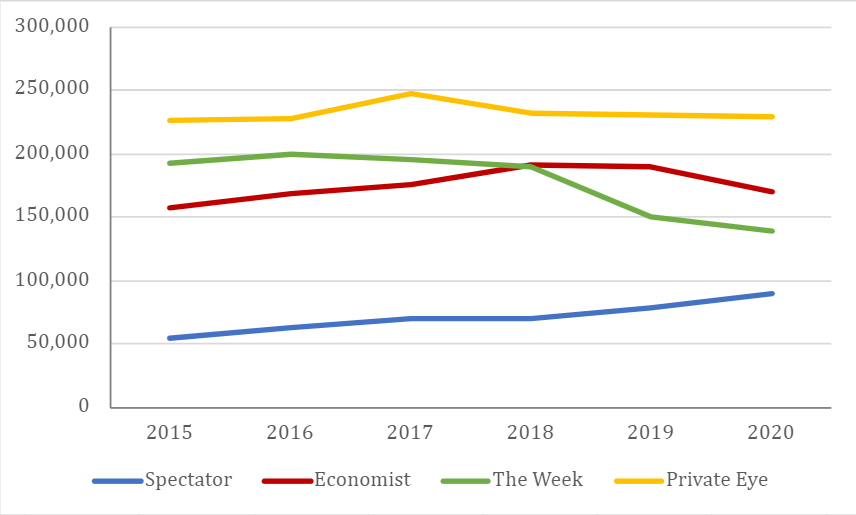
On February 5 2021, Andrew Neil, once respected political interviewer, pundit and chair of the Spectator Magazine Group, posted this tweet:

At a glance – which is all Neil is counting on you throwing at it – it really looks as though the Spectator is upping its game. Further examination, however, reveals that, as has become depressingly normal among those on the right, Neil is lying to you with statistics.

Check out the y-axes on those images. (For those you’ve forgotten their year-five maths, the x-axis is the horizontal line and the y-axis the vertical.) Notice anything odd? For one thing, they start at different values. Second, they’re plotted on different scales (the values for the Spectator are further apart). Why might that be?

Because if you plot them all on the same scale, the results paint a rather less flattering picture of the magazine’s fortunes:

At the end of the day, though, this is hardly novichokking a kindergarten, is it? It’s just rascally old Uncle Andy, cheekily tweaking the data to make his grubby little publication look a bit more appealing to prospective readers and advertisers.

But if that was all people were using these tricks for, I wouldn’t be writing this.

I started this series of posts because while people aren’t too bad at working out when they’re being lied to with words, our numbers game is a little less surefooted. And that seems to go double (= two times as much) for data presented in visual form: graphs, charts and tables, collectively known as graphics, or data vis.

Pictures and graphs lend an authority to data that words cannot. Our internal logic goes something like this: “Surely, if someone’s taken the trouble of researching, compiling and publishing a graph or a chart, they must know their stuff – and they must be telling the truth!”

Here’s the rebuttal to the first part of your thesis, internal logic:

As for the second part: truth doesn’t pay the bills (case in point: this blog). When people take great pains over something, there’s a distinct possibility that murkier motives are in play. Below are some examples to show you what I mean.

Quarter pounders

Until recently, you couldn’t move online for Tories excitedly parroting the news that the UK was the “fastest-growing economy in the G7”. (You’ll notice that not many of them are still flogging that particular horse. We’re about to see why.) But few of them bothered to include the data on which they were basing their claim.

The main problem with data visualisation is that it’s rarely possible to fit all the relevant data into your visualisation. Presenting numerical information inevitably involves making choices about what to include and what to leave out. If you want to illustrate the performance of the top 100 companies on the Financial Times Share Index in your newspaper, for example, you physically can’t represent every data point going back to its inception in 1984 without some sort of gatefold. So you go back as far as space will allow, and present what you hope is enough data to paint a meaningful picture. For share prices, such cherry-picking doesn’t matter so much. GDP figures are a different story.

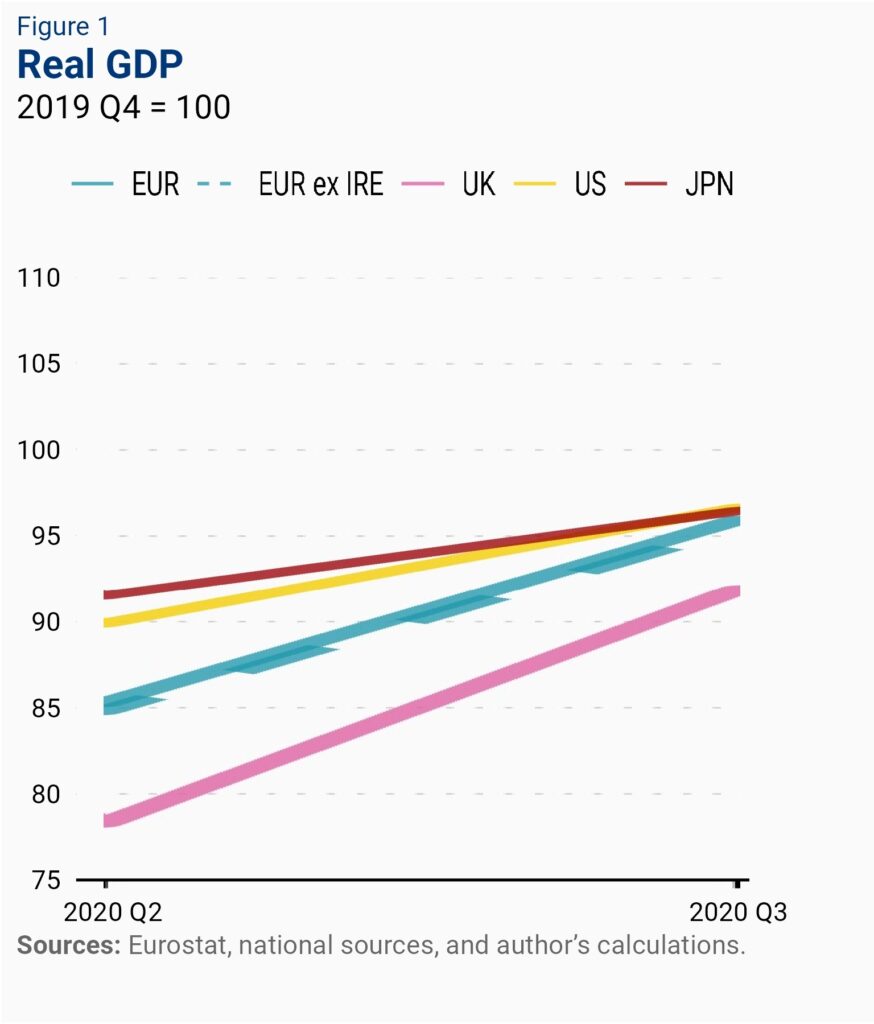
Below is the data on which the Tories were basing their uplifting, Brexit’s-so-brilliant claim. And sure, in itself, it’s quite correct. A bigger gradient means a higher rate of growth, and on that metric, the UK really was leading the world.

But there are two problems with extrapolating this conclusion from this data. First, look at the actual values of those lines. The UK is bottom of the heap, both at the beginning and the end of the period. What this means is that the UK economy was faring worse, relative to its performance in 2017, than all its rivals (the widely accepted explanation for this is that the UK was hit the hardest economically by the pandemic, and was therefore recovering from a lower base. It was bound to be “fastest growing” at some point).

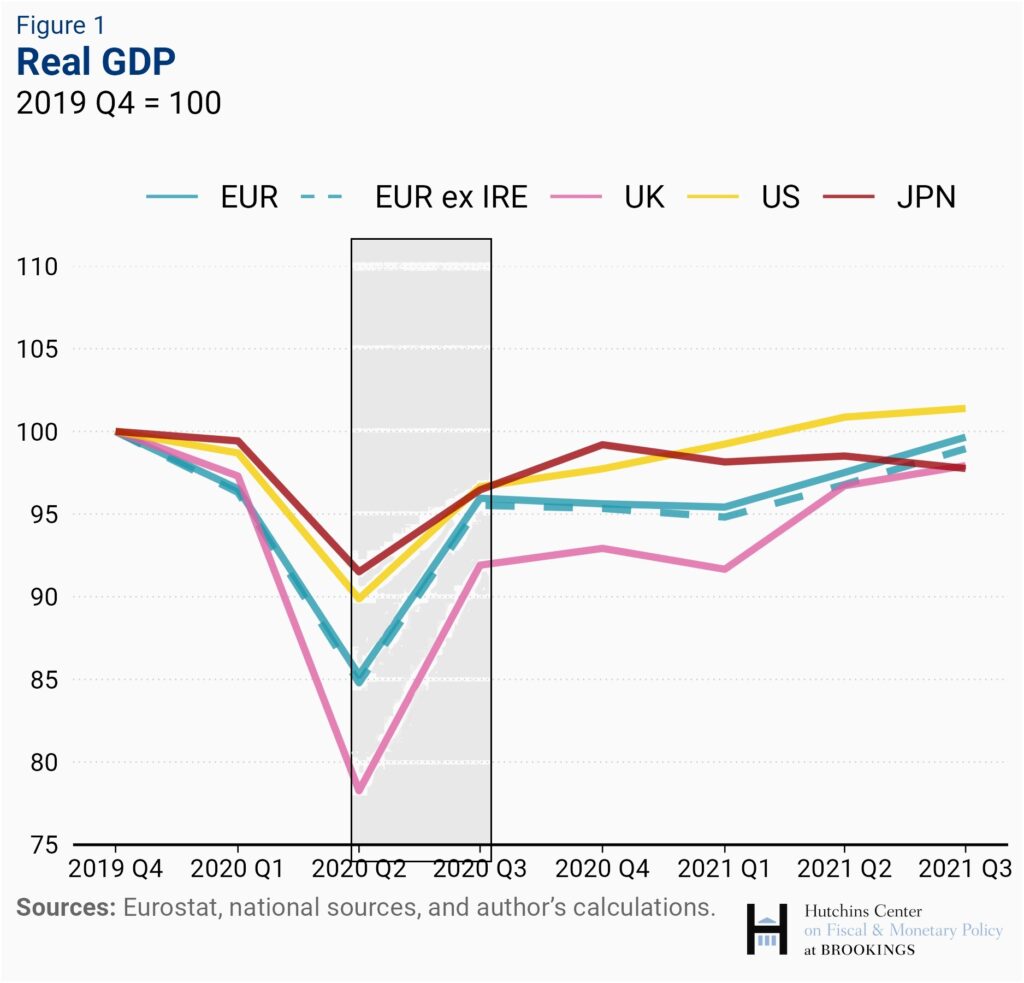
The second issue is that this is the smallest possible range of data. It shows us how the UK fared economically against comparable countries over a single quarter. Zooming out a bit, the picture looks rather different:

On the longer-term trend – which is the only trend that matters here – the UK’s performance is woeful. And why wouldn’t it be, with all those lovely trade barriers it’s thrown up with its nearest neighbours and biggest trading partners?

To interpret this graph as “the UK is the fastest-growing economy in the G7” is cherry-picking of the most outrageous order – straight up lying with figures – and yet practically no one ever calls it out.

Information dumped

In the next example, which was also shared with great enthusiasm by Tories in March 2022, once again, it’s not what the visual data is telling you, but what it isn’t, that’s significant.

Where’s that smell of roses coming from? Oh! Quelle surprise, it’s the UK again! What a world-beating nation it is!

The first thing that should set your Spidey sense tingling is the lack of any source on the graphic. (Turns out it was the Foreign, Commonwealth & Development Office, who posted this tweet, but when challenged, they declined to reveal their workings. The write-up of their exchange is worth a read.)

But once again, the most urgent problem is that we are missing crucial information. We have no idea what these figures represent as a percentage of the total Russian assets invested in those territories. If £1tn of Russian assets are invested in the UK economy, and only £40bn in the EU, then who is doing the better job on sanctions? (Definitive figures on the amount of Russian capital sloshing around the world are hard to come by, but the UK has long been oligarchs’ favourite spot to invest in property, and the bulk of Russian financial assets will inevitably have been parked in or near the City of London, the world’s leading financial centre.)

If you made a chart comparing how well-travelled Jason and Arthur are, showing that Jason has only been to France and Arthur has been to 50-plus countries, surely you’d think it apposite to mention that Jason is 14 and Arthur is 62?

Y, MIA

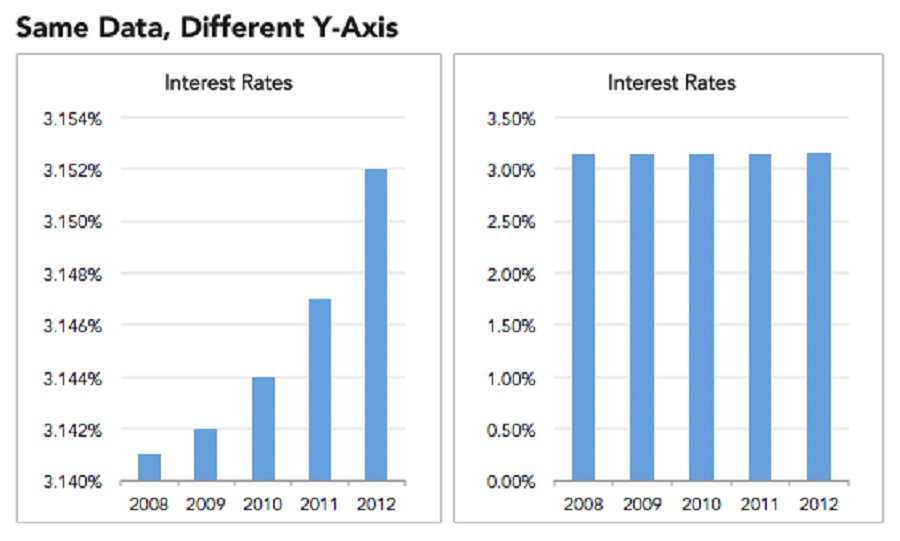
Once you’ve checked the bottom of a graphic for a source, and ascertained whether the x-axis is really as wide as it should be, the next place to look is at the y-axis. Does it start at zero? Why not?

Stolen from Ravi Parikh’s blog at Heap

If you tinker with the scale by selecting a narrow range of values, you can make differences appear as big or as small as you like.

Rotten Apple

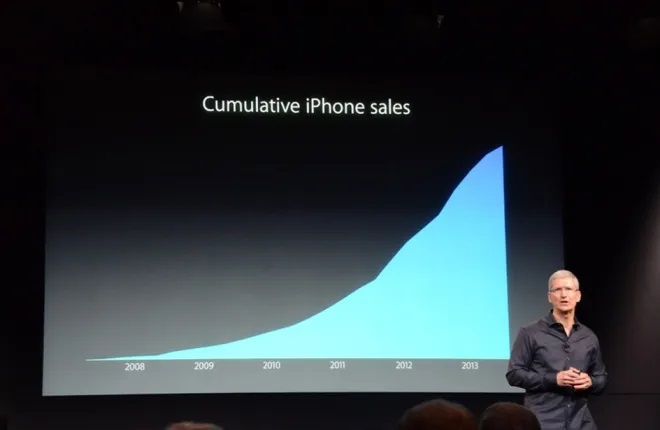
In 2013, Apple CEO Tim Cook used the following graph as part of his presentation to mark the launch of the latest iPhone:

Tim-Cooking the books?

We’ve already seen that the omission of any units on an y-axis is a cardinal statistical sin. But that’s not all that’s off kilter here. Usually, when illustrating a company’s sales, you show the units sold in each time period. But this is a depiction of cumulative sales. Short of a mass product recall, cumulative sales never go down! Anyone armed with a jot of mathematical nous should spot that that decrease in gradient at the top right of the graph means sales are falling.

Chartjunk

Be wary of tables tarted up with bright colours, flashy fonts and pictorial elements. Yes, it might look more arresting, but it can also be harder to make sense of. The statistician, designer and artist Edward Tufte, one of the fathers of modern data visualisation, coined the term “data-ink ratio” to describe the proportion of a graphic that is essential to the communication of data. In his view, this should always be as close as possible to 1. The more bells and whistles a graphic has, the more sceptical you should be.

A common form of “chartjunk” is the use of images to illustrate the quantities involved.

According to the data in this graph, the amount of stupidity in Britain has doubled since 2015. To reflect this, the graphic designer (me) has made Daniel Hannan’s stupid head twice as tall at 2022 as it is at 2015. However, because images are two-dimensional, the second Hannan is actually four times as large as the first. The use of images here has created a misleading impression.

Porky pies

Even the humble pie chart is routinely mishandled. Here’s Fox News up to its perennial tricks:

Presumably, even some MAGA types are aware that the segments of a pie chart should add up to 100%. What Fox have probably done is ask a question and permitted multiple answers. The results of such questions should never be represented in pie-chart form; a bar chart would be more appropriate.

Some of the more ostentatious data designers like to show off their Photoshop skills with 3D pie charts that seem to leap out of the page. But while they’re more visually arresting than their 2D counterparts, they’re less useful for displaying information, because the perspective distorts the respective quantities, making the slices at the “front” appear bigger than they in fact are, and the slices at the “back” smaller.

Pretty patterns

Finally, just because two things are sitting together on a graph or chart, it doesn’t mean there is any relationship between them. You can plot anything against anything. Here’s just one example of researchers finding a correlation between two completely independent phenomena.

Even when there is a relationship, it doesn’t mean one thing is directly causing the other. Sometimes, a third, unmentioned force – known as a “confounding variable” – is at work.

It’s hard to see what role ice-cream consumption could play in the rate at which people drown, or vice versa. The true explanation for the relationship, of course, is the confounding variable of temperature. When it’s hot, people eat more ice-cream, and go swimming more often.

Similarly, a US study in the 1950s revealed that far more people were killed on the roads at 7pm than at 7am. “Goodness,” some wondered. “Why are there so many more bad drivers around in the evening than first thing in the morning?”

And the answer is: there are more drivers around in the evening than in the morning. The confounding variable here was simply the number of people on the road.

Apples and oranges

In the early 20th century, the US Navy launched a recruitment campaign based on the premise that serving in the navy was safer than being a civilian. And their statistics were sound: the death rate among serving naval officers was indeed lower than in the general populace.

The stumbling block in this case was that they were not comparing like with like. Sailors, almost without exception, are young and fit. The general populace, meanwhile, includes infants, old people and long-term sick people, all of whom (at least at that time) were far more likely to die than the average able seaman.

Graphic non-fiction v graphic novels

The watchwords for visual data, then, are pretty much the same as for verbal information: transparency, clarity, simplicity.

When deciding whether or not to trust visual data, your checklist should be as follows:

  • Source
  • Units
  • y-axis
  • Large range of values
  • Context: is there any other information, omitted from this visual element, that would be useful for a fuller understanding of the subject?

I’ll conclude this series soon with a round-up of all the other potential abuses of stats.

Wokeness: the far right’s last scapegoat

Barbarians enter gates of Rome

“Do-gooders” are no longer just a nuisance – their “decadence”, according to populist demagogues, is now an existential threat to civilisation

Barbarians enter gates of Rome
‘Why did the world end, Daddy?’ ‘Too much compassion, son.’

“Right on”. “Politically correct”. “PC”. “Social justice warriors”. “Virtue signallers”. Now “woke”. Rightwingers and authoritarians of all stripes have been sneering at liberals, leftwingers and anyone with a conscience for at least 50 years, and the onslaught has intensified in step with social media’s dominance of the infosphere.

But recently, there’s been a noticeable increase in stridency – and a worrying raising of the stakes.

Whereas not so long ago, people who discussed pronouns, chucked statues into rivers and sat on roads were merely a nuisance, of late they have evolved, if we are to believe some commentators, into a clear and present danger to our way of life. It turns out they’re not just a symptom of the collapse of democracy in the western world, but a root cause.

Current Tory party chair and former anti-culture culture secretary Oliver Dowden, in a speech to the Heritage Foundation in February, talked of the west being “in the clutches of a painful woke psychodrama”, afflicted by a “dangerous form of decadence”; Sherelle Jacobs delivered a pale imitation of his pale speech in the Telegraph; while Matthew Syed in the Times bewailed the “poison introduced into the vitals of the system” (paywall). As usual, these talking points have been taken up and repeated, usually verbatim, across the political right.

But unlike the hordes of reflexive retweeters, I have questions.

1. What do they mean by decadence exactly? What form is this terrifying descent into depravity supposed to be taking, and how is it unfolding?

Decadence comes from the same root as the word decay, and as I used to understand it, means something not dissimilar: a marked deterioration in standards, of art, for example, or of the values of a nation.

And indeed, such matters have been the bugbear of small- and capital-C conservatives since time immemorial: think the original Cancel Queen, Mary Whitehouse, having an embolism over Chuck Berry’s My Ding-a-Ling (before presenting Jimmy Savile with an award for “wholesome family entertainment”), or Catholics soiling their cassocks over a collectible card game.

It has also, we should remember, been an obsession for some of the west’s bitterest enemies. Adolf Hitler outlawed all “degenerate” art as “cultural Bolshevism” (in his view, cultural degeneracy went hand in hand with physical degeneracy); Osama bin Laden demanded that the west “reject the immoral acts of fornication, homosexuality, intoxicants, gambling, and trading with interest”; while Josef Stalin kept the peasants on side partly by issuing endless direful warnings about the decadence and cruelty of the west.

But it doesn’t seem to be that sense of decadence that Dowden, Jacobs and Syed are fretting about. Their diatribes make no mention of fornication, slovenliness or drug-taking, of violent computer games or the corruptive influence of the Teletubbies. In fact, you have to go through all three jeremiads with a fine toothcomb to find any examples of the hell-in-a-handbasket horrors they’re deploring.

Syed’s piece contains a throwaway line about the “infiltration of the universities” (for which he fails to provide any evidence, or indeed any hint as to what shadowy cabal might be masterminding it), but it’s mostly an attack on “me first” society, global finance and British foreign policy of the last 30 years. Can the blame for any of that really be laid at the door of human rights lawyers or Just Stop Oil, whose byword is “me last” and who are generally bitterly opposed to the financial and petrochemical giants and the concept of war?

Ordinarily, I’d presume that Syed was ordered to shoehorn in the anti-woke lines by his editor at the Times, but the writer himself chose to promote it on Twitter with the following quote:

While Xi Jinping was resetting the world order through his Belt and Road initiative and Vladimir Putin was recreating the Russian empire by annexing Georgia and Crimea, we were arguing over gender-neutral toilets

Matthew Syed, Twitter, 6/3/22

It’s certainly clickbaity, and, as was undoubtedly intended, duly generated its fair share of pop-eyed “debate” on everyone’s favourite social media battlefield. But as with most clickbait, it’s a bunch of shit.

For one thing, as a comparison, it’s up there with the far right’s very worst for sheer asininity. Are we really supposed to accept that the geopolitical policy decisions of the unassailable ruler of a major world power are equivalent to the bickerings of a handful of 19-year-old Durham University students? Mightn’t those worthy woke warriors be setting their sights a little higher than questions of bathroom access if they had the economic, cultural and military might of a nation of 1.3 billion people behind them?

Syed is also guilty of the same fallacy as the commentators who burst a blood vessel whenever they chance upon a new “woke” initiative in the police force: “Perhaps the police should spend less time filling in forms and more time solving murders!”

The latter point relies on the bizarre assumption that the police force is some sort of monolithic entity that can focus only on one activity at a time, rather than a heterogeneous organisation made up of multiple forces consisting of hundreds of thousands of individuals with different skills, responsibilities and specialisms. Syed’s zinger is predicated on the similar idea that the entirety of the United Kingdom is permanently engaged in trivial squabbles while all of China is Greatly Leaping Forward, when in truth the only people devoting more than a few seconds a year to these culture war issues are a small crowd of earnest lefties and the far-right commentators who’d be hunting down Jack Monroe recipes without them.

Dowden’s Heritage Foundation homily is equally free of substance, consisting mostly of 40-watt fire and brimstone about free speech, privilege, “cancelling”, “fashionable nostrums”, “policies inimicable to freedoms”, and people “seeking to expunge large parts of our past”.

In 2,300 words of hufflepuff, the only real-world instances of “dangerous decadence” that he drops in are the defacement of Winston Churchill’s statue during the Black Lives Matter protest in June 2020 (someone spray-painted the words “was a racist” under his name; truly, democracy is finished), “obsessing over pronouns” (another surefire omen of doom) and “seeking to decolonise mathematics”.

I literally work in the news, and this last horseman of the apocalypse was news to me. After a more demanding than usual Google search, I’ve concluded that it refers to a minor kerfuffle in early 2021 over a paper by Californian academics suggesting adding an anti-racist element to the teaching of maths.

Maybe it was a bigger deal in the States. Even so, it didn’t seem to dominate the agenda of vast swathes of the US population for long, much less of anyone further afield.

Let’s be charitable for the moment and assume that these demagogues have simply chosen poor examples to illustrate their point. A second question still needs addressing:  

2. If western citizens are misdirecting their energies, what should they be doing instead?

Because if re-examining history, or hanging banners from Marble Arch imploring people to use less fossil fuel, constitutes “dangerous decadence”, if conversations about pronouns are a waste of time, then the implication is that individuals thus occupied should be channelling their efforts into more productive endeavours. Exactly what endeavours, our friends on the right are again reluctant to spell out (unless they’re seriously suggesting we should be spending our days planning multi-trillion-dollar global infrastructure projects and invading France).

My best guess is that what they want us to do is devote 100% of our time and energy to the betterment of the nation (and by nation, of course, what the far-right elites generally mean is them). We should be good little serfs, tilling the fields in the service of our masters, paying our tithes and dying young so as not to be a burden on the state.

And if there is any time left at day’s end after we’ve completed our designated duties, we should devote it to wholesome, morally improving activities, like athletics and shooting and unprotected sex (take that, Great Replacement!). None of this culture rubbish. Culture leads to reflection, and reflection leads to scrutiny.

The underlying message coming through to me, at least, is that we should shut the fuck up, and cease daring to question the status quo that is so endlessly lucrative for them and increasingly harmful to the rest of us.

But such a vast, sustained and coordinated anti-woke operation – even if its thesis is as weak as Dowden’s handshake – seems like overkill if all they are trying to do is silence a few plebs. Which leads me to my final question:

3. What’s really going on?

The irony here is that the narrative these prophets are trying to foist on us comes within shouting distance of the truth. Because there is some consensus among historians that decadence was indeed a factor in the erosion or implosion of many of Earth’s great empires (most of the commentators seem to have at least skim-read the Wikipedia entry on Gibbon’s History of the Decline and Fall of the Roman Empire).

But it wasn’t the corruption of everyday folk that was the problem. In Rome, in the Mongol empire, in the Byzantine and the Ottoman, the rot started at the top. Think Caligula building a marble stable for his horse; the petty theological infighting that led to the downfall of the Byzantines; Kublai Khan’s extravagant spending; Suleyman shunning his official duties to spend more time in his harem.

Rome fell not because ordinary citizens were frittering away their days bickering about minor tweaks to the human rights framework, but because their rulers were spending too much time and money feasting, fucking and erecting ever bigger monuments to themselves to run their territories properly; and because, with inequality skyrocketing, the common folk, increasingly vexed at working for peanuts while their overlords bathed in asses’ milk and risking their lives on the battlefield for leaders who kept the lion’s share of the spoils, were less and less inclined to give their all in service of the “greater good”.

Remind you of anything?

If I asked you to point to anyone in the western world in the first quarter of the 21st century who could be said to be charging head first into the abyss of turpitude, where else could you begin but with our leaders? When it comes to lax morals, low standards and all-round malevolence, no student, judge or “wokester” can hold a candle to Oliver Dowden’s Tories and the corporations they serve.

Because in case you hadn’t noticed, the party presently running the UK is now packed to the rafters with councillors, MPs, aides, ministers and peers guilty of deporting longtime legal residents of the UK, plotting to drown and exile asylum seekers, slashing international aid, illegal lobbying, cronyism, filing false expenses claims, tax avoidance, lying, cheating, illegally carousing in a pandemic, excessive drinking, drug-taking, Muslim-bashing, gay-bashing, bishop-bashing, bullying, sexual harassment, sexual assault, rape, treason and murder. These are people, for crying out loud, who have actually tried to depict “do-gooders” as the bad guys and have now described the head of the Church of England as a virtue-signaller.

(Another reason cited by Gibbon for the collapse of Rome – one the faux Christians on the libertarian right oddly seem to skip over – was the rise of fundamentalist Christianity. The devoutly anti-intellectual stance of the church, itself perpetually riven by theological disputes that really did weaken the state and distract people from external threats, stripped away the foundations of culture, philosophy and technological superiority on which the empire had been built. In other words, they’d had enough of experts.)

Ultimately, then, the war on woke seems to be just another deflection tactic.

Authoritarian governments have long invoked bogeymen to frighten the unwary into voting for them, and to give them someone other than the government to blame. But the current bunch are running out of scapegoats.

They can’t blame Labour for the precipitous national decline any more, because Labour hasn’t been in power for 12 years. Nor can they point the finger at the EU, because the UK is free of its “shackles” – not that they’re having much luck finding EU rules they want to scrap anyway. And while the smear campaign against immigrants shows no sign of abating, people are slowly waking up to the overwhelmingly positive net contribution they make to society, largely thanks to the catastrophic labour shortages caused by the exodus of EU workers.

So having exhausted the enemies without, they’re turning their fire on enemies within: charities, judges, lawyers, teachers, students, the Archbishop of Canterbury, and anyone else who has enough time at the end of their day to read a book or the temerity to ask a question. But it should be glaringly obvious to all but the most loyal Daily Mail reader that it’s not Greta Thunberg who’s plotting to usher in the Dark Ages 2.0. The self-appointed harbingers of doom are bringing it themselves.

Statistricks, part 3: how they lie to you with polls

Opinion polls are way off with their predictions too often to be of any use. So why are they such big business?

Are you diving into the data, or is the data diving into you?

Part 1: ‘Trade with the EU is declining’ (no, it isn’t)
Part 2: ‘We send the EU £350m a week’ (no, we don’t)
Part 4: ‘The UK is the fastest-growing economy in the G7’ (no, it isn’t)

Not so long ago, you could go years without coming across a survey. A few folks were dimly aware of a company called Gallup, thanks to Top of the Pops, for which they compiled the charts, but otherwise polling companies were shy little leprechauns that only popped out once every four years to sound out the populace before each general election.

Now you’re lucky if you can go four minutes without seeing a snapshot of public opinion. Twitter polls, website polls, newspaper polls, polls by phone and email and WhatsApp; polls on everything from support for the death penalty to your preferred shade of toast.

What’s my tribe?

The appeal to us plebs is obvious. We can’t get enough of other people’s opinions, whether our response is to nod sagaciously or spit out our tea.

Interestingly, our egos are so devious, it doesn’t much matter whether most people agree with us or not. Because if, according to any given poll, ours is the majority view, we tend to sit back and smirk: “Well, naturally my opinion is the right opinion.” If, on the other hand, we’re in the minority, our response is usually “Gosh, I’m so clever, unlike all these sheep!”

Either way, polls are reassuring because they reinforce our place in the world. Our tribal, hierarchical nature, our teat-seeking need to belong, compels us to constantly reaffirm our sense of identity, and polls give us that in a neat package.

Views as news gets views

If polls are a novelty gift for the hoi polloi, they’re a godsend for newspapers, struggling as they are with dwindling resources, and for rolling news channels with endless airtime to fill. No time-consuming investigation, photography, writing or planning required – the pollsters take care of it all for free, right down to the covering press release with its own ready-made headline finding. And the public lap it up.

The pollsters, of course, are laughing all the way to the bank. Their services are in greater demand than ever before; the polling industry in the UK currently employs 42,500 people – four times as many as fishing.

So, surveys are win, win, win, right? People get entertainment, journos get clicks, pollsters get rich. What’s the problem? Because there’s always a problem with you, isn’t there, Bodle?

Blunt tools

As a matter of fact, there are two. The first is that polls are low-quality information.

Despite having been around for almost 200 years, and despite huge advances in methodology and technology, gauging popular opinion is still an inexact science. For proof, look no further than the wild differences between any two surveys carried out at the same time on the same issue.

In the week prior to the 2017 UK general election, for example, Scotland’s Herald newspaper had the Tories winning by 13%, while Wired predicted a 2% win for Labour. (In the event, May’s lot won by 2.5%; picking a figure somewhere in the middle of the outliers is usually a safeish bet.)  

The main headache for canvassers has always been choosing the right people to canvas. If you conducted a poll about general election voting intentions solely in Liverpool Walton, or took a snapshot of views on the likely longevity of the EU from 4,000 Daily Express readers (which the Express continues to do on a regular basis), then presented the results as a reflection of the national picture, you would rightly be laughed out of Pollville.

The key to a meaningful survey is to find a sample of people that is representative of the whole population. Your best hope of this is to make the sample as large as possible and as random as possible, for example by diversifying the means by which the poll is conducted (because market researchers wielding clipboards on the high street aren’t going to capture the sentiment of many office workers or the housebound, while online polls overlook the views of everyone without broadband), and sourcing participants from a wide area.

Even then, you have to legislate for the fact that pollees are, to a large degree, self-selecting. For one thing, people who are approached by pollsters must, ipso facto, be people who are easily contactable, whether in the flesh, by phone or online, which rules out a swathe of potentials; and for another, they’re likely to have more free time and less money (many polls still offer a fee).

Tories, trolls and tergiversators

Even if you do somehow manage to round up the perfect microcosm of humanity, there are further obstacles.

For one thing, people are unreliable. The “shy Tory factor” is well documented; people don’t always answer truthfully if they think their choice might be socially unacceptable. You can mitigate this problem somewhat by conducting your survey anonymously, which most pollsters now do.

Anonymity, however, only exacerbates a different problem. As anyone who has spent five minutes on social media will know, there are plenty of people around who just lie for kicks (or money). And if the questions aren’t being put to you in person, and your name isn’t at the top of the questionnaire, there’s even less pressure on you to tell the truth.

Furthermore, people don’t always know their own minds. If you’re faced with difficult questions in an area where your knowledge is sketchy, like trans rights or Northern Ireland, your honest answer to most questions would be “Don’t know”. But you’d feel dumb if you ticked “Don’t know” every time. Isn’t there a temptation to fake a little conviction?

And (Brexiters and Remainers notwithstanding), people’s opinions are not set in stone. Someone may genuinely be planning to vote Green when surveyed, then change their mind on the day.

Then there’s the issue of framing. Every facet of a survey, from its title to the introductory text, from the phrasing of the questions to the range of available answers, can unwittingly steer waverers towards certain choices.

Let’s say you want to study views on asylum seekers. If you ask 2,000 people “Do you agree that Britain should help families fleeing war and famine?”, you’re likely to get significantly different results than if you ask them, “Do you think Britain should allow in and pay for the upkeep of thousands of mostly young, mostly male, mostly Middle Eastern and African migrants?” (If this seems like an extreme example, I’ve seen some equally awful leading questions.)

Sometimes the questions don’t legislate for the full spectrum of possibilities. If no “don’t know” option is included, for example, people may be forced into expressing a preference that they don’t have.

Finally, the presentation of a poll’s results can make a huge difference. Few people have the patience to read through polls in their entirety, so what happens? Pollsters create a press release featuring the edited highlights – the highlights according to them.

When you consider all these pitfalls, suddenly it’s not so hard to see why pollsters’ predictions often fly so wide of the mark. But … so what if polls are inaccurate? They’re just a bit of fun!

This brings us to my second, more serious concern.

Market intelligence

While they’re passable diversions for punters and convenient space-fillers for papers and news channels, no one ever went on hunger strike to demand more polls. This constant drizzle of percentages and pie charts has not been delivered by popular demand. It’s a supply-side increase, driven by the people who really benefit from it.

Businesses live or die by their market research: the information they gather from the general populace. If you’re a food manufacturer launching a new bollock-shaped savoury snack, for example, it helps to know how many consumers are likely to buy it. But firms are also greatly dependent on their marketing – the information they send back into the community. And one of the best things they can do to promote their product is to generate the impression that by golly, people love Cheesicles!

We simply don’t have the time to do all the research required to formulate our own independent view on every imaginable issue. So what do we do? We take our cue from others: friends, or experts, or people we otherwise trust.

Hence the myriad adverts featuring glowing testimonials from chuffed customers. Hence celebrities being paid astronomical fees for sponsorship deals. Hence the very existence of “influencers”. Like it or not, our opinions are based, in large part, on other people’s opinions.

The only thing more likely to cause a stampede for Cheesicles than the endorsement of a random punter or celebrity is the endorsement of everyone. Why else would a certain pet food manufacturer spend 20-odd years telling everyone that eight out of 10 cats preferred it (until they were forced to water down their claim)? Aren’t you more tempted to give Squid Game a chance because everyone’s raving about it?

Even though some people quite like being classed among the minority – the brave rebels, the “counterculture” – those people are, ironically, in a minority. Most of us still feel safer sticking with the herd. So it’s in manufacturers’ interests to publish information that suggests their product is de rigueur.

(If you’re in doubt about the susceptibility of some people to third-party influence, look up the Solomon Asch line length test. As part of an experiment in 1951, test subjects – along with a number of paid plants – were shown visual diagrams of lines of different lengths and told to identify the longest one. The correct answer in each image was clear, but the stooges were briefed to vocally pick, and justify, the (same) wrong answer – and a surprisingly high proportion of the subjects changed their decision to match the wrong answer given by their peers. Later variations on the same study furnished less clear-cut results, but the phenomenon is real.)

And this is where all those flaws in polling methodology suddenly become friends. Polls can be inaccurate and misleading by accident – but they can also be misleading by design.

When businesses conduct a poll, they can (and have, and still do) use all the above loopholes to nudge the results in the “right” direction. They can select a skewed sample of people. They can select a meaninglessly small sample of people (still the most common tactic). They can ask leading questions, leave out inconvenient answers, present the results in a flattering way – or just conduct poll after poll after poll, discard the inconvenient results, and publish only those in which Cheesicles emerge triumphant.

Woop-de-doo, so businesses tell statistical white lies! Hardly front-page news, or the end of the world. If I’m duped into shelling out 75p for one bag of minging gorgonzola-flavoured corn gonads, well, I just won’t repeat my mistake.

True. But it’s a different story when the other main commissioners of polls play the same tricks.

Offices of state

It cannot have escaped your notice that the worlds of business and politics have been growing ever more closely intertwined. There’s now so much overlap of personnel between Downing Street, big business and the City (the incumbent chancellor, who arrived via Goldman Sachs and hedge funds, is just one of dozens of MPs and ministers with a background in finance), such astronomical sums pouring into the Tory party from industry barons, and so many Tories moonlighting as business consultants, that you might be forgiven for thinking that the two spheres had merged.

And as the association has deepened, so politicians (and other political operators like thinktanks and lobbying groups) have borrowed more tactics from their corporate pals. Public services are run like private enterprises; short-term profits and savings for the few are constantly prioritised over the long-term interests of the many; government communications departments have been transformed into slick, sleazy PR outfits. And one of the tools they’ve most warmly embraced is the poll.

While businesses carry out market research to gauge the viability of their products and services, political parties do so (largely through focus groups) to find out which policies and slogans will go down well. But whereas businesses only publicise polls to create the illusion of popularity, the practice has wider and scarier applications in the political sphere.

“Opinion polls are a device for influencing public opinion, not a device for measuring it. Crack that, and it all makes sense”

Peter Hitchens, The Broken Compass (2009)

Loath as I am to quote the aggressively self-aggrandizing Hitchens, on this occasion, he may have stumbled across a point. A number of studies (pdf) have looked into this phenomenon (pdf), and while the findings aren’t conclusive, they all point in the same direction: people can be swayed by opinion polls.

There are several mechanisms at play. First, if there’s a perception that one candidate in an election has an unassailable lead, some undecideds will back the likely winner, because they think the majority must be right (the “bandwagon effect”); a few will switch to backing the loser out of sympathy (the “underdog effect”); some of those who favoured the projected winner might not bother voting because it’s in the bag, while some of those who favoured one of the “doomed” candidates might give up for the same reason.

Conversely, if polls suggest a contest is close, turnout tends to increase. Even if your preferred candidate isn’t one of the two vying for top spot, you might be moved to vote tactically, to keep out the candidate you like least.

Polling also has an indirect effect via the media. When surveys are reporting good figures for a candidate, broadcasters and publishers tend to give them more airtime and column inches, thus increasing their exposure, and, consequently, their popularity.

However these effects ultimately balance out, it’s clear that the ability to manipulate polling information could give you enormous political power. “But that’s absurd!” you cry. “I’ve never had my mind changed by anything as frivolous as a poll!”

Really? Can you be absolutely sure of that? Even if you’re immune, can’t lesser mortals be affected? If it works in the advertising world, there’s no reason why shouldn’t it work in the political sphere.

You might object at this point that pollsters are legitimate enterprises that have nothing to gain from putting out false information. To which I would counter-object: polling companies are businesses too. They exist not as some sort of public service, but to make money for their clients. And their clients’ interests do not always align with the public good.

A brief look at the ownership and management of the pollsters does little to alleviate these fears.

Savanta ComRes (formerly ComRes)

Retained pollster for ITV and the Daily Mail. Founded by Andrew Hawkins, Christian Conservative and contributor to the Daily Telegraph with a clear pro-Brexit stance. This year, Hawkins launched DemocracyThree, a “campaigning platform” that helps businesses and other interest groups raise funds and build support – ie influence public opinion.

“Democracy 3.0 helps you build a support base, raise the funds you need for your campaign to take off, and then we work with you to appoint professional campaigners – such as lobbyists and PR experts – who can bring your campaign to life.”

DemocracyThree website

ICM

Co-founded in 1989 by Nick Sparrow, a fundraising consultant who worked as a private pollster for the Tories from 1995-2004. Now part of “human understanding agency” Walnut Unlimited, which is in turn part of UNLIMITED – a “fully integrated agency group with human understanding at the heart”.

The sales pitches for these firms include the following quotes:

“Our team are experts in public opinion, behavioural change, communication, consultation and participation, policy and strategy, reputation, and user experience.”

ICM website

“We help brands connect with people, by understanding people … Blending neuroscience, behavioural science and data science, we uncover the truth behind our human experiences … Our mission is to create genuine business advantage for clients … by uncovering behaviour-led insights from our Human Understanding Lab.”

Walnut Unlimited website

Populus

Official pollster for the Times newspaper, co-founded by Tory peer Andrew Cooper and Michael Simmonds, a former adviser to the Tory party now married to Tory MP Nick Gibb, who has recently been added to the interview panel to choose the next head of media regulator Ofcom

YouGov

Founded by Nadhim Zadawi, the incumbent Tory health secretary, and Stephan Shakespeare, former owner of the ConservativeHome website and former associate of diehard Brexiters Iain Dale, Tim Montgomerie and Claire Fox.

Survation

Founded by Damian Lyons Lowe, who during the EU referendum campaign set up, at the request of Ukip’s Nigel Farage, a separate “polling” company, Constituency Polling Ltd, based in the Bristol office of Arron Banks’s Eldon Insurance. But its remit seems to have been less about asking questions and more about micro-targeting voters. “Interviews with several people familiar with Survation’s operations show that in addition to measuring public opinion, the firm’s executives also helped shape it.”

(I was unable to find any evidence of strong political affiliation among the leadership of Ipsos MORI or Qriously, and Kantar has changed ownership and CEO so frequently of late as for any such investigation to be meaningless. As a side note, there seems to have been a recent flurry of activity in this sector, with many companies being gobbled up into ever larger, faceless global marketing conglomerates, whale sharks hoovering up data, with ever more sinister specialisms: “consumer insights”, “market intelligence”, “human understanding”.)

I don’t know about you, but I’d expect the people who founded and run companies that were nominally about gathering and analysing data to be statistics nerds – people with an interest in objective truth – not, by an overwhelming majority, people with the same strong political leanings. Put it this way: CEOs of polling firms have final approval over which surveys are released. If you were married to a Tory MP, would you really sign off on a poll that was damaging to your husband’s party?

Someone of a more cynical bent might start wondering whether the hard right, having secured control of most of the UK’s print media and with its tendrils burrowing ever deeper into the BBC, was stealthily trying to establish a monopoly on data.  

So maybe they’re not all angels. But surely they can’t just pump rubbish into the public domain willy-nilly? In a stable(ish) 21st-century democracy like Britain, there must be checks and balances in place.

Well, here’s the thing. Businesses are prevented from publishing grossly misleading adverts by the Advertising Standards Authority, but there’s no such independent regulator for the polling industry. They police themselves, through a voluntary body called the British Polling Council, staffed entirely by industry members.

So, polls are bad information, they can influence people’s votes, the pollsters’ motives are questionable, and they’re accountable to no one. But what about journalists? Isn’t it their job to pick up on this sort of thing?

It is, but as I mentioned above, journalistic resources are so depleted now, and the pressure to get stories up fast so great, that they can ill afford to look gift stories in the mouth. And as I mentioned in my last post, journalism and broadcasting aren’t exactly brimming with Carol Vordermans. Even if they had the time and the inclination to carry out due diligence, they wouldn’t necessarily know how.

The bald fact is, when you look at a poll, whether it’s reached you through a newspaper, a website, a meme or a leaflet, you have no guarantee whatsoever that it’s been subjected to even rudimentary checks.

What can we do?

Surveys are – or were, originally – designed to present a snapshot of the popular mood. But even the most fair-minded, honourably intentioned, statistically savvy pollster, using the best possible methodology, can produce a poll that is complete and utter Cheesicles.

But judging by the vast amounts of money pouring into the industry, the political leanings of its ownership and management, and their alarming transformation from simple question-setters to behavioural change specialists, there’s a very real possibility that honourable intentions are an endangered species in the polling industry.

Polls aren’t going away any time soon. Businesses and politicos will always want to gauge which way the wind is blowing. But when it comes to the data they’re pumping back in the public domain – a tiny fraction of what they’re amassing – the rest of us don’t have to play along.

To journalists, I would say: please stop treating polls as an easy way of filling column inches. (Employees of the Daily Express, Mail, Sun and Telegraph, I’m not talking to you. I said “journalists”.)

This is the opposite of speaking truth to power; it’s speaking garbage to those who aren’t in power. It’s 1980s women’s magazine journalism, clickbait, guff, and you’ve repeatedly proven yourselves incapable of discerning good information from bad.

If you must run an article on a poll, then ensure that, at the very minimum, you ask, and get satisfactory answers to, these questions:

  • Who commissioned the poll?
  • Who carried out the poll?
  • What was the sample size? If it’s much less than 2,000 people, ignore it.
  • What’s the relative standard error? (A measure of the confidence in the accuracy of the survey. If Labour are leading the Tories in a poll by 36% to 35% and the RSE is over 2% – as it is on samples of less than 2,000 – then they may not be leading at all.)
  • What were the questions?
  • What was the methodology?

Then, when you publish the story, include all this information so that readers can draw their own conclusions about the poll’s reliability. Above all, include a link to the poll. If you don’t take all these steps, your story is worthless.

To the public, my advice would be: ignore polls. If you must read them, treat them as meaningless fun, fodder for a throwaway social media gag, and don’t for one second fall into the trap of thinking they’re conveying any sort of truth.

If you’re ever approached to participate in a poll, ask yourself: do you really want to be handing over your data to people who are likely to be using that data against you and enriching themselves in the process?

Finally, to the pollsters, I would say: we’ve got your number. 

How they lie with statistics, part 2: the value of nothing

Johnson playing tennis

The point was never whether EU membership cost £350m, £150m or a fiver a week. The question should have been: what does that buy us?

Numbers racquet: anyone for a £160,000 game of tennis with a former Russian minister’s wife?

Part 1: ‘Trade with the EU is declining’ (no, it isn’t)
Part 3: Why are all polling companies run by Tories?
Part 4: ‘The UK is the fastest-growing economy in the G7’ (no, it isn’t)

Here’s a thought experiment. Picture a woman who’s two metres tall (about 6ft 6in). Easy, right? Now picture a second woman, standing next to the first, who is a millon times taller: 2 million metres, or 2,000km, tall. I guarantee you the giant you’re imagining is no more than 100 times the size of her neighbour.

Try approaching it another way. Say the six-foot woman launches a rocket, which travels straight upwards at 100mph (about the average speed of the space shuttle for the first minute after take-off). How long do you think you will have to keep mentally following that rocket before it draws level with the giant’s head? The answer is 12 and a half hours.

All of which is a rather long-winded way of showing that human brains are rubbish at processing large quantities. If everyday numbers cause a mental power cut in most of us, big numbers trigger a full-on meltdown. 

“The crooks already know these tricks. Honest men must learn them in self-defence”

Darrell Huff, How To Lie With Statistics (1954)

‘We send the EU £350m a week’

No examination of number abuses would be complete without a look at the granddaddy of them all: the slogan that, along with “Take back control”, arguably swung the EU referendum for Leave.

On one level, of course, it was just another example of populists making shit up. The true EU membership fee, after the UK received its rebate, was probably at most half that sum (Vote Leave’s Skid Row Svengali Dominic Cummings admitted in a letter dated April 2016 to Sir Andrew Dilnot of the UK Statistics Authority that “£237m per week was the net level of resources being transferred from the UK as a whole to the EU”) (pdf).

But the arguably more interesting point is why he chose this line of attack in the first place.

The following Twitter exchange from a couple of months ago (I failed to screenshot before the inevitable block came) is enlightening.

“We’ll save £350m a week by leaving the EU!”
“No, we won’t. The figure on the bus was a lie. The true cost of membership is about half that.”
“Well, £175m still sounds like a lot of money!”

Wait. So £350m a week is too much … and a 50% discount on that is still too much? What’s a reasonable amount then?

This is what Cummings and co were bargaining on. They knew the exact sums involved were immaterial; all that mattered was the emotional impact of the big number. “Eek, seven zeroes!” Critical faculties switched off, job done.

(Meanwhile, the other prong of Cummings’ propaganda assault – Turkey – was designed with similar intent: “Eek, brown people!” Primal fear of The Other evoked, rational brain bypassed, job done.)

Some of us identified the flaw fairly quickly. If I arrived in the pub and told you breathlessly that I’d just spent one thousand pounds, you might raise an eyebrow, but you’d probably reserve your final judgment pending further information. Namely, what did I spend it on? A house, a car, a watch, a hat, or a packet of crisps?

A moment’s reflection, which is apparently more than 52% of the electorate could spare, would tell you that the statement Quantity X costs a lot of money is meaningless in isolation. Before you can judge whether that expenditure is a good idea, you need answers to the following questions:

  1. Can the buyer afford it? What is this sum as a proportion of their budget?
  2. What do comparable items or services cost?
  3. Is it a reasonable rate? Are others being charged a similar amount?
  4. How much will it cost to get out of the contract?
  5. What exactly is the buyer getting for their investment? Does it represents good value for money? Can the same or better goods and services be obtained elsewhere, for less outlay?

“They said how much money we would save [by leaving the EU], but they didn’t say how much we would lose”

Rueful Brexit-voting ex-miner from Sunderland, speaking to Financial Times journalist

Let’s tackle those points one by one.

1) The UK’s EU contributions for the financial year to April 2020, minus rebate and EU funds received, came to £7.7bn. Total government spending for the same period is predicted to turn out a shade north of £900bn. So as a proportion of the UK’s overall spending, EU membership cost less than 1%. If you’re a taxpayer earning £30,000 pa, that means you’re paying about £43.53 a year towards the cost of EU membership, or just over a quarter of the TV licence fee. Does £150m a week (£7.7bn/52) feel so enormous now?

2) To put that £7.7bn in perspective, the government spends around £190bn a year on pensions (“We send economically unproductive old people £3.7bn a week. Let’s fund our NHS instead”), £170bn on the NHS, £110bn on education, £43bn on defence, £15bn on civil service pay, £600m on running the House of Commons and the Lords, including £225m on MPs’ and Lords’ salaries and allowances, £67m on the royal family, and £80m on the Department for Exiting the EU. (Specific, up-to-date figures are not available for all these areas, particularly when it comes to the murky warrens of government, so I’m doing some approximating here, but they’re all in the right ballpark.)

To round off with a couple of other large-scale operations, the international aid budget stood at around £15bn a year (until the Tories slashed it), the BBC’s annual spend is around £4bn year, and membership of the United Nations and the World Health Organization sets the country back £100m and £10m a year respectively.

Does £150m a week feel so enormous now?

3) You’ll often hear Brexiters complaining that “the UK is the biggest contributor to the EU”. Again, that’s not true; Germany, France and Italy all pay more. Moreover, there’s a good reason why Britain chips in more than most, which is that Britain is one of the most populous and richest countries in the EU. If you work out the contribution per head, ie, divide the fee between us, the UK is bang in the middle of the field. Norway, which isn’t even a full member of the EU and has no say in passing its laws, pays in more per person than the UK does.

Besides, in most societies, taxation is organised such that richer people pay more than poorer people. It’s hardly crazy to suggest that the same logic should apply to economic blocs.

Does £150m a week feel so enormous now?

4) Calculating the economic cost of extricating Britain from the EU is fiendishly complex, because it touches on so many areas of government, business and personal life, so many of the costs are yet to be borne, and we can’t know for sure how things would have panned out if we’d stayed. But if we’re lacking all the pieces of the jigsaw, we have enough side and corner segments to give us an approximate idea of its size.

The costs come in the form of costs to the government, to businesses and to citizens, but since the government is funded by taxpayers and businesses have little choice but to pass on most costs to customers and employees, they will all, ultimately, be borne by you and me.

(There’s bound to be a bit of double-counting going on here, but I strongly doubt whether that will amount to more than the stuff I’ve missed. Speaking of which, if you’re knowledgeable in this field and you find anything missing or startlingly amiss, please point it out – politely – in the comments, and I will amend ASAP.)

Costs to government

Holding referendum: £130m

Government information campaigns: £50m on Get Ready For Brexit in October 2019; £93m on Get Ready 2: Check, Change, Go, from July 2020

New customs infrastructure to monitor trade: £700m

No-deal Brexit agreement with ferry company that had no ferries: £87m

Consultancy fees: £150m

Paying 27,500 extra civil servants to plan and execute Brexit-related changes: £825m a year (conservatively assuming a salary of £30,000 per civil servant) (plus recruitment costs, benefits, pensions)

Assistance to exporters in training and hiring 50,000 customs officers: £84m

Festival of Brexit: £120m

Extension of Fujitsu contract to service old customs system: £12m

Building 29 lorry parks to hold lorries without correct paperwork: no hard figures yet available because work is ongoing, but the town of Warrington alone received has £800,000 from the government just to help with the costs of running them.

By the end of 2021, the government estimates that it will have spent £8.1bn just on making Brexit happen. And the haemorrhaging of cash isn’t magically going to stop then; businesses will still need support, negotiations for a new trading relationship with the EU will need to continue, and the government will likely have a lot of expensive court cases to fight.

Costs to business

Re-registering all UK-produced chemicals under new licences: £1bn (one-off)

Processing new customs paperwork: £7bn per year (including, I assume, the salaries of the abovementioned customs officers)

Extra admin, traffic delays and lorry parks for haulage and freight firms: £15bn per year

New customs declarations: £17bn-£20bn a year

Costs to you and me

(These will of course vary from person to person, depending on your lifestyles and life choices.)

  • Travel visas
  • Health insurance
  • Mobile roaming charges
  • Credit card charges abroad
  • Kennelling fees, as pet passporting now defunct
  • Higher prices abroad due to lower value of sterling
  • Fall in value of pensions due to lower value of sterling
  • Rise in prices of imported food and other goods due to lower value of sterling
  • Reduction in portion sizes (loss of value)

Plus, of course, the loss of our freedom to live, study, work and retire in 31 countries, which to my mind is incalculable.

Finally, falling upon the nation as a whole is a hotchpotch of unknown and unquantifiable losses, which while impossible to nail down exactly, will without doubt all be sizeable negatives: the talented immigrants put off from coming to the UK; shortages of labour, skilled and unskilled; the brain drain of EU citizens and disillusioned Remainers leaving because of Brexit; the effect on the mental health of millions; the dire consequences for the economy of having a fanatical, incompetent, mendacious, anti-intellectual far-right government in charge; the social costs of a divided and disinformed citizenry; all the governmental, parliamentary and civil service time wasted on Brexit; the value of EU laws on workers’ rights, the environment, and health and safety; the huge blow to Britain’s global reputation and soft power.

All these factors feed into probably the best indicator of a country’s material wealth: its gross domestic product (GDP). When a country is spending so much time and energy on negotiations, and unnecessary infrastructure, and form-filling, and stuck in queues of lorries, it has less time and energy to make things. Meanwhile, tariffs and non-tariff barriers never fail to reduce the volume of trade.

Estimates of the long-term hit to the UK’s GDP vary from 2% to 9%, with only Patrick Minford’s discredited Economists for Europe group predicting any improvement, and that at the cost of the UK’s manufacturing industries. Two per cent of GDP is £42bn per year. Nine per cent is £189bn.

Does £150m a week, or £8bn a year, feel so enormous now?

5) Now to the crunch question. What did the UK get for its money? Even if not everything about the EU was desirable, some of it was clearly worth having, or the UK and every other member state would have quit long ago. Can all these bounties be sourced elsewhere? If so, at what price?

Here’s a list (far from exhaustive – again, please pipe up with any glaring omissions) of some of the basic, and not so basic, functions and programmes provided by the EU.

Frictionless trade, frictionless travel, trade negotiations, Horizon 2020, Natura 2000, Marie Curie programme, EHIC, Erasmus education programme, Erasmus+ sports programme, Galileo, Euratom, European Arrest Warrant, European Medicines Agency, European Banking Agency, European Youth Orchestra, regional development funds, research grants, pet passports …

Some of this is plain irreplaceable. The UK has already given up on developing its own alternative to Galileo, because it has neither the money nor the expertise. Erasmus and Erasmus+ are dead and gone, with only the spectre of a promise of a … UK-only version to succeed it. And if we want to be part of Euratom and the European Arrest Warrant again, we’ll just have to swallow our pride, beg for acceptance, and pay, doubtless over the odds, for the privilege.

Some is replaceable, but under the Tories, highly unlikely to be replaced. The government is going to give Cornwall a measly 5% of the funding it received from the EU, in breach (naturally) of its promise to match the sum in full.

Instead of a plaintive whine of “Lies!”, the Remain campaign’s response to the Bus of Bollocks should have been a bigger bus (Megabus? MAGAbus?) emblazoned with the slogan “£150m a week? Less than 1% of GDP? For all this? Bargain!”, and a word cloud listing all the positives of membership listed above.

Not as catchy, of course, but unfortunately for the good guys, the truth rarely is.

  • Next time: I dunno, probably something about surveys and comparing apples and oranges.