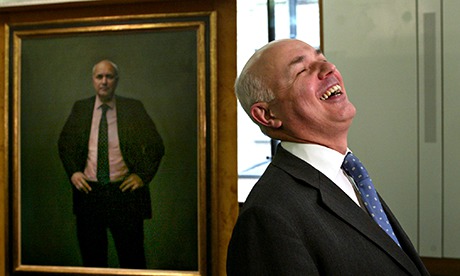
How does it feel to be written off by a vampire onion with a fake CV?
“Double six. Two of yours. Two actual living, breathing human beings.”
Something pinged when I watched this interview. A connection was made where before there had only been a fuzzy proximity. And in that moment, one of the fundamental and perennial problems of politics crystallised.
“Low-value people”? Who defines people in terms of their value? As if it were some predetermined, unchangeable quantity? People who don’t see people as people, that’s who; people who see people as pieces in a game. Their game.
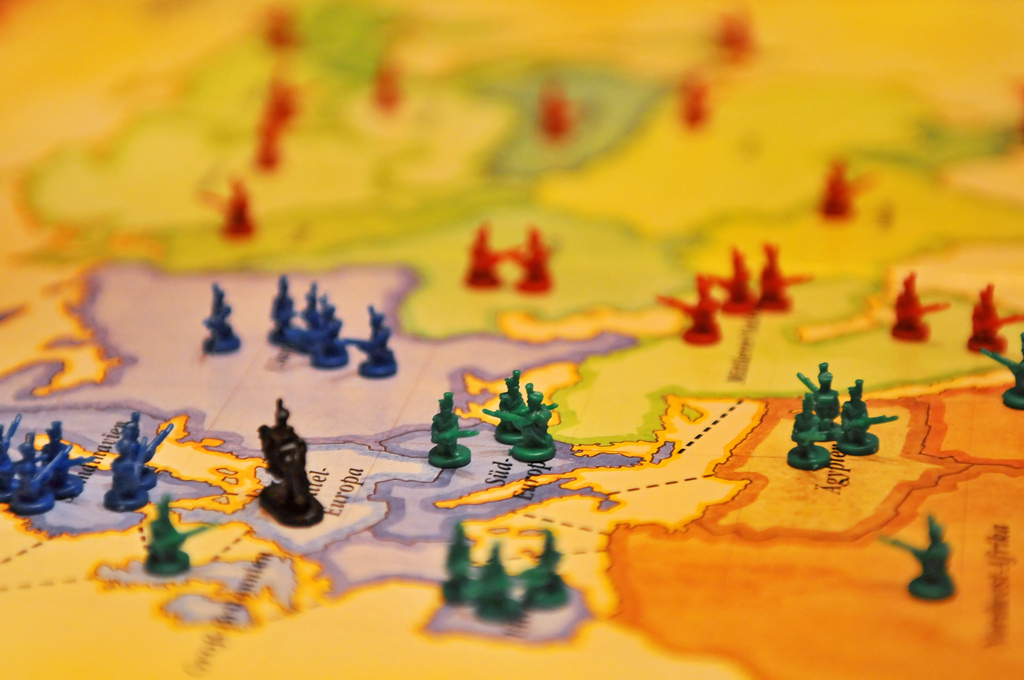
Look at yourself through Iain Duncan Smith’s eyes for a second. What are you? A pawn? A bishop? A king? Are you worth sacrificing for guaranteed mate in four?
Perhaps Risk is a better analogy. Up to six can play, diplomacy and chance have a greater role, and troops can be replenished. (There’s probably an even better one in the world of video games, but since I’ve been out of that world for a good 15 years now, I’ll leave that to the fancy of the digitally minded.)
The metaphorical link between politics and games has always been strong. Games started out, after all, as simplified simulations of life. Military commanders have long used counters on boards to represent troops. Game theory, under the right conditions and parameters, has been revealed as one of the better approximators of human behaviour. And increasing computer processing power means that the gap between simulations and reality is fast dwindling to nothing. It should come as no surprise that the opposite transformation sometimes occurs.
“And then I ate him. Artists are a bit … stringy”
But when it comes to real policies, which affect real people – people you know, people you love – is it really acceptable to think, and legislate, in terms of pebbles or pieces of plastic? How does it feel when a vampire onion with a fake CV writes you off on the basis of a report drawn up by a prematurely balding double-barrelled nanny’s boy straight out of Oxford via Harrow? Who made this fucking loser God?
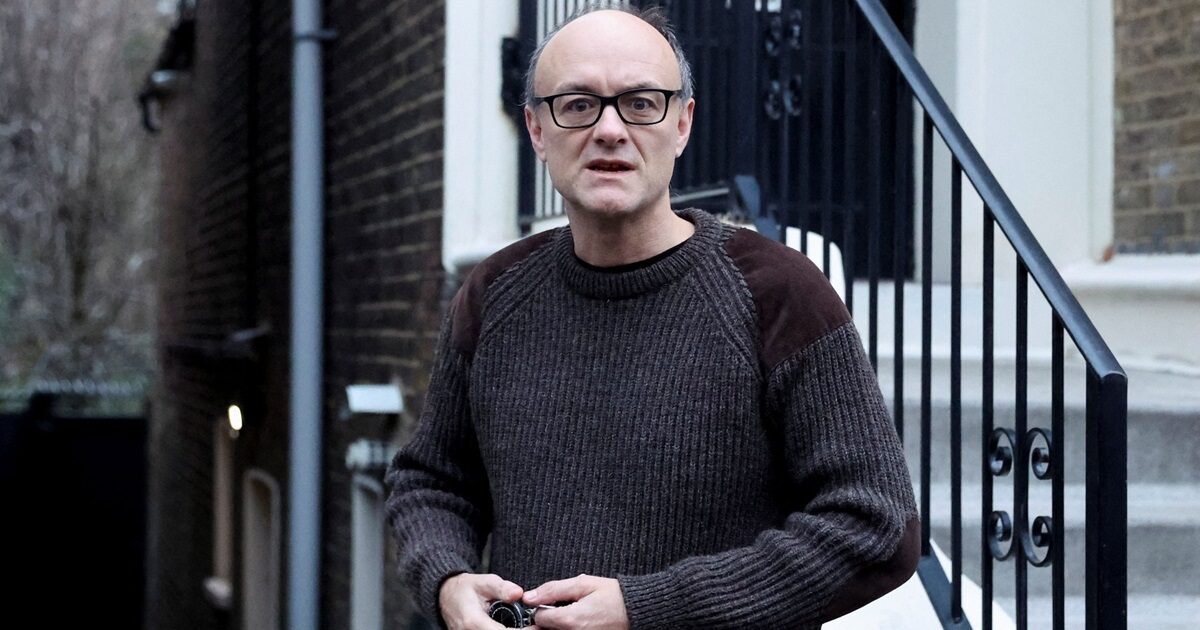
I can’t shake the image of Duncan Smith, and sundry shadowy halitotic sepulchraves like Dominic Cummings, releasing silent farts in their Soho club, cradling a brandy and sniggering as they dispatch five infantry and two cavalry from Japan into Kamchatka. And then your disability benefits are stopped. Kaboom.
I like to think, if more people kept this image in their skulls as they walked into the polling booth, that our governments would look very different from the way they do today.
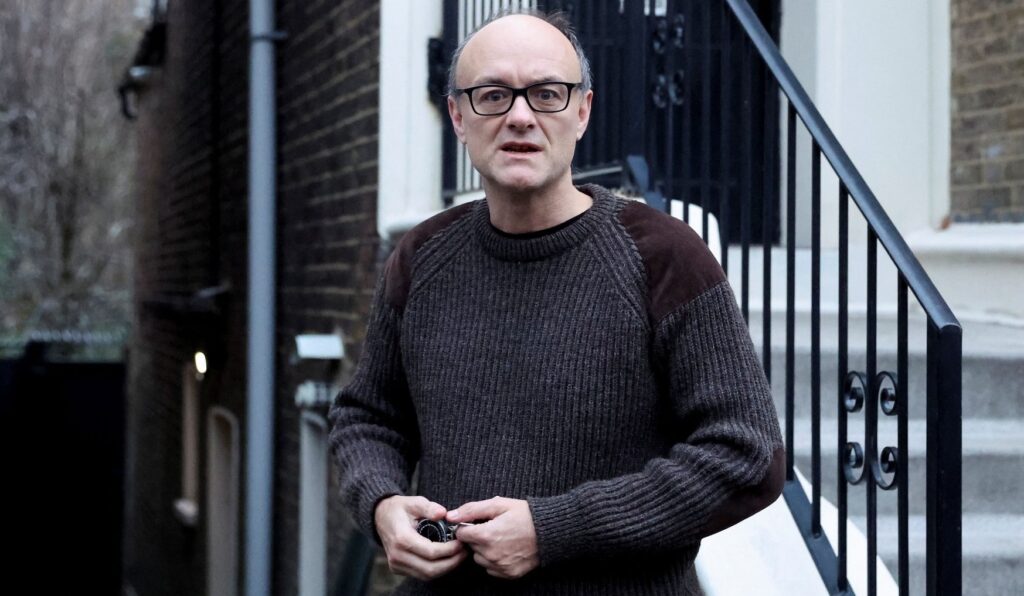
‘Humanity has produced few true visionaries. But it’s produced plenty of arseholes who thought they were visionaries.’ Photograph: Hannah McKay/Reuters
Andy Bodle here. Remember me?
It would be wrong to say we were close at university,
except in the strictly geometric sense. You were my neighbour on Staircase 9 in
Exeter College in 1991/2 – my fourth year, your first. We didn’t hang out much,
because you didn’t really hang out with anyone, but on the occasional Sundays you
would invite me into your room for a glass of port and a game of chess. I think
I managed a draw with you once.
But as this was the extent of our social
interaction, we didn’t exchange details when I graduated, and we lost touch.
So it came as quite a pleasant surprise when,
about 14 years ago, you turned up in my office as the guest speaker at our
morning meeting (I believe you were an adviser to Michael Gove as education
secretary at the time). We exchanged brief pleasantries and I think we might
even have mooted meeting for a drink one day. We didn’t.
It was a rather less pleasant surprise when, four
years after that, you appeared again, at the forefront of the insane clown
posse that was Vote Leave, the official campaign group advocating the UK’s exit
from the European Union. And to widespread surprise, you won.
In case you hadn’t guessed, that’s why I’m
reaching out after all this time.
Initially, I was angry – very, very angry, to the point that I found
out where you lived with the firm intention of knocking on your door and punching
you in the face. Nine years on, I’m still extremely angry – because my life is no less
ruined by Brexit, and the nation no less fucked – but since it’s neither healthy nor physiologically possible to sustain
that level of hatred for more than a few years, I’ve now calmed down enough to address you with
what I hope is some measure of restraint.
So here’s my question. Why? Why were you so
determined to drag the UK out of the EU?
Millions of businesses, millions of livelihoods, hundreds
of thousands of relationships, 4% of GDP, the fishing industry, the NHS, social
care, UK farming, household budgets, Jo Cox, Makram Ali, Duncan Keating, Arek
Jozwik, the freedom of movement of 68 million people across 30 countries, were
all acceptable casualties in the pursuit of what, exactly?
For most of the Brexit cabal, the answer
is not hard to fathom. They’re racists, they’re nostalgia-driven Thatcher loyalists,
they’re business leaders looking to slash costs by slashing workers’ rights, they’re
grifters, they’re short sellers, they’re Hayek/Friedman free-market loons,
they’re idiots.
You, though, as far as I’ve been able to
ascertain, are none of the above. You have no employees to strip rights from, no
CEO bonus to swell, no colossal hedge fund likely to be further inflated by
relaxed regulations, no willingness to spout populist bollocks born of a burning
desire to be in the public eye, and your college room was relatively light on
Nazi memorabilia.
You have offered us a few nuggets over the years,
most notably the arguments you put on buses and full-page newspaper adverts – £350m
a week for the NHS, Turkey joining, etc – but as half of us knew then and most
of us know now, they were bullshit.
There have also been some possible pointers in your
public statements, usually in evidence to various parliamentary committees, and
I’ll touch on those as they come up, but none of them really stand up to any
sort of scrutiny either.
There’s probably something buried in one of your interminable
screeds on Substack, but first, I don’t have enough time left on this earth to be
trawling through a quintillion words of vicious, poorly structured, self-aggrandizing
jabber, and second, I don’t see why I or anyone else should have to find out
why you made us poorer by parting with yet more cash.
So I wondered if, as a courtesy to an old
acquaintance, whether you might for once in your life, with minimal evasion,
divagation and tu quoque, provide a succinct and direct answer to my question?
I realise that a life spent on the extreme fringe
of rightwing politics, in the company of (by your own admission) charlatans,
fools and professional propagandists, will have caused irreparable damage to
your relationship with the truth. But for once in your life, Dom, please try to
include at least a smattering of it in your reply. Because I really, really
want to know why you did this.
One of your guiding principles seems to
be that the end justifies the means; that any amount of collateral damage is
acceptable in pursuit of your goals; that you can’t make an omelette without
breaking eggs. Which raises the question: how fucking big and delicious is this
omelette to merit the violent destruction of so many millions of eggs? And
where the fuck is it?*
This was originally intended to be a single
blogpost, but I don’t believe modern attention spans will relish everything I
have to say at once.
So over the coming weeks, I’ll list, in more or less reverse order, all the explanations I’ve been able to conceive of: the ideological, the cultural, the economic, the personal. Some are more plausible than others, but literally none of them, as far as I can tell, seems valid enough to justify the massive historic damage you’ve inflicted on your country.
*Sorry. I did warn you there was still some residual anger. But courtesy and diplomacy have never really been your thing anyway, have they?
Next time: did you back Brexit because you’re a Nazi?
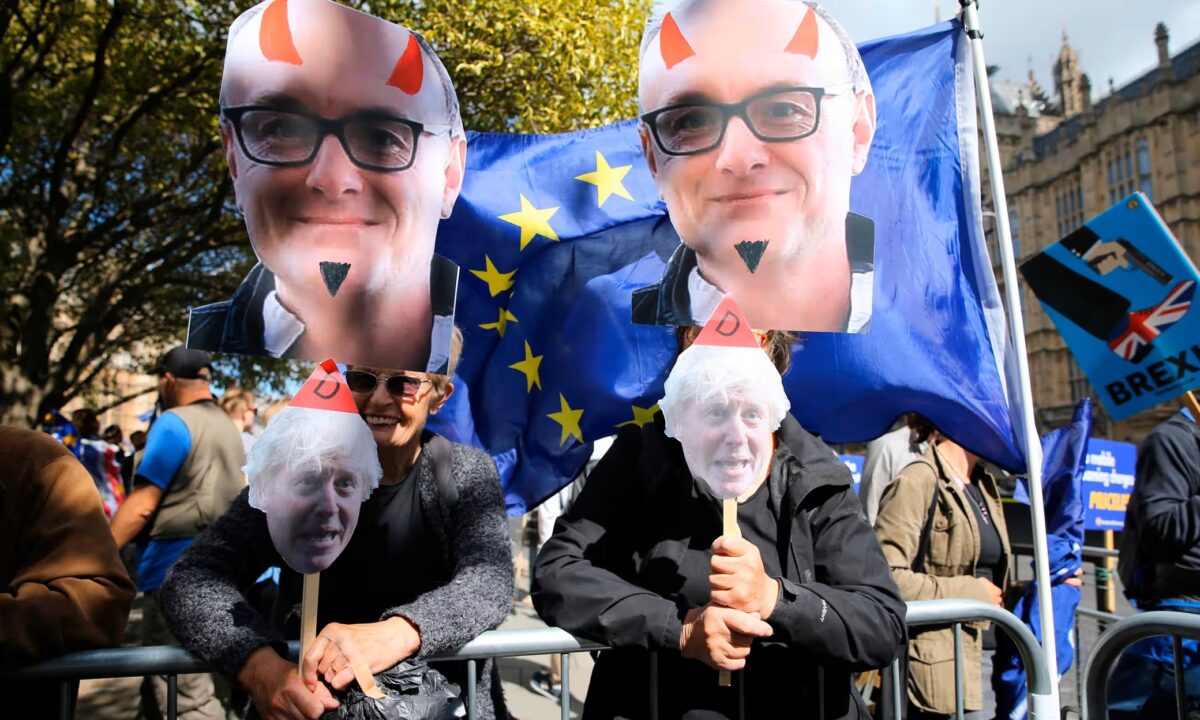
Have you considered getting some horns? They rather become you.
Dear Dominic Cummings,
I know. It’s not fair to label all Brexit voters and campaigners as racists. For one thing, you bamboozled thousands of curry house owners into backing leave by (very quietly) promising them relaxed immigration rules for workers from Asia. On the other hand, you’d be hard pushed to find a white supremacist who didn’t swing behind it. The question here is whether it was hatred of foreigners that was driving you.
Shame, cos I was quite proud of this one.
If I’d needed any
convincing, by the by, that Brexit was beloved of the far right, the last nine
years would have set me straight. I’ve been doxxed, received death threats, and
had someone send me a picture of the pub at the end of my street, merely for expressing
the view online that the UK might have been better off staying in the European
Union. And last time I went on a pro-EU march, a band of Brexit thugs outside
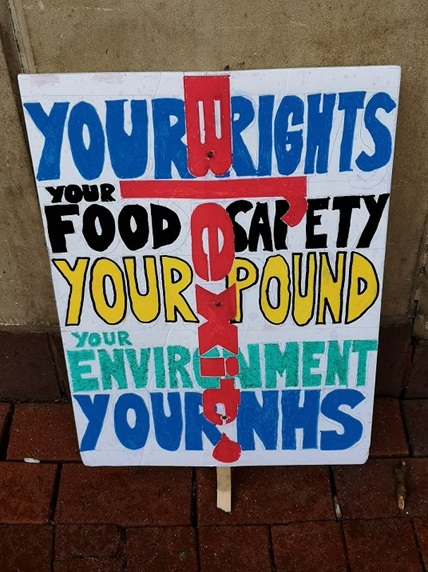
Westminster tube station physically attacked me and snapped my placard in two.
I’ll save us time and take it as read that you condemn such behaviour in the strongest possible terms, while taking care to note that those individuals are a tiny minority and not representative of the leave movement as a whole, yada yada.
In our university days, I never got any overtly Ku Klux Klan vibes from you, although Oxford at the time was whiter than a No 10 staffer’s septum and since you never left your room, I never saw you interact with anyone but me.
The Leave
campaign was a many-headed beast, but by far the two biggest heads were your
bunch, Vote Leave, and Banks and Farage’s Leave.EU. While you were at pains to
point out that there was no cooperation between your groups, somehow, your attack
lines somehow dovetailed beautifully.
Leave.EU took the low road, spreading egregious falsehoods and obsessively shrieking “immigration”, appealing to people’s lizard brains, their base emotions. Your Vote Leave, meanwhile, took a semi-respectable, pseudo-intellectual approach, avoiding outright deception in favour of half-truths, exaggerations and cherry-picked data.
Ah. Two classic pieces by the Bruegel of Bullshit, Darren Grimes of BeLeave.
Leave.EU’s manure fuelled the motivation – racism – but it was your seemingly rational arguments that gave the shit a patina of legitimacy. So millions of people were free to vote with their gut safe in the knowledge that they could justify it to themselves and others with impressive-sounding but meaningless stats and equally meaningless abstract concepts like “sovereignty”. The bald fact is, you’d never have got over the line without them, nor they without you.
“The EU … [has ] got this combination of free movement, can’t cope with Islamic nutjobs and growing political extremist parties” – Dominic Cummings, 2017
For all that, I’m
fairly sure that you, as an educated man, don’t subscribe to the belief that
white people are genetically superior to black or brown ones. I’m also sure that
you, as a devotee of data, know very well that immigrants are net contributors
to the economy; that they are twice as likely as native Britons to set up their
own business; that only a small minority of immigrants are terrorists or
rapists or scroungers and the crime rate among immigrants is no worse than
among the native-born; that the great majority of asylum claims are found to be
valid; that the only reason some are a temporary drain on state coffers is
because successive UK governments pandering to their perceived xenophobic base
have deliberately created an abstruse and arduous asylum process and that the
state forbids them from working for a year (compared with six months, for
example, in Germany); that much of Britain’s historic wealth and influence was
built on immigrant labour and technical skill (as well as on slavery, which is
just immigration minus the letting-them-in part); and that in future, without
significant levels of inflow, the UK’s population, and therefore growth, will collapse.
I’m sure you also figured out at some point that you can’t just click your fingers and get all of Britain’s young, sick, or recently retired people to fill in for the jobs that immigrants currently do.
You might even admit under light torture that the “problem” with immigration is not the reality of the thing – most people who’ve met immigrants hold no fear of them – but its perception, which has been shaped for years by the Daily Mail, the Spectator, Tommy Robinson, Farage, and, well, you.
You have been
vocal in recent years about the EU’s inability to reduce immigrant numbers. (Though
if this were a genuine worry of yours, one would think you’d prefer the UK to
be on the inside, since even though we take in fewer souls than almost any
other country, it’s just as much our concern as the other 27 states’, and it
might be useful to have access to Europol, Frontex, the Schengen Information
System and the European Arrest Warrant.)
Perhaps, though, you’re not a full-blooded racist, but merely a patriot: a believer in sovereignty and self-determination.
But here again, I can’t imagine that you, a self-professed philosopher king, haven’t twigged that membership of an economic bloc – impossible without some shared standards and values – involves surrendering a barely measurable fraction of national sovereignty in return for enormous benefits to commerce and culture and opportunities for its citizens. It’s a trade-off that 27 other advanced, wealthy countries have been more than happy to make.
I’m sure you’re also aware that Brussels never really dictated anything to the UK, because the UK was a full and equal partner in all decisions (some would say, thanks to the concessions won by Margaret Thatcher’s bullying, a more than equal partner). Indeed, many of the most unpopular laws “inflicted on” Britain, such as the measures to promote energy-efficient lightbulbs, were British proposals.
And if, as I will discuss in a future post, you hoped one of the bonuses of Brexit would be closer alignment with (ie subservience to) the US, can the notion of sovereignty really be so precious to you?
All of which leads me to near certainty that you, as a literate and numerate man, will have known full well that leaving the EU would do nothing to alleviate the immigrant crisis, so there’s no way you’d have inflicted such deep and lasting damage on Britain’s economy, its relations with its allies, and its global soft power, for that reason.
On balance, then, I’ll grant you the benefit of the doubt and conclude that racism was not your chief motivation for Brexit. While taking care to note that you collaborated with racists, used methods favoured by racists to win the hearts of racists, caused a massive rise in racially motivated attacks, and handed more political power to racists than they could have dreamed of 20 years ago.
Next time: did you back Brexit because you’re a communist?
One explanation for Dominic Cummings’ support for Brexit suggests he knew exactly how much damage it would do – and that damaging the UK was the whole point
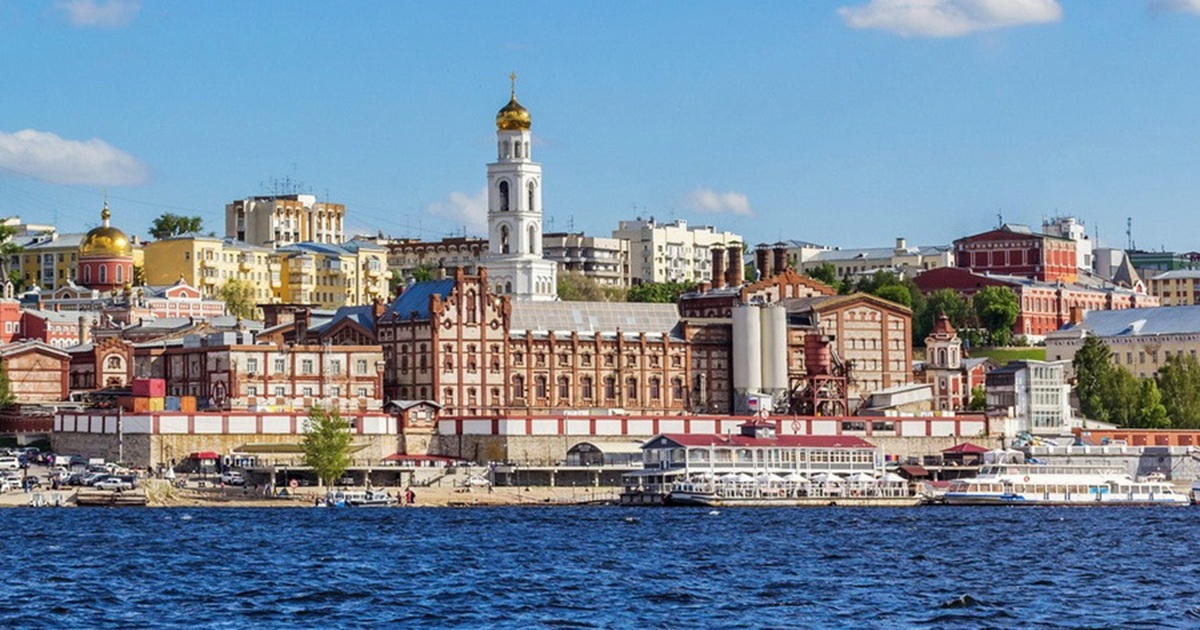
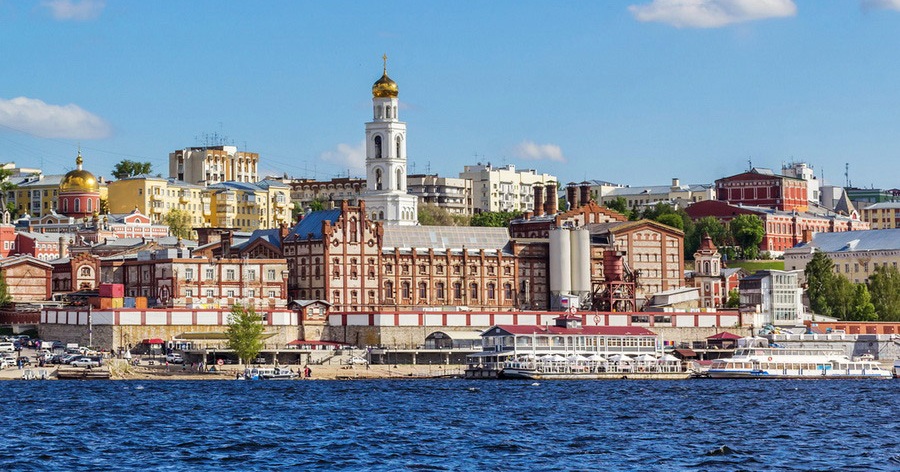
Samara, Russia: not actually a bad location for a Bond movie.
Now that we’re fairly sure your backing of Brexit didn’t come from a far-right place, let’s examine the opposite possibility.
The virtue of this theory is that it’s one of the few that credits you with some intelligence, since it suggests you knew exactly how much damage leaving the EU would do to the UK … and that damaging the UK was the whole point, because you are working for its enemies. (When I say communist, I don’t, of course, mean communist in the sense of believing in shared ownership of the means of production, but in the sense of an ally of the successors of the Soviet Union.)
The drawback is that it sounds silly.
It is, not, however, entirely without basis, so in the interests of thoroughness, let’s go over the evidence that you’re a traitor and a spy.
First, as we’ve established, “patriot” likely isn’t the first word we’d see on your Grindr profile. Unlike Farage and co, you’ve never falsely bragged about how much you love your country, and to be fair to you, your country’s given you few reasons to love it. Bullied at school, ignored at university, a virgin until some time after your child’s third birthday … One of your favourite ways to boost your maverick mythos is to boast how little you care that people don’t like you. Of course, the only people who ever say that are people who’ve never been liked.
You’ve made clear on countless occasions the depth of the contempt in which you hold your fellow Britons, dumbing your referendum campaign down to breast-beating, big numbers and dog whistles, slagging off the “biased liberal media”, universities, civil servants, judges and experts of all stripes, and even tearing a strip off your nominal allies, calling Boris Johnson “mad” and “a joke”, David Davis “thick as mince”, the European Research Group “useful idiots” and “a tumour that needs to be excised”, and Tory ministers “useful fuckpigs” and “morons”.
Can we really expect someone to act in the best interests of their country when they despise most of its inhabitants?
Second, Oxford and Cambridge universities have famously been fertile espionage recruiting grounds for generations. MI5 and MI6 still yoink a disproportionate number of their spooks from the quads – you and I both know people who had the tap on the shoulder – and the baddies got David Floyd, Jenifer Hart, Bernard Floud, Philby, Maclean and co, and Lord knows how many more whose files aren’t declassified yet.
Third, even though your undergraduate degree was in history, you spent much of your time learning Russian on the side. When I asked you why, you said “for fun”. One of your tutors there was Norman Stone, a radical thinker and an eminently blackmailable violent alcoholic womaniser who was so enamoured with Britain that he spent his twilight years in Turkey.
Fourth, immediately after graduating, you left the UK for an adventure on the balmy shores of … Samara, in south-western Russia, where you supposedly spent three years trying and failing to set up an airline, but supporting evidence for this beyond your own testimony is hard to come by. And what did you do the moment you came home? Throw yourself into the campaign to keep the UK out of the euro – the precursor, in terms of personnel, world-view and methods, to the Brexit campaign.
Fifth, your campaigning methods – and by that I mean the logical fallacies you like to use in your “arguments”: ad hominem, tu quoque, straw men, appeals to emotion, hyperbole, red herrings – are all lifted straight from the Kremlin playbook. If you do curl out a response these posts, I will be exceedingly surprised if it contains anything more than whataboutery and squeals of “liberal bias”.
And sixth, you could barely insert a sheet of tracing paper between your views and Vladimir Putin’s on a range of issues. You’re in complete alignment on the “menace” posed by the EU, the failures of liberalism, and the need for the west to abandon Ukraine. Like your programmer, Norman Stone, you have a soft spot in that leathery carapace for strong, charismatic and ruthless leaders: Sun Tzu, Pericles, Bismarck, Oppenheimer, Steve Jobs. And if you’ve ever said a kind word about NATO, I can’t find it.
When I put most of this to you on Twitter in 2017, you replied, “Don’t be ridiculous.” That’s settled, then!
I grant you, though, that there are counterarguments, the most obvious of which is the timing.
At the height of your Slavic infatuation, glasnost and perestroika were still in full swing. Russia was, if not an ally of the west, safely out of enemy territory. Surely Red Square wouldn’t have been recruiting at a time of reform, reconciliation and hope?
Well. While the immediate threat of thermonuclear armageddon receded in the 90s, for our respective intelligence agencies, the cold war never ended. And when you returned to the UK with your tail between your legs, Putin, who had already set his mind on restoring Russia to its post-WW2 glory days, was only a year away from becoming head of the FSB.
There remains the question of motive. Spies tend to be wooed in three ways: beliefs, bribery and blackmail. We can instantly discount the idea that you palled up with Putin for ideological reasons, since Putin doesn’t have an ideology, unless you count staying in power for as long as possible.
I’m not sure quite how wealthy you are, although that Islington town house is a bit fancy for a drifting fixer and a rentabollocks Spectator hack. But it bears mentioning in passing that Russia has long been famous for its “Kompromat hotels”, where people the Kremlin wanted to control or bring down were enticed into participating in depraved acts, and subsequently shown the tapes.
The main hillock upon which this theory stumbles is that if you were a Russian asset, surely, surely, the UK’s vaunted intelligence services would have raised a flag at some point. This is not, of course, necessarily the case; MIs 5 and 6 are far from infallible and have been compromised more than once. Moreover, while civil servants and senior politicians are thoroughly vetted, Spads (advisers, for those not in the know) such as yourself are subject to much less rigorous background checks.
Still. My faith in HMSS – and my reluctance to believe that I lived adjacent to a John Le Carre villain for a year – are sufficient to give you the benefit of the doubt.
Most of the potential motives for Brexit that I’ve imputed to you so far have been, shall we say, less than generous. Not that many would blame me; the Leave camp wasn’t exactly awash with noble intentions. Most of your allies were self-serving faux-racist demagogues, avaricious business leaders, no-mark, no-brain backbench MPs and hasbeens hellbent on avenging Thatcher’s downfall, and crooks.
We must now consider the notion, however perverse, that you acted in good faith. That despite sharing methods with the Nationalsozialistische Deutsche Arbeiterpartei of the 1930s and the Communist party of the Soviet Union from the 1920s to the 1950s – the Big Lie, short, simple and false slogans, demonising minorities, crowbarring open social divisions – you don’t necessarily share their aims. That instead of being a 24-carat cunt, you are merely a Dreadnought-class dimwit.
But if you genuinely believed Brexit would benefit the UK, that raises the £350m question: why? What principles was this belief founded on? Who is Dominic Cummings?
Too cool for schools of thought
Most people are upfront about their philosophies. They’re happy to be described as communists, environmentalists, centrists, or Muslims, because that’s how they describe themselves. You, though, have always tetchily resisted being pigeonholed. (Which to me smacks of the schoolboy desire to be seen as cool, edgy, a maverick, an outsider, whereas in truth your punk-rock credentials extend to sometimes wearing your Wednesday socks on a Thursday.)
When someone refuses to be labelled, you have to build a picture of their world-view the hard way: by looking at their influences, their associates, their words and their deeds. Since you haven’t actually done anything, that just leaves your influences, associates and words.
I’ve already mentioned Norman Stone, your history tutor at Oxford, who evidently left quite a mark on you (albeit a different sort of mark from the ones he left on his wives). Stone was a hater of institutions, a deep blue Conservative, and a staunch fan of Margaret Thatcher in particular.
When you came back from Russia in the late 1990s, you threw your lot in with Business for Sterling and the No campaign, which opposed the UK joining the euro (slogan: “Europe yes, euro no”. How quickly things change). This was populated by most of the same rights-and-standards-phobic CEOs who later campaigned for Brexit – Lord Wolfson, Lord Bamford, Rupert Lowe, Tim Martin, Richard Tice, Jonathan Warburton, Lord Sainsbury – and the remaining dregs of Thatcher’s toadiest toadies, Lawson, Rifkind et al.
After a stormy period advising Iain Duncan Smith when he was leader of the opposition, your next big project was the New Frontiers Foundation, a free-market libertarian “thinktank” (a word that should send shudders down every spine) that called for the dismantling of the BBC, the civil service, the EU and the UN. Your chief partner in crime there was James Frayne, who has spent his life since writing evidence-free guff for the Telegraph and Conservative Home, and scurrying around various shady, opaquely funded rightwing thinktanks.
Then it was on to North-East Says No, the campaign against a regional assembly on your childhood turf. (Every time you’ve espoused a cause, you’ve been victorious. I sometimes wonder what would happen if you ever campaigned for something, rather than against it.)
Your last big job before Brexit, and probably one of your longest associations, was as adviser to noted climate change denier and Iraq War backer Michael Gove when he was education secretary. But the only thing of substance that clown is remembered for saying is that people have had enough of experts, a line that reeks of Eau de Dom, and it seems fair to assume that the influence in that partnership ran exclusively one way.
Post-Brexit, of course, we have your illuminating stint as eminence grise to Boris Johnson during the clusterfuck that was the UK’s response to the Covid pandemic. A period when draconian rules were imposed on the demos (rightly, in my view), with exemptions for a certain Boris Johnson (Partygate) and Dominic Cummings (Barnard Castle).
Norman Stone aside, it’s not clear what, if anything, you learned from any of these collaborators, so let’s examine some other potential influences. Here’s a short list of historical and present-day figures for whom you have expressed admiration: ancient Greek historian Thucydides, Dostoevsky, wartime Churchill aide Viscount Alanbrooke, Apollo programme engineer George Mueller, Manhattan Project mathematician John von Neumann, and Otto von Bismarck.
These were industrious men; men of vision, men of ambition, men of action. Men who got things done. Men, men, men, men, manly men, men, men. Men who were, for the most part, sceptical or even scornful of the concept of democracy and due process and who were, almost to a man, far more concerned with personal glory and the glory of the state than with the welfare of ordinary people.
I’ve said before that I’m not going to further deplete my Brexit-drained pockets by paying to wade through the Elliot Rodger-esque jeremiads on your Substack, but in your public pronouncements, you’ve dropped a few more clues about your view of the world.
In the early noughties, at the NFF, you spoke of the need to remove barriers to free trade and foreign capital (15 years before erecting the biggest barriers to trade the UK has seen in our lifetime) and of your desire to “drastically reduce the regulatory burden on businesses”.
You’ve repeatedly called for more “nimbleness” in government and management – as opposed to what we see from the “bloated”, “hidebound”, “stagnant”, “sclerotic”, “failing”, “moribund” civil service and EU; for the sort of dynamic, industrious taskforces of geniuses that gave us the atom bomb, the Apollo programme and Silicon Valley.
You have at least once complained that the UK has failed to exploit the opportunities arising from freedom from the EU, mirroring the myriad grumbles of other ardent Brexiters who moaned about us getting the “wrong sort of Brexit”.
And of all the world’s nations, the one that seems to be closest to where your heart should be is the United States. As well as fangirling over its technological achievements, you have on more than one occasion called for closer ties with our onetime colony, even if to the detriment of our relationship with our neighbours.
For someone who claims to be uncategorisable, there are some strong threads running through these names, bodies and statements. Low tax. Small state. Nationalism. A cavalier attitude to rules and regulations, and outright contempt for the common man.
It all seems to place you squarely in the same laissez-faire park as Ayn Rand, Friedrich Hayek, Milton Friedman and Liz Truss. The sort of people who would see Brexit as a gateway to their dream of creating “Singapore-on-Thames”; whose grand idea for governing is not to govern at all, but to entrust the future of the country to the philanthropy of CEOs and the benevolent wisdom of stock traders.
It’s extremely tempting to conclude that, for all your scruffy rebel trimmings, you’re just another neoliberal.
Disastrous capitalism
Neoliberalism, for those who didn’t glance at the news in 2022, is big-boy, max-strength, batshit capitalism. On crack. It’s about eliminating everything that could conceivably put a dent in profits; about maximising CEO bonuses and share payouts in the short term, and pretending the long term doesn’t exist. If too much tax is a bad thing, no tax must be best! If too many regulations stifle investment and innovation, then surely zero regulations is the answer!
But if neoliberalism is such an obviously terrific idea, Dom, how come it wasn’t universally adopted from the moment of its conception? One reason, really: it’s fucking terrible for 99% of the population.
Little ever trickles down. Without some sort of external rebalancing mechanism, such as that provided by the state or a body like the EU, it merely concentrates in an ever smaller number of hands. Millionaires hoard their millions until they’re billionaires, and our present-day billionaires are now laser-focused on hitting 13 figures.
Singapore has achieved its success only through eye-watering levels of immigration (40% of the labour force are foreign-born), which might have been a hard sell to most Brexit voters. The US, too, owes much of its prosperity to outsiders – the Manhattan Project team in particular was stuffed with surnames that most of your supporters wouldn’t dare try to pronounce.
And while America is undoubtedly the wealthiest nation on Earth, that wealth is enjoyed by a tiny fraction of Americans. The inequality there has reached levels not seen since 1910, contributing to violent crime rates higher than in any other developed country. Workers have few rights and next to no holidays, decent healthcare is unattainable by all but the gilded few, and as a consequence, life expectancy in the US is lower than in Panama and Albania and it’s battling with Belize for 24th spot in the World Happiness Index. (The UK is in 23rd, down from 14th in 2020. The Brexit bonuses just keep rolling in.)
Even if we did want to emulate that “success”, we’d have our work cut out, as the US has five times the population of the UK and 50 times the natural resources.
While no one would disagree that too much red tape is a bad thing, it wasn’t devised purely to annoy rightwingers. It actually has uses: safety considerations, antitrust, quality control, environmental protections, consumer choice. Following proper procedures also allows us to achieve widespread consensus for an idea (and no, I don’t mean the flimsy, fleeting sort of consensus you can whip up by pasting bollocks on the side of a bus) so that it can go ahead with proper resourcing and popular support.
Lower standards aren’t just an accidental by-product of deregulation – they’re the whole point, as Jacob Rees-Mogg witlessly let slip with his “good enough for India” comment to the Treasury Committee soon after Brexit.
Regulation conflagrations result in huge short-term gains for CEOs and traders … and market crashes, runaway inequality, and disasters like Grenfell and Bhopal and Deepwater Horizon and Boeing.
And while the lean, nimble, efficient taskforces you have such a hard-on for are great for achieving specific, limited goals, they’re not really the ideal vessels for tackling bigger, longer-term problems, like coordinating international efforts to reduce waste and pollution and deforestation, tackling mass migrations, mounting a response to a global pandemic, or, I dunno, maintaining peace in Europe.
(Interesting parallel here: you’ve proved yourself adept at assembling teams to achieve the specific short-term goal of smashing things up, and you maintained your 100% record with Brexit. But when it came to the real, hard, complex job of forging a post-Brexit future for Britain, you, and every other Brexit nutjob, have abjectly failed. Because that involves long-term thinking, long-term planning, innovation, imagination, research, consultation, and achieving a real, lasting consensus, and not many of the thinkers, planners, innovators and diplomats, having been on the other side of the argument, were lining up to help out.)
The implicit “right sort of Brexit”, of course, was “the Brexit we secretly wanted but never actually described in detail because if we had, you’d never have voted for it”. You can win a referendum with lies, but to then deliver the exact opposite of what was promised was a political impossibility even for Boris Johnson’s Tories.
You’d sooner dress like a grown-up than admit it, but what most Brexit voters really wanted was BRINO – Brexit in name only. They wanted a win; they wanted their voices to be heard, to know their concerns were being acknowledged; but, aside from perhaps the genocide of all non-white folk, they didn’t actually want anything to change. If I had a pound for every time I’d heard some variation on the phrase “Stop panicking, there won’t be any downsides!”, the UK’s GDP would only be 3% lower because of Brexit instead of 4%.
Take this hilarious tractor twat, for example, who insisted that Brexit would make no difference, and that, at the same time, leaving the EU would somehow mean less red tape when trading with the EU.
False flag
But while I feel we’re edging closer to the truth here, I still don’t think the neoliberal dream was necessarily what you were chasing when you shoved the UK off the top floor of the Hotel Brussels without a crash mat.
For one thing, EU membership wasn’t really an obstacle to any of your stated goals. We’ve always been free to set up taskforces, to decide our own response to pandemics and suchlike, and besides, the UK had a disproportionate say in the laws that the EU drew up and passed. Being part of the bloc in many ways made innovation easier, as it gave us access to more funding and a deeper pool of talent.
Another reason I don’t think we’ve quite hit the nail on the head is that you know neoliberalism is not the answer. You’re a student of history and the classics and you’re up to speed with the news. (Hell, you were the news for a good few weeks.) You’re fully aware that a serially discredited ideology that’s been endlessly tried and tweaked and ended in tears for all but a few every time can’t possibly be the best path forward for Britain. Despite your stated desire for a meritocracy (government by the most deserving) and/or technocracy (government by the brightest), you know very well that populist methods only ever deliver kakistocracies (government by the worst): the likes of Boris Johnson, Donald Trump and Nigel Farage, the sort of lazy, narcissistic, self-serving scum described to a τ by the democrat/tyrants of Plato’s Republic.
But the main reason I don’t think you were acting in Britain’s best interests is that you hate your country.
You genuinely seem to believe the average IQ rises by 100% when you enter any room. You make no attempt to mask your disdain for your fellow man. Your political opponents, the media, the civil service, Tory politicians, even your direct collaborators: all are, in your jaded, bulging eyes, beneath you. And you hold the general public in such utter contempt that you blithely assumed they would swallow your outrageous referendum lies (52% of them duly obliged).
Why would anyone who regards literally all of his countrymen as blethering idiots ever devote so much time and effort to doing what’s best for his country?
Oh, and to return to the matter of your world-view, now that it’s all laid out before us, it rather puts one in mind of Mary Shelley, doesn’t it? A putrid pot-pourri of random elements in varying stages of decomposition, roughly stitched together, which seems like a reasonable idea on paper, but which, given life and released into the world, proves catastrophic.
Frankenstein never gave his creature a name either.