Male competition means that males have evolved traits useful for competing with each other.
Male competition means that males have evolved traits useful for competing with each other.
“Lovers who are young indeed, and wish to know the sort of life That in this world you’re like to lead, ere you can say you’ve caught a wife, Listen to the lay of one who’s had with Cupid much to do, And love-sick once, is love-sick still, but in another point of view.”
– James Planché, The Golden Fleece
As I’ve explained in previous posts [now gone; I may put them back up some day], there are two basic principles governing sex in the natural world: female choice, and male competition. (It’s true that there are such things as female competition and male choice, but their effects seem to be far smaller.)
Female choice means that females have evolved preferences for certain characteristics in males: characteristics that either benefit her offspring genetically (strength, speed, intelligence, resistance to parasites), or materially (builds decent nests, brings food gifts, hangs around and protects/provides for a bit). She can opt for a strong, healthy male who will love her and leave her, but leave her with strong, healthy sons, who will in turn be attractive to the next generation of females (the “sexy son” hypothesis); or she can go for a male who will provide for her and her young and/or share some of the parenting, thus ensuring that more of their (slightly less attractive) offspring survive.
Male competition means that males have evolved traits useful for competing with each other: strength, aggression, cunning, a willingness to take risks. But they have also had to factor in female choice; building good nests and bringing food gifts might bring more rewards (and have fewer costs) than duffing up all your rivals, depending on the species and the environment. Pair-bonding and parenting are also valid choices, but this is highly susceptible to abuse, because of paternity uncertainty, as I mentioned last time.
Evolutionary biologists call these mating strategies. They’re not strategies in the sense that they are plans that have been consciously worked out; animals don’t teach them, or show them to their young. They’re just drives and patterns of behaviour that spontaneously appeared at some point, and were then inherited. The successful strategies, the ones that are still with us today, are the ones that have developed, over millions of years, to produce the largest number of fit, healthy offspring.
So what strategies do we see at work in modern humans? What do men and women want?
The clues point in contradictory directions. We know, for example, that height is definitely a thing for women. There isn’t a culture in the world where women prefer shorter men; taller men are far less likely to be childless than shorter ones. Human beings are around 50% taller than their ancestors from 3 million years ago, and it’s not just down to better nutrition. Since height is a good indicator of strength and of social status, this suggests that there is widespread demand among females for a strong, dominant partner.
Then there’s the enduring appeal of the “bad boy”. Russell Crowe, Russell Brand, Robert Downey Jr, Charlie Sheen, Darren fucking Day, Ashley Cole, Chris Brown: despite their inability to be faithful, or even fleetingly pleasant, none of them is likely to go without a date for long.
On the other hand, nice guys don’t do too badly for themselves. Sure, they’re not lusted after as much as bad boys, but I’m willing to bet that in most of the happy long-term heterosexual relationships you know, you’d describe the man as a reasonably good egg. And when you look at the basic mating system of the vast majority of human civilisations – monogamy – it’s tempting to conclude that on the whole, the female strategy has been to go for commitment, generosity and “niceness”, and the male strategy has been to go along with that.
But … you guessed it. Things aren’t quite so simple.
Because for men, there’s a strategy that’s better than being a bad boy and better than being a nice guy. It’s pretending to be a nice guy and actually being bad: namely, cheating.
If cheating behaviour ever came about, in a population where most of the partners were trusting, it would spread through the population like wildfire. (Until, of course, a behaviour evolved that counteracted cheating, such as mate guarding, mentioned last week.) Even if it’s eradicated completely, as soon as it appears again, it will spread like a plague.
One thing’s for certain: we’ve all got a lot of cheating men in our family tree.
Similarly, from the woman’s perspective, the choice needn’t be just between the stud who leaves you up the duff and doesn’t give you a penny and the besotted, committed wimp who devotes himself to your children. From an evolutionary point of view, the best thing to do is shag the stud and dupe the wimp into bringing up his child. Best of both worlds!
This is exactly what happens with a lot of “monogamous” species, notably birds, such as the blue fairy wren. And as we’ve seen from results of DNA fingerprinting studies, it seems it’s more common than we’d like to think in humans.
Most biologists don’t actually class humans as monogamous. They describe us as mildly polygynous, or selectively promiscuous. Helen Fisher’s theory is that we’re serial monogamists; after studying the brain chemistry of attraction, she has concluded that humans are designed to stay together for only about four years – just long enough that the child has a good chance of surviving with one parent.
The more attentive among you will have noticed that we have drifted somewhat off the point I was originally driving at: the differences between men and women. But it’s been a detour with a purpose: to illuminate some of the contrasting challenges that face males and females in the mating arena.
I hope you’ll agree, for example, that our little thought experiment goes some way towards explaining the following phenomena:
Why it is overwhelmingly men, not women, who initiate courtship
Why so many women can’t stop dating bastards
Why coyness is virtually unheard of in men
Why there’s no such thing as a subtly wealthy man, only a conspicuously wealthy one
The otherwise incomprehensible popularity of Fifty Shades of Grey
Why, now that women’s earnings are almost on a par with men’s, some women are writing about the “new scarcity” of decent marriage options
Why men, on average, have a higher sex drive (I’m not going to get into an argument about this. It’s been proven over and over again. Let’s just say that if the female sex drive were as great as the male, we’d still be living in caves)
Why looks matter more to men than to women (health and fertility are all they need to worry about; women have a more extensive list of requirements)
Why women tend to prefer older men (status, ability to provide) and men to prefer younger women (fertility)
Why twice as many men as women remain childless
Why men take more risks
Why women are more worried about emotional infidelity (risk of losing resources) and men are more concerned about sexual infidelity (risk of wasting resources)
Why women’s tastes change according to the time of the month: they prefer more masculine (alpha/sexy son) faces when ovulating, and kinder, gentler faces for the remainder.
Let’s look at it from another angle. We’ve already seen how, anatomically speaking, men and women are virtually identical – except when it comes to the sex parts.
In the realm of sensation and perception, comparisons are harder, because there’s no good way of measuring them, but based on subjective reports, we seem to be cut from more or less the same cloth. There is, however, one obvious difference: the way we experience orgasm. There are huge disparities in frequency, duration and intensity (the theories as to why will have to wait for another day). So in terms of how we feel and interpret the world, men and women are highly similar … except when it comes to the sex part.
Doesn’t it make perfect sense, then, that when it comes to our behaviour, to our drives, our motives, our goals, men and women should be more or less indistinguishable … except for the sex part?
For my final exhibit, I call not on biology, or mathematics, or economics, but on some simple observations.
If men and women are so similar, why don’t we understand each other? Why are there so many thousands of books telling women how to trap a man into marriage, and telling men how to trick women into bed? Why do we find romantic comedies funny? Why are there so many man-hating women, and so many women-hating men? Why are we all – even feminists – so ready to make sweeping generalisations about the opposite sex (“All men are rapists”)? Why is gender such an integral part of our identity (anthropological studies indicate that it is among the most important of our ways of defining ourselves, above national identity, ethnic identity, religious identity and occupational identity)? Why do men tend to prefer more feminine women and women to prefer more masculine men, ie types as unlike themselves as possible?
We’re not brought up segregated from our opposite-sex siblings. We’re not taught different syllabuses. We’re not exposed to different TV shows or newspapers (true, many choose to consume gender-specific material – lads’ mags, chick flicks. But that’s their choice, not something they’re railroaded into). And yet, when it comes to matters of the heart (and groin), we still don’t have the faintest clue how the opposite sex operates.
Of course we’re different. There’s a yawning chasm between us. Which is why it feels so magical when, by whatever means, and for however short a time, we manage to bridge it. And the differences are not learned, they’re hardwired. They’re clearly and firmly rooted in our evolutionary past.
The problem I think most feminists have with evolutionary psychology is not with the information per se, but with how it might be used. They’re concerned, perhaps unsurprisingly, about the agenda of those carrying out and quoting the research.
But for most of us, it’s not about returning to a world where men can pinch women’s bottoms with impunity. It’s not about dragging women out of boardrooms and throwing them back in the kitchen. It’s not about banning women from map-reading and men from verbal communication.
My concerns, at least, are far pettier. I started my first blog because I wanted to figure out where I went so spectacularly wrong. I wanted to know why women I thought attainable spurned me, and women I thought unattainable spooned me. I wanted to know how a woman could choose a misogynist ratbag over a pretty decent guy, how a woman could change her mind completely overnight, and how the hell pouring a pint of beer over a woman’s head could transform someone from scum of the earth into cock of the walk. I wanted to know what, if anything, I could do to maximise my chances of being held again. That’s all.
Some people might have expected me to weigh in on the debate about Elliot Rodger’s killing spree in Santa Barbara…
Some people might have expected me to weigh in on the debate about Elliot Rodger’s killing spree in Santa Barbara, California, on May 23. After all, this is one subject I might seem vaguely qualified to talk about.
I too was serially rejected as a teenager, and was terrified that I would never lose my virginity, to the point where I tried to kill myself three times (although in my case, the desperation stemmed more from the fear that I would never experience love than the fear that I would never get my end away). I too have spent a lot of time reading about and engaging with the Men’s Rights Movement – albeit as an observer rather than a member. Until about a month ago I was following and followed by PUAHate, one of the forums Rodger visited, on Twitter. And since starting the blog, I’ve had quite a few messages from young men with similar experiences: 21-year-old virgins asking for advice, sexually frustrated young men wanting to know if it was all right to pay for sex.
But I’m not going to talk about Elliot Rodger. And nor should anyone else. Not yet.
I’m not going to start pointing fingers when there are still six families grieving. I’m not going to call for stricter gun control laws (although I do like living in a country where those laws are already strict). I’m not going to call for reforms to the United States’ mental healthcare system. I’m not going to propose the banning of all violent films or computer games. I’m not going to pin the blame on society’s culture of misogyny. (I’m no advocate of woman-hating. But if institutionalised misogyny was really the sole cause of this incident, why weren’t there more mass shootings like this when society was even more misogynistic than it is today?) I’m not going to try to hang it all on Seth Rogen and Judd Apatow, however tempting that might be. And I’m certainly not going to write a horribly misguided “open letter to Elliot Rodger” practically empathising with the guy for being a virgin at 22.
I might just as well demand the sterilisation of all Hollywood executives – that would certainly have prevented this tragedy – or the banning of all BMWs.
You get the impression that some of these people had template articles pushing their own agenda ready to go, and as soon as news of the attack broke, they simply filled in all the blanks with the name “Elliot Rodger” and fired them off.
There’s a simple reason why I’m not doing any of these things; why I’m not hitching this gruesome wagon to my own political train. Because we know practically nothing.
The vast majority of the information we currently have about Elliot Rodger comes from Elliot Rodger himself: his videos and his 141-page “manifesto”. This is a man who couldn’t be trusted to observe the most fundamental tenet of human society: don’t kill people. How the hell can we trust him to tell the truth? Judging by the videos, it seems quite likely that Rodger was a psychopath (although again, we mustn’t presume), and one of the defining characteristics of psychopaths is their tendency to manipulate and deceive.
For starters, I see no compelling reason why we should accept Elliot Rodger’s word that we was a virgin. Sure, he might not have had sex with the women he wanted to have sex with; but does anyone really believe that a 22-year-old man, with his own BMW, his own gun, a high sex drive and a colossal sense of entitlement, had never paid for sex at least once?
Even if the likes of Rodger, and Anders Breivik, and Seung-Hui Cho, are saying what they believe to be the truth, why should we accept their version? How can you trust someone who is out of his mind to know his own mind?
After events such as these, newspaper editors, legislators and the public clamour for facts, opinions, and action. But the responses should come in that order. Opinions and legislation should never be formulated without facts. Hysterical knee-jerk responses turn the debate into a series of petty rows and risk sidelining the critical issues. Look at what happened with MMR: when Andrew Wakefield published his 1998 paper suggesting a link between the vaccine and autism, newspapers disseminated it uncritically and people stopped vaccinating their children in droves. Wakefield’s methodology and results have since been systematically discredited time and time again, but no matter how often or how comprehensively the link is disproven, many people still doggedly refuse to vaccinate their children. As a result, the United States is on the brink of its worst measles outbreak in 20 years.
And if I was to ask you what the motives of the Columbine killers were, how would you reply? Probably something about video games, or bullying, or the “Trenchcoat Mafia”, because those were the memes circulating in the immediate aftermath of the massacre. The truth, in the end, was rather different.
Any or all of the issues raised by the commentators above may have been a factor in this tragedy. It might be something else entirely. We don’t know. We may never know.
But until all the evidence is in, and all expert testimonies have been heard, I’m going to resist the urge to speculate, and to campaign for changes to laws that may have had nothing to do with the deaths.
I’m going to show some fucking respect, and I’m going to show some fucking patience.
“He’s another one I wish I liked,” she said, without any apparent premeditation.
The fact that both actors turned out to be wankers should not put you off this great film.
As a boy, I was an Arsenal supporter. I made the pilgrimage to Highbury more than once, and was riveted to the Grandstand videprinter every Saturday evening. But being an Arsenal fan in Swindon in the 70s and 80s was a dispiriting experience. With the exception of the FA Cup in 1979, they won nothing; they were a mediocre, mid-table side, capable of impressive victories over top teams on their day, but just as capable of being stuffed at home by Watford. There wasn’t even anyone to share my pain with, as everyone else at school carried a Liverpool bag.
In my early teens, I devised an ingenious coping strategy: I stopped caring. It was hard at first, but after a few months’ practice, the agony of defeat had faded to a pinprick. From then on, whenever I did watch Final Score, it was with a serene disinterest.
But the strategy had an unexpected side-effect. In 1989, when, thanks to Michael Thomas’s stunning last-gasp goal at Anfield, the Gunners became champions again, my celebrations were strangely muted. In deadening myself to the pain of my team’s failures, I had lost the ability to feel any joy at their victories.
At the age of 32, I worried that a similar process was affecting my love life. I was now so practised at handling rejection that even the cruellest blow barely left a dent. I was sick with terror. Well, a dull unease. Was my toughened hide, impervious to harm, now equally impervious to love?
***
The Guardian’s 2002 spring drinks at the Saatchi Gallery was a turgid affair even by the standards of Guardian drinks. The venue had all the intimacy and ambience of an aircraft hangar; the music was muffled to an intermittent thud; the majority of my coworkers were too busy applying the 12 Tenets of Effective Networking to contemplate having fun; and most of the people I liked had sensibly arranged prior commitments. Even the B-list celebrity count was abnormally low, thanks to last-minute cancellations by Maureen Lipman and Germaine Greer.
Just as I had resigned myself to an evening of solitaire Name That Tune, I saw her.
Lucy had joined the company three weeks earlier. In her mid-20s, petite, with long brown hair, huge eyes and a life-affirming, whole-body smile, she managed simultaneously to evoke my paternal instincts and some entirely contradictory ones.
I’d been praying for a chance to talk to her ever since. But while her desk was only yards from mine, she worked on a different section of the paper, so opportunities for interaction had been scarce.
Now here she was, six feet away, engaged in awkward conversation with Adam from the website. The manner in which I interposed myself between them is unlikely to be remembered for its nonchalance.
Minutes later, Adam obligingly departed in search of a refill.
Lucy was lovelier than I’d hoped: bright, modest, unpretentious, curious about the world. Although I wasn’t on the best form of my life and she was on her guard, our backgrounds were just similar enough and our opinions just different enough to keep the conversation lively. We didn’t click so much as slide gently into place.
The next day, we took two cigarette breaks together. The day after came our first lunch. That was swiftly followed by an evening drink, which became an impromptu meal, which, being round the corner from her place, became an impromptu tour of her flat. After introducing her cohabitees, Lucy ushered me to her bedroom. Then she made us coffee, invited me to lie on her bed, and read me intimate passages from her diary.
In the normal scheme of things, I might at this point have attempted to lower the tone of the evening. But I had come to a decision. Even though Lucy was more or less my idea of perfection; even though we fitted together so well in so many ways, and even though I wanted to hold her until gangrene set in, I had already resolved that I would never make a pass at her. Because whichever way you sliced it, I did not deserve this woman. I wasn’t young enough, I wasn’t handsome enough; I wasn’t rich, successful, well dressed or well tressed enough to assert the right to take Lucy in my arms. It would be reward enough, I told myself, for her to call me friend.
Over the next couple of weeks, we started emailing regularly – nothing flirtatious; just thoughts, anecdotes, background info. The fag and lunch breaks became routine, and we shared a post-work pinot once a fortnight. It seemed I’d got my wish.
***
The lights of a descending jet glimmered in the distance as she gazed out breathlessly across the sleeping city, replaying the night’s events in her head. Dinner at Sheekey’s, cocktails at his private club, then a romantic moonlit walk along the river back to his place. And what a place! A spacious, exquisitely decorated pad on the top floor of an exclusive harbourside development, with a view that would have had Sex and the City’s Mr Big spitting out his single malt. Even though she’d known he was a high-powered broker, she hadn’t dared hope for anything as opulent as this.
She darted her eyes to one side to drink in his toned six-foot-plus frame, immaculately clothed in bespoke Armani suit and handmade Ferragamo loafers.
“It’s a beautiful apartment,” she gushed, barely able to keep her voice steady.
A lock of his thick, dark hair flicked across his forehead as he turned and speared her with his smoky gaze.
“I designed it myself,” he crooned, with an irresistible hint of braggadoccio. “Although I’ve never really felt at home here. It’s always felt … empty somehow.”
His deep blue eyes twinkled as his strong, manly arm reached out to pull her towards him. She couldn’t have resisted if she’d wanted to. His breath flashed hot against her delicate alabaster skin.
“But you know,” Ben growled as his lips closed on hers, “suddenly it doesn’t feel so empty.”
***
After about a month, Lucy asked me to accompany her to a birthday bash in Islington. Since neither of us knew many people, we both drank too much too quickly, and after about an hour and a half she confessed to feeling unwell. “Would you please take me home?”
She fell asleep on my shoulder almost as soon as we got in the cab. I asked the driver to wait outside her place while I helped her to bed, then continued home.
At work, we were inseparable. The frequency with which we smoked and lunched together prompted more than one colleague to ask whether something was going on. Their suspicions would have been raised further if they’d seen the emails – 30, 40, 50 a day were zinging between us. We left no subject uncovered: hopes, fears, secrets, how the Romans would have played bingo.
What endeared and annoyed me most about these exchanges was Lucy’s absurd lack of self-esteem. If she wasn’t down on her weight (“Aargh! Eight stone!”), she was fretting about her job, her hair, or what others might think of her. Her bum wouldn’t have looked big in the Greenwich Observatory telescope, but I had to remind her of the fact at least once a week. It made me angry with her sometimes, but, as I was usually able to put her mind at rest, it also made me feel needed.
It must be said that Lucy wasn’t always the most conscientious friend. She cancelled our arrangements at the last minute with exasperating regularity, and two or three times forgot them altogether. But she usually made it up to me; and I always forgave her.
***
A tendril of cannabis smoke drifted lazily across the ceiling lights as the tanned, powerful hand that had been so deftly manipulating the instrument panels returned to its owner’s dimpled chin.
“And that, gorgeous,” crooned Carl, “is how we make a hit single.”
The corner of his mouth kinked as he leaned forward, probing for her reaction.
The day had been such a whirlwind, Lucy didn’t know what to think. Three hours before, she’d been walking along Oxford Street, window-shopping and minding her own business, when a limousine had pulled up to the kerb and the window wound down. “Hey, gorgeous. Come here!”
She wasn’t particularly into chart music, much less boy bands, but even she couldn’t fail to recognise the cheeky grin that beamed from within. Carl, the one member of Hi5 who could actually sing; and also, she now noticed, the best-looking.
She’d declined at first, of course; one doesn’t simply jump into a strange man’s car, even if he is impossibly rich and famous. But when he had gone on to reassure her that there was no pressure, that he’d just thought she looked like fun, and that she might like to do something different this afternoon – and more importantly, when the grin widened to reveal those gleaming, spirit-level teeth – her resolve had dissolved. Well, you only live once.
Now here she was, sitting in a state-of-the-art recording studio, having just watched one of the bestselling groups in the country lay down a track for their new album. She barely knew Carl, he was fully two years younger than her, and he was maddeningly cocksure. But he had behaved like a perfect gentleman, he was talented, and he was undeniably cute.
Lucy blushed slightly as she murmured, “It’s fascinating. I had no idea so much work went into three minutes of music.”
Carl flicked a speck of something from the chest of his T-shirt, then inched closer. “The guys are going to a party later tonight if you want to tag along, gorgeous,” he purred, his masculine fingers snaking forcefully but gently between hers. “Or if you like, we could just stay here.”
***
Lucy was disarmingly upfront about her love life. While she spared me the graphic details, she rarely wasted any time in informing me when there was a new suitor on the horizon. And it was an exceptionally busy horizon. Every two or three weeks, it seemed, she’d be fizzing with excitement about some new stolen kiss or scribbled number. For a few days, she’d speculate breathlessly on how much he liked her and whether he might be The One; then the name would suddenly fade from her lips and our conversations would revert to normal – until the next intoxicating prospect.
I did feel a twinge the first time she mentioned another man. But with each successive annunciation, the sensation dimmed a little, until the advice I was able to give her was almost entirely objective. And since none of them lasted long enough for me to meet them, they somehow never felt real.
In any case, the point became moot when there was a brief resurgence in my own love life. For six months, I pushed my feelings for my friend further to the back of my mind. But when Rachel and I split up, the person I called to pour my heart out to was Lucy.
A couple of weeks later, after working late one evening, I decided to surprise Lucy on my way home. The voice on the intercom was breathy. “Come up!”
I was greeted at the door by Jennifer Beals. “Sorry,” said Lucy. “Yoga.”
I offered to come back in a few minutes. “God, no – exercise is so boring. I could do with the company.”
So as Lucy stretched and sweated and moaned and the smooth, firm flesh of her arms glowed in the light of the TV, I made small talk, and tried my hardest not to think bad thoughts.
In early January 2003, after a swift one that turned into a slow five, Lucy was in even more candid mood than usual. She told me about an incident a couple of years before, when she’d been to a party with someone, and even though she wasn’t interested, he’d talked his way into her flat, then her bedroom, then her bed. He had suggested sex; she had declined. He had suggested it again, and when she had declined again, he had had sex with her anyway. The craziest part was, she was worried that she had done something wrong.
I walked the three miles home that night planning in minute detail the alterations I would make to the scumbag’s anatomy if he ever had the misfortune to cross my path.
***
Lucy’s face fell as she saw the steel chain fastened around the gatepost.
“Locked,” she sighed. Well, it was two in the morning.
Harry’s limpid blue eyes twinkled in the lamplight as he shinned up a tree and leapt athletically over the fence and into the park. “Not to us it isn’t!”
Lucy couldn’t suppress a girlish giggle as his powerful arms reached over and hauled her in.
“We’ll get into trouble!” she squealed, half seriously.
“Funny,” teased Harry, his strong hand brushing her hair from her eyes. “I thought you liked trouble.”
Now that he mentioned it, after three hours guiltily bopping to an anarchic psychedelic rock band and a further two knocking back champagne on a yacht moored in St Katherine’s Dock (not, sadly, Harry’s – it belonged to one of his advertising colleagues), Lucy was in the mood for a little bad behaviour. Especially if it was with this sport-loving, smooth-talking, fast-living hunk of a man.
“Race you to the swings,” barked the floppy-haired executive, setting off like a thoroughbred before she could respond. He slowed down to let her catch up, then accelerated effortlessly to the finish line, and turned so that she fell breathless into his arms.
The swing chain creaked gently in the breeze as their mouths met hungrily, and she melted in his controlled yet passionate kiss.
“And now,” said Harry, as he forcefully guided her hand down over his collarbone, his manly chest, his heaving six-pack, “now, you’re going to do something really naughty.”
***
I hadn’t wanted to do anything special for my 33rd birthday. I’d already seen enough to prove my Theory of Diminishing Turnouts – 200 guests at my 18th, 100 at my 21st, 30 at my 32nd – and wasn’t eager to test it further. But Lucy talked me round. It had been ages since she’d had a good knees-up – and anyway, wasn’t it about time she met my friends?
So one evening after work, after scouting the neighbourhood for suitable venues, we booked a pizza place in Angel for the Saturday night.
The invitees filed in bearing the usual burnt offerings: mugs, clockwork penises, the books they’d got for their birthdays. Then Lucy arrived, looking unbefuckinglievable, and handed over a bag containing not one, but five parcels. She called it a “writer’s kit”: bottle of wine, wine glass, gourmet coffee beans, silver coffee cup and saucer, silver ashtray. I’d been harping on about writing my sitcom for too long, she said. This might be the kick up the arse I needed.
I was speechless. In all my born days, no one, but no one, not girlfriends, not parents, not even Nana Rose, had put that much thought into buying a present for me.
The rest of the evening passed in a pleasant daze; no one got punched or poisoned, and everyone seemed to get on.
As I lay in bed that night, the cogs refused to stop turning. I’d established nine months before that I wasn’t good enough for Lucy. But with the presents, things had changed. More to the point, I had changed. Round about the time I’d met Lucy – perhaps not, it now occurred to me, coincidentally – I had cut out the excess boozing and started going regularly to the gym, with the result that I could now face the mirror again. I’d started to put more thought into the way I dressed. I’d joined the office choir and discovered a reasonably impressive tenor voice. I’d had a couple of half-decent articles published and was building a reputation as one of the more able subeditors on the paper. I’d had one relatively normal six-month relationship; and as my party had just proved, there were still at least 25 people in the world who liked me. Most of all, I’d got my confidence back. I was, as much as I’d ever be, a marketable proposition. Was there a glimmer of hope after all? Was it time to reassess the situation?
Five days later came the perfect opportunity to do just that. Lucy and her flatmates had decided to flick the Vs at the accursed saint by throwing an “anti-Valentine’s” party for their single friends. Since available men were in short supply, Lucy asked if I could help. Only two candidates sprang to mind: Guy and Phil. While Phil wouldn’t have been my first choice for Phone a Friend on Who Wants To Be A Millionaire, he was usually a fun addition to a gathering, and was as far from Lucy’s type as I could imagine; and Guy, for all his flaws, wouldn’t dream of screwing me over.
Things warmed up fairly quickly thanks to a crate of champagne courtesy of Lucy’s rich friend Quentin and Phil’s patented icebreaker games. Then, after about an hour, Lucy retreated to her room. Personal phone call? Makeup adjustment? Five minutes passed. Was this the time to say something? I might never get a better chance.
I was steeling myself to knock when a squeal came from behind the door: “Phil!” I’d never heard her sound so … girly before. “Come in here.”
As I stood frozen in the hallway, Phil strolled up to the door, winked, and pushed past me into her bedroom.
***
An ambulance wailed in the street outside as Phil closed the door behind him. Lucy, glancing up from the bed, tried to look as insouciant as possible.
“What’s occurring, babe?” drawled Phil, depositing his can of lager on the bookshelf and wiping a blob of guacamole from his lip.
“I wanted to talk to you … alone.” Lucy rose from the bed and wafted elegantly across to where he stood.
Phil gazed up at her through his inch-thick glasses and smiled, revealing his crooked, yellowing teeth. “Phwoarr. D’ya fancy it then?”
He stroked his hand contentedly over his paunch as Lucy stepped back and unhooked the straps of her dress.
“Fuckin’ ‘ell,” ejaculated Phil. “Well tasty!”
***
I recognised the feeling straight away. It was the same twinge that had hit me the first time Lucy mentioned another man, only a thousand times more powerful. It was all I could do to stop myself throwing up on the spot. I asked Guy to pass on the message that I wasn’t feeling well and ran into the street to find a cab.
That night, unable to sleep, I weighed up my options. The correct thing to do, clearly, was nothing. The grown-up course of action was to take a deep breath and keep quiet. Except something wonderful had happened.
I felt shit.
It was as if I’d been Arsenal’s most loyal, most passionate supporter my whole life, and they’d just been beaten in the Champions League final by a last-minute goal from Man United. There was a cavernous void in my stomach. I was crying. Heck, for the first time in 15 years, I actually wanted to kill myself.
Excellent!
If I could still experience misery this profound, this intense, then I could also, theoretically, still feel joy. And if it was Lucy who was inflicting this misery on me, then surely she was the key to any possible future happiness. I had to tell her how I felt.
Besides, this was Phil we were talking about. Phil, who openly boasted of having bedded more than 300 women. Phil, whose reaction on meeting Mirjam had been to pull a face and suck air in through his teeth. Phil, who was, in short, exactly the sort of womanising throwback that I had vowed just weeks before to protect her from.
So on Monday morning, at work, I asked Lucy to join me for a cigarette in the corridor. “I’m sorry,” I said as she took her first puff, “but I love you.”
I admitted that my timing could have been better; and I assured her that I was not deliberately trying to undermine her budding relationship with Phil. (Although I may have let slip that if she did carry on seeing him, I couldn’t see them lasting more than two weeks.) I was simply acquainting her with all the relevant facts so that she could make an informed decision.
Lucy’s initial handling of the situation was masterful. She took me out to lunch for a sneaky couple of vodka and oranges. Her emails were sweet and perfectly judged: she was “so flattered”, she said. I’d made her feel “amazing”. She promised she wouldn’t see Phil again for a while, at least until she’d had some time to think. And she agreed to go on a “zeroth date”, a no-pressure drink and meal that ended up back at her place with Lucy sitting on my lap as I read parts of her novel on her computer.
I also, of course, had to explain things to Phil. He was less understanding. But eventually I persuaded him that the matter would be settled more conclusively by Lucy than by fisticuffs.
The games evening we had scheduled for the following weekend turned into an emergency summit meeting where the rival parties put their cases. Lucy’s options, essentially, were to choose neither of us; to go for a short, thick Essex paparazzo who’d known her for 90 minutes and wanted her because she was, and I quote, “a fit bird”; or to go for the nice, intelligent guy who had been her closest companion for nine months, who had seen every side of her, and who loved her more than life itself.
She pleaded for more time to think.
The first clue as to which way the wind might be blowing came a couple of days later. Lucy was telling me about another male friend who had fallen for her: “He’s another one I wish I liked,” she said, without any apparent premeditation.
But things were not yet set in stone. There was still time for my closing statement, and I knew just when to deliver it. Lucy’s birthday party was the following weekend, and Phil wasn’t going.
I took the three days before the party off work. I got out the wine, the glass, the cup and saucer, coffee beans and ashtray, threw in two bottles of vodka, and buckled down. Sod the sitcom – this was my metier, my chef d’oeuvre, my raison d’etre.
I’ve explained how Lucy, despite her abundance of natural advantages, suffered from a crippling lack of confidence. A large proportion of our emails and most of our conversation had consisted of me reassuring her about her weight, her looks, her writing ability. But as I wouldn’t always be there to give her that support – even if we did get together – I figured she needed a more permanent resource.
And at 8am on the morning of her party, the “Little Blue Book” was finished. A handmade volume of 366 pages – one for every day of the year – each featuring a different reason to be cheerful. So if ever Lucy woke up one day and felt a bit down, she could open it to the relevant date and find a joke, an aphorism, a poem, a memory or a cartoon reminding her how special she was.
And she took it, and spent so much time reading it that she hardly spoke to any of her guests, and at the end of the night she looked up at me with tears of gratitude and begged me to hold her all night long.
Well, that was the plan. In the event, of course, she had no time even to open the book. In fact, she didn’t get back to me the next day, or the day after that.
When we did finally meet, she was odd, terse, guarded. She loved my present, she said, but … yes, she was seeing Phil. And she had been since Valentine’s Day.
“Will it come like a change in the weather?
Will its greeting be courteous or rough?
Will it alter my life altogether?
O tell me the truth about love.”
WH Auden
“So, Andy,” said Dad with a twinkle. “How do you fancy staying up late tonight?”
I was 11 years old. Bedtime on school nights was 8pm, 10 at the latest at weekends. To be allowed to stay up after Mum went to bed was a treat on a par with a personal visit from Tom Baker.
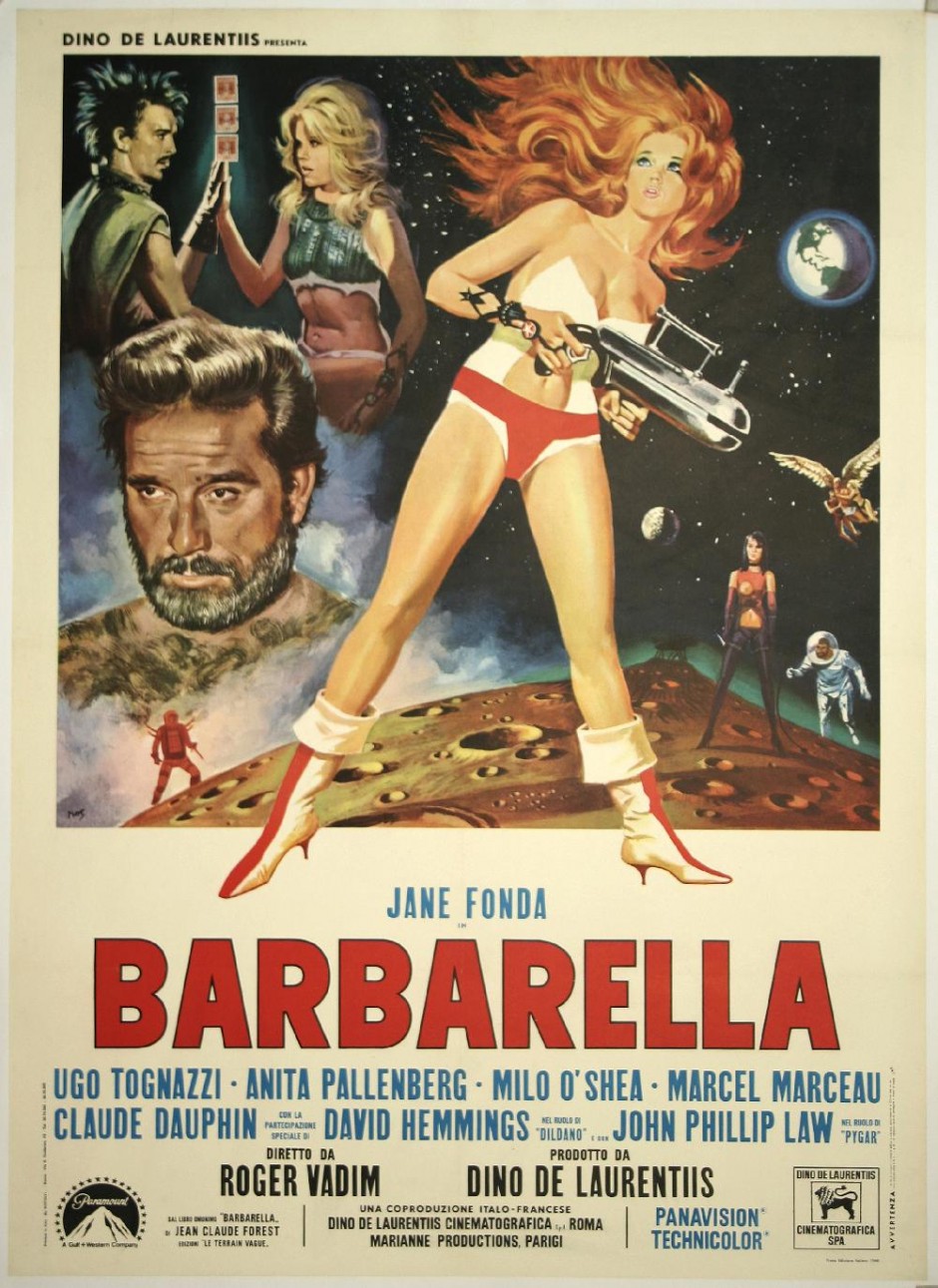
The reason for this break with protocol, it emerged, was that Dad wanted me to watch a film with him: Barbarella, the 1968 comic-book adaptation starring Jane Fonda as an interstellar explorer with an uncanny knack of losing her clothes. I enjoyed the film more for the robots and monsters than for Jane’s wardrobe malfunctions, although the semi-nudity did coincide with some stirrings which, at the time, I put down to Mum’s shepherd’s pie.
It was years before I worked out what was going on that night. Roger Vadim’s kitsch sci-fi romp was, I realised, the sum total of my parents’ efforts to explain to me the myriad complexities of human reproduction. No awkward birds-and-bees talk, no 1950s government information booklet “accidentally” left by my bedside; just a scantily clad spacewoman being pecked to death by budgerigars.
The state didn’t do much better. We had one sex education lesson, at the end of my second year, which consisted of two indecipherable diagrams, some vague mumblings about Aids, and a five-minute a video of a gruff-looking German woman unrolling a balloon over a stick. It was like teaching Mandarin from a takeaway menu. There was nothing about feelings; no clue as to whether this was roughly average size for a stick; and most importantly, no pointers on how to persuade the German woman to touch your stick in the first place.
The internet and self-help literature were years away. If I’d had any brothers or sisters, I might have gleaned the odd snippet by putting my ear to their bedroom door; as it was, the only scraps of information available were the eye-boggling fisherman’s yarns of the playground and the odd scrunched-up jazz mag abandoned in the woods. And with coordinated teams of torch-wielding teenagers combing for them in overlapping eight-hour shifts, those were hard to come by.
But I wasn’t too worried. Everyone else seemed to get by without an instruction manual. Sex obviously comes naturally to humans, as it does to the animals. I would instinctively know the right thing to do when the time came. Wouldn’t I?
♥ As you read this, a million people are having sex. (The World Health Organisation estimates that 100 million sex acts take place every day, and the average duration of intercourse is 7 minutes, which means that at any one moment, there are about 500,000 couples making whoopee.)
And when we’re not doing it, it’s never far from our minds. The oft-touted statistic that men think about sex every nine seconds is a myth, but various studies put the figure at anything between several times a day and once a minute. It’s reckoned that there are about half a billion pages of porn on the internet, and sexual images are everywhere, in newspapers and magazines, on TV and advertising billboards.
Yet for a species seemingly so obsessed with sex, mankind has been remarkably slow to learn about it. The derisory state of sex education in the 1980s isn’t actually that surprising when you consider that sex and love and relationships, were, until roughly that time, a mystery to everyone. Whether it was because sex was taboo, or because we felt the subject somehow beneath our attention – everyone knows how to have sex, don’t they? – there was practically no research into the field until the alarmingly recent past. John Farley, in his 1982 book Gametes and Spores, wrote: “Sex remains almost as complete an enigma today as it was 300 years ago when Dutch microscopists discovered minute ‘animalcules’ swimming about in human seminal fluid.”
Sure, we’d figured out the nuts and bolts – but even they were a long time coming. Sperm (as opposed to semen) were only discovered in 1677, and it was another 150 years before anyone clapped eyes on a human egg. Until the mid-18th century, most scientists still clung to the ancient Greeks’ theory that male semen contained complete human beings, and women were just a sort of incubator. (Oscar Hertwig finally vindicated women in 1875 when his experiments with sea urchins proved that both sperm and egg contributed genetic material to the embryo.)
Things didn’t move much quicker in the early 20th century. In 1933, Sigmund Freud advised those who wished to learn about women to “turn to poets, or wait until science can give you deeper and more coherent information”. Alfred Kinsey published his reports on human sexual behaviour in 1948 and 1953, and while they revealed a lot about what people did, they offered no explanation of why they did it. In fact, we’d split the atom, invented the laser and landed on the moon before anyone had even begun to address many of the fundamental questions of sex.
Why do we have sex? Why does attraction fade? Why do people cheat? Why are there so many female prostitutes, and so few heterosexual male ones? Why is it always men who propose? Why are so many women attracted to men who treat them badly? Why do you often see beautiful women with ordinary-looking men, but never the opposite? What is beauty anyway? Why is it more acceptable for men to sleep around than women? Why is it easier to meet a partner when you already have one? Why are there so many single mums and so few single dads? What’s so attractive about a sense of humour? And what, exactly, is chemistry?
Many of these questions hadn’t even been asked by the time I was born, and none of those that had had received satisfactory answers. The first breakthroughs to cast light on these issues came in the 1970s – although they were building on a theory that was more than 100 years old.
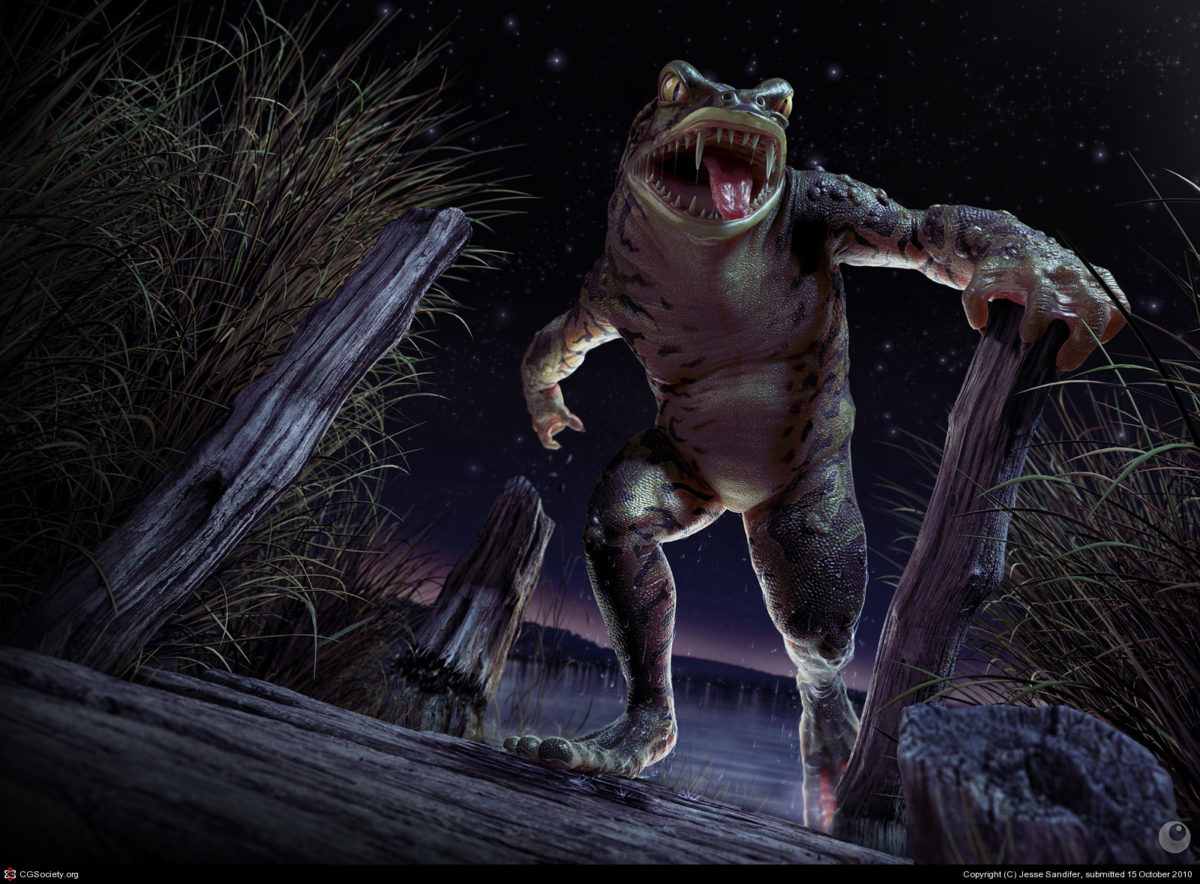
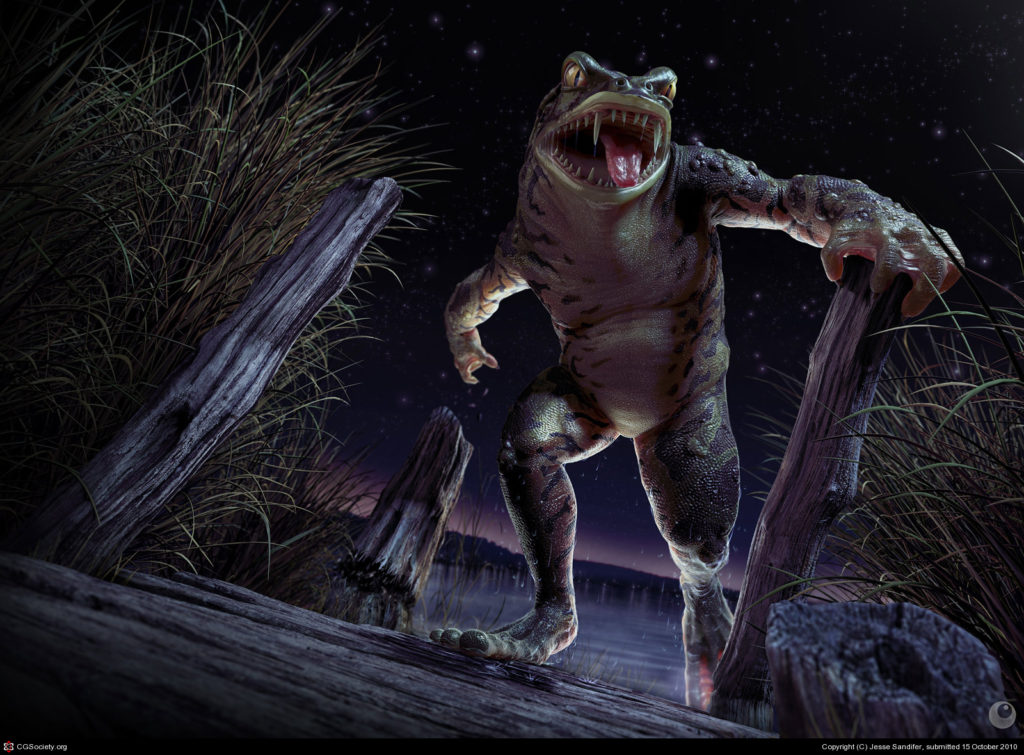
His favourite snack is children. And his favourite flavour is ginger.
And the last word he heard was … ribbit.
My earliest memory isn’t of an event. It’s a nightmare. (The symbolism didn’t hit me for quite a few years.)
I’m three years old, maybe four. I’m in a large, unfamiliar house. The sun is streaming in through the windows and I’m playing boisterous games with other children – there must be 20 or 30 of us, and no grown-ups to spoil the fun. But the house abruptly falls quiet when one of the girls cries out: “Can anyone else hear that?”
We listen. Sure enough, ever so faint, but unmistakeable: thump, thump, thump. The room grows dark as a cloud passes over the sun.
“What is it?” asks one boy. We look searchingly at one another, but no one steps forward.
I know what it is. Or rather, who it is. It’s Big Frog and his army of grisly, murderous monsters, and they’re coming to kill us all.
Big Frog is my nemesis. Although he’s a frog, he walks upright. He’s green and slimy and eight feet tall, and he marches at the head of a horde of the foulest, most hideous creatures you could imagine. His favourite snack is children. And his favourite flavour is ginger.
We all know instinctively that we can’t leave the house; they’ll catch us before we can reach safety. Our only hope of survival is to hide.
At this point, a disembodied voice – my mother’s, perhaps – rings out through the house, counting down from 50. So 30 children begin the most important game of hide and seek of their short lives.
Things are orderly to begin with – the thump is still distant, the monsters some way off – but become more frantic as the countdown progresses.
I start looking for a hiding place with two friends. We run to the upstairs bathroom, where we see a couple of kids crouching under a shelf, in plain sight. We’re certainly not going to join them.
“38. 37. 36…”
Next, the bedroom. Two children are crawling under the bed; I try to join them, but there’s no room.
“29. 28. 27…”
My remaining two friends and I race downstairs to the kitchen. They climb inside a cupboard. I plead with them to find somewhere better – it’s the first place the monsters will look – but they wedge themselves in and slam the door.
“17. 16. 15…”
The thumping noise is deafening now. Another two kids dive into the wendy house. I am the only one left who hasn’t managed to conceal himself.
“10. 9. 8…”
Despairing of finding a good hiding place, I hurry back to try to squeeze into one of the bad ones. But when I look under the shelf in the bathroom, I find that the children who hid there have turned to stone. It’s the same under the bed, in the kitchen, in the wendy house. They are all, I now notice, in pairs: one boy, one girl. They’re all safe. They’re all dead.
“3. 2… ONE.”
As the countdown reaches zero, the wall of the house caves in. I wheel round to face my doom alone.




 Some people might have expected me to weigh in on the debate about Elliot Rodger’s killing spree in Santa Barbara, California, on May 23. After all, this is one subject I might seem vaguely qualified to talk about.